

6. Jagannath Temple (Puri, Odisha)
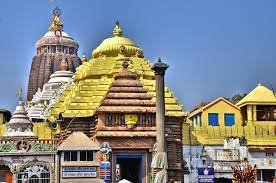
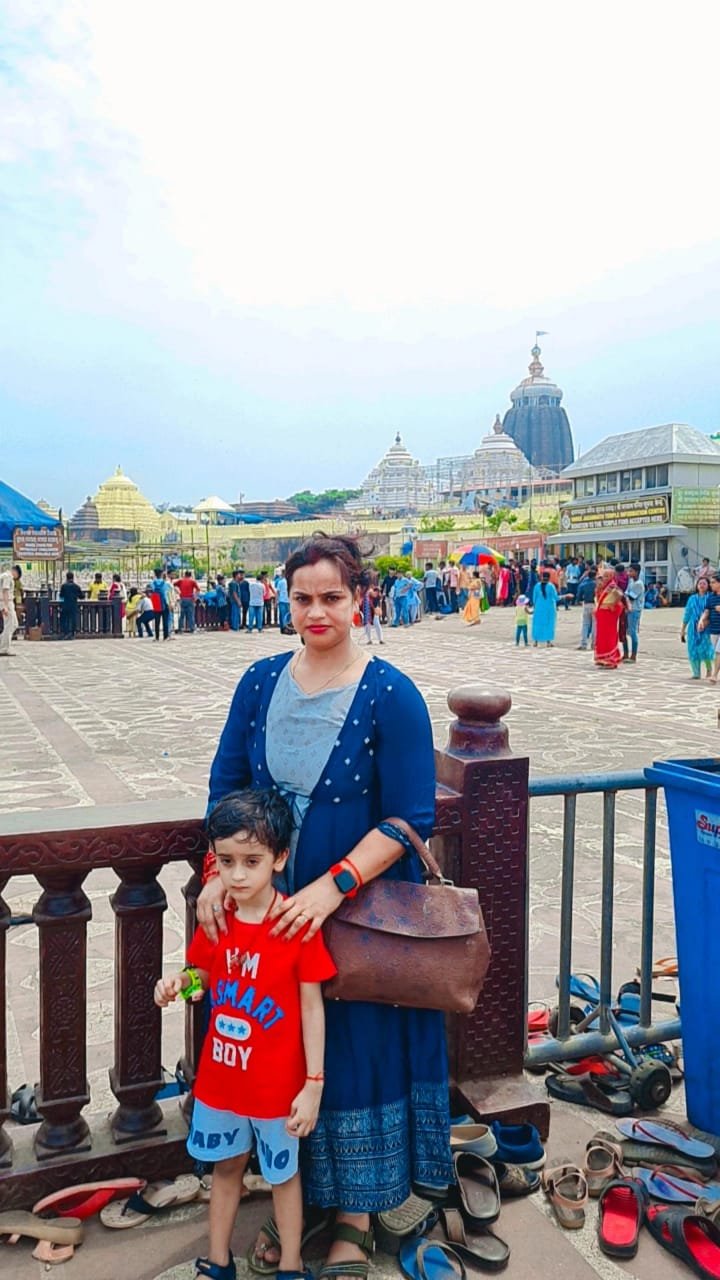
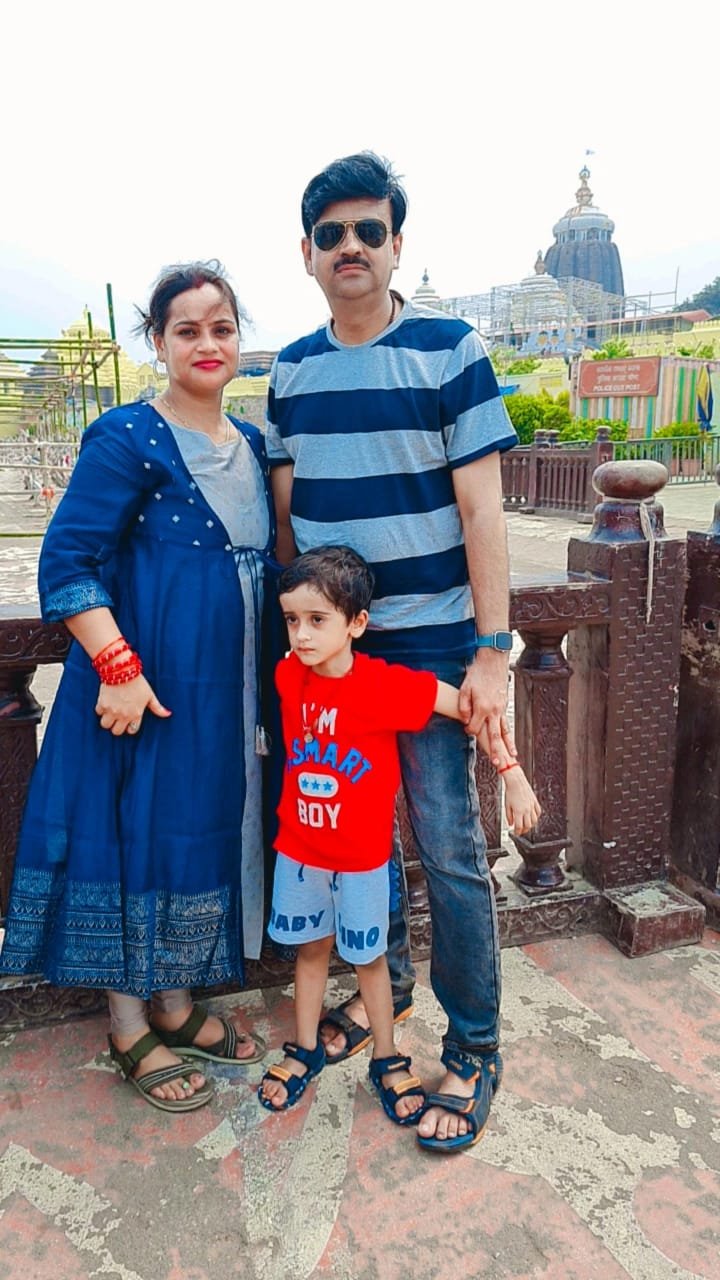
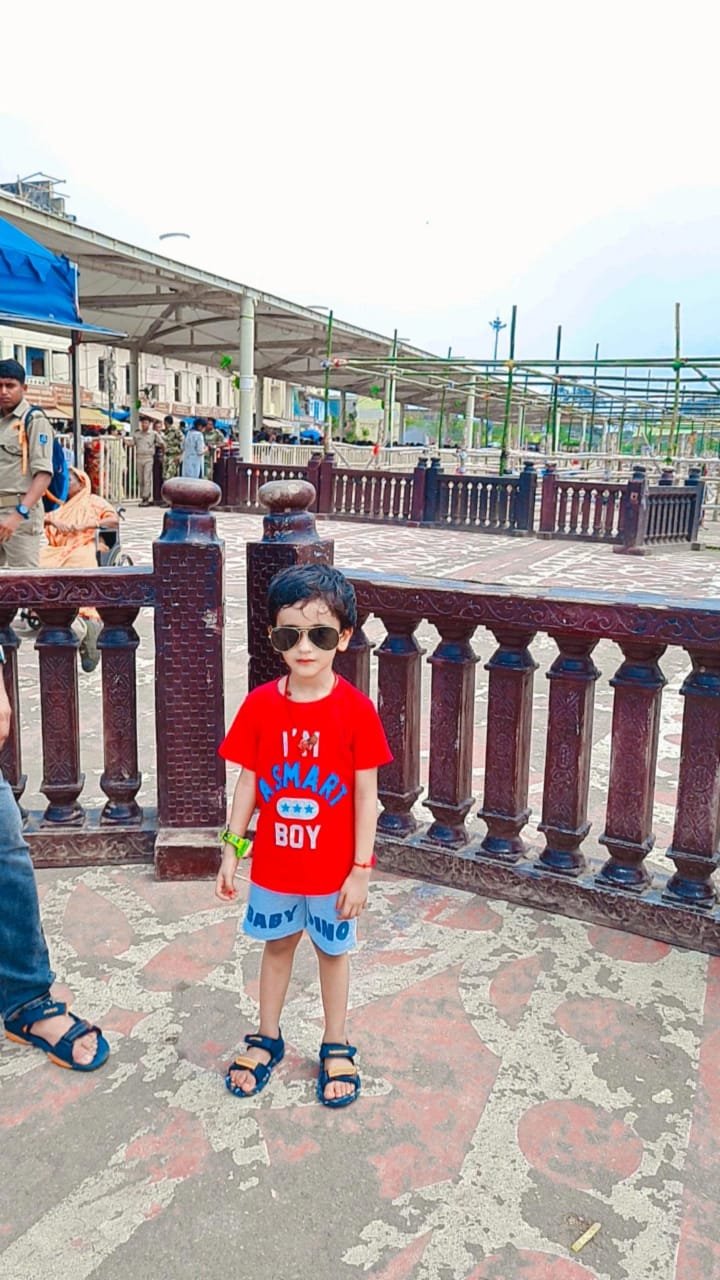
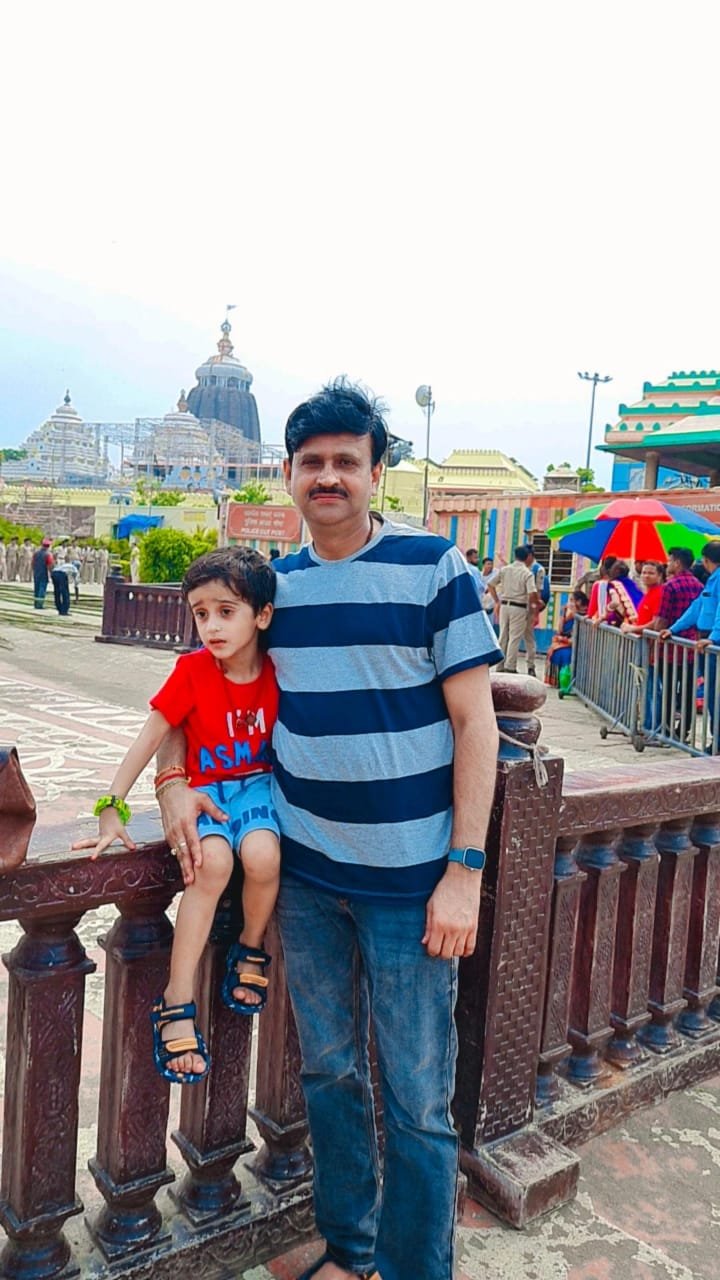
Odisha is known as the land of Lord Jagannath (literally meaning the Lord of the Universe). The Jagannath Temple is an important Hindu temple dedicated to Jagannath, a form of Krishna, in Puri in the state of Odisha on the eastern coast of India. The temple was built by the Ganga dynasty king Anantavarman Chodaganga in the 12th century CE, as suggested by the Kendupatna copper-plate inscription of his descendant Narasimhadeva II.[7] Anantavarman was originally a Shaivite, and became a Vaishnavite sometime after he conquered the Utkala region (in which the temple is located) in 1112 CE. A 1134–1135 CE inscription records his donation to the temple. Therefore, the temple construction must have started sometime after 1112 CE.
According to a story in the temple chronicles, it was founded by Anangabhima-deva II: different chronicles variously mention the year of construction as 1196, 1197, 1205, 1216, or 1226. This suggests that the temple’s construction was completed or that the temple was renovated during the reign of Anantavarman’s son Anangabhima. The temple complex was further developed during the reigns of the subsequent kings, including those of the Ganga dynasty and the Suryvamshi (Gajapati) dynasty. Pilgrims flocking the temple town of Puri from all corners of the world throughout the year.
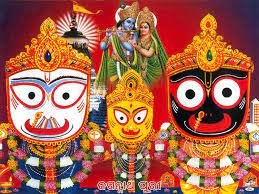
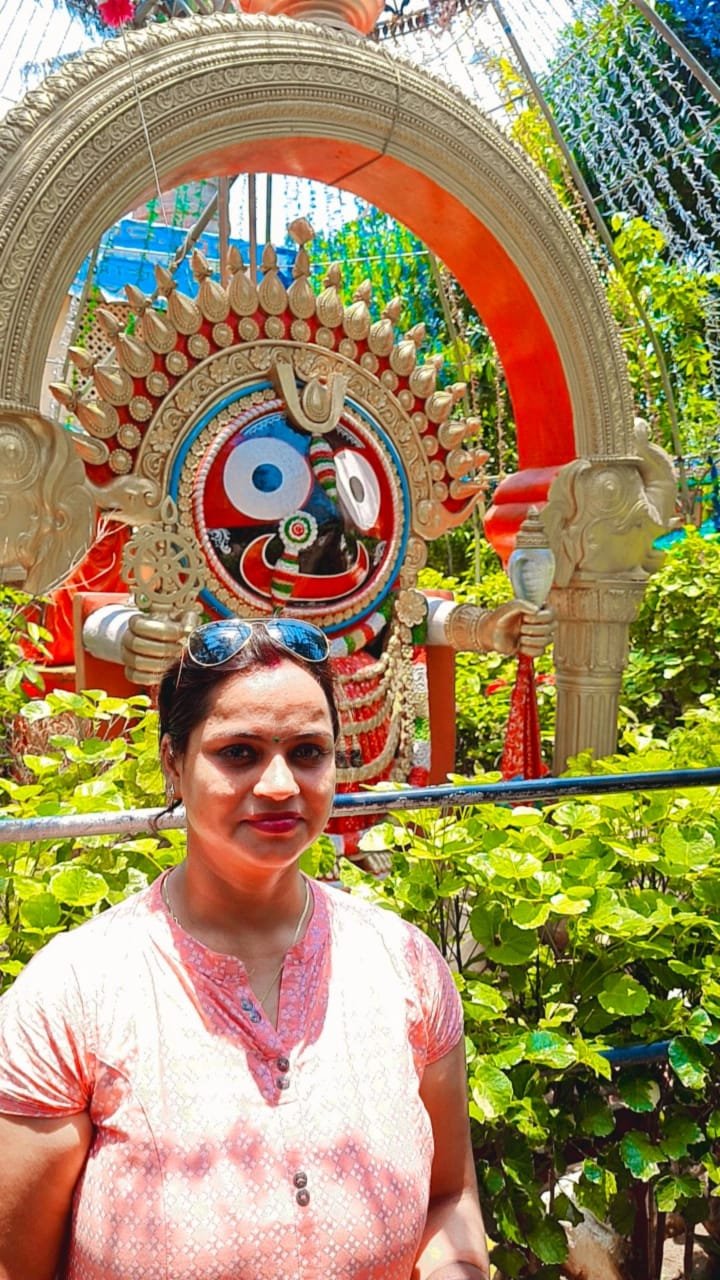
Jagannath, Balabhadra and Subhadra are a trio of deities worshipped at the temple. The inner sanctum of the temple contains statues of these three Gods carved from sacred neem logs known as daru sitting on the bejewelled platform or ratnabedi, along with statues of Sudarshana Chakra, Madanmohan, Sridevi and Vishwadhatri.]The deities are adorned with different clothing and jewels according to the season. Worship of these deities pre-dates the building of the temple and may have originated in an ancient tribal shrine.
According to legend, the construction of the first Jagannath temple was commissioned by King Indradyumna, son of Bharata and Sunanda, and a Malava king, mentioned in the Mahabharata and the Puranas.
The legendary account as found in the Skanda-Purana, Brahma Purana and other Puranas and later Odia works state that Lord Jagannath was originally worshipped as Lord Neela Madhaba by a Savar king (tribal chief) named Viswavasu. Having heard about the deity, King Indradyumna sent a Brahmin priest, Vidyapati to locate the deity, who was worshipped secretly in a dense forest by Viswavasu. Vidyapati tried his best but could not locate the place. But at last he managed to marry Viswavasu’s daughter Lalita. At repeated request of Vidyapti, Viswavasu took his son-in-law blind folded to a cave where Lord Neela Madhaba was worshipped.
Vidyapati was very intelligent. He dropped mustard seeds on the ground on the way. The seeds germinated after a few days, which enabled him to find out the cave later on. On hearing from him, King Indradyumna proceeded immediately to Odra desha (Odisha) on a pilgrimage to see and worship the Deity. But the deity had disappeared. The king was disappointed. The Deity was hidden in sand. The king was determined not to return without having a darshan of the deity and observed fast unto death at Mount Neela, Then a celestial voice cried Thou shalt see him. Afterward, the king performed a horse sacrifice and built a magnificent temple for Vishnu. Narasimha Murti brought by Narada was installed in the temple. During sleep, the king had a vision of Lord Jagannath. Also an astral voice directed him to receive the fragrant tree on the seashore and make idols out of it. Accordingly, the king got the image of Lord Jagannath, Balabhadra, Subhadra and Chakra Sudarshan made out of the wood of the divine tree and installed them in the temple.
King Indradyumna put up for Jagannath the tallest monument of the world. It was 1,000 cubits high. He invited Lord Brahma, the cosmic creator, consecrate the temple and the images. Brahma came all the way from Heaven for this purpose. Seeing the temple, he was immensely pleased with him. Brahma asked Indradyumna as to in what way can he (Brahma) fulfill the king’s desire, since was very much pleased with him for his having put the most beautiful Temple for Lord Vishnu. With folded hands, Indradyumna said, “My Lord if you are really pleased with me, kindly bless me with one thing, and it is that I should be issueless and that I should be the last member of my family.” In case anybody left alive after him, he would only take pride as the owner of the temple and would not work for the society.
Legend surrounding the Temple origin
The traditional story concerning the origins of the Lord Jagannath temple is that here the original image of Jagannath (a deity form of Vishnu) at the end of Dvapara yuga manifested near a banyan tree, near seashore in the form of an Indranila mani or the Blue Jewel. It was so dazzling that it could grant instant moksha, so the God Dharma or Yama wanted to hide it in the earth and was successful. In Kali Yuga King Indradyumna of Malwa wanted to find that mysterious image and to do so he performed harsh penance to obtain his goal. Vishnu then instructed him to go to the Puri seashore and find a floating log to make an image from its trunk.
The King found the log of wood. He did a yajna from which God Yajna Nrisimha appeared and instructed that Narayana should be made as fourfold expansion, i.e. Paramatma as Vasudeva, his Vyuha as Samkarshana, Yogamaya as Subhadra, and his Vibhava as Sudarsana. Vishwakarma appeared in the form of an artisan and prepared images of Jagannath, Balabhadra and Subhadra from the tree.
When this log, radiant with light was seen floating in the sea, Narada told the king to make three idols out of it and place them in a pavilion. Indradyumna got Visvakarma, the architect of Gods, to build a magnificent temple to house the idols, and Vishnu himself appeared in the guise of a carpenter to make the idols on condition that he was to be left undisturbed until he finished the work.
But just after two weeks, the Queen became very anxious. She took the carpenter to be dead as no sound came from the temple. Therefore, she requested the king to open the door. Thus, they went to see Vishnu at work at which the latter abandoned his work leaving the idols unfinished. The idol was devoid of any hands. But a divine voice told Indradyumana to install them in the temple. It has also been widely believed that in spite of the idol being without hands, it can watch over the world and be its lord.
All of the renowned acharyas including Madhvacharya have been known to visit this kshetra. Adi Shankara established his Govardhana matha here. There is also evidence that Guru Nanak, Kabir, Tulsidas, Ramanujacharya, Srimanta Sankardev,and Nimbarkacharya had visited this place. Sri Chaitanya Mahaprabhu of Gaudiya Vaishnavism stayed here for 24 years, establishing that the love of God can be spread by chanting the Hare Krishna mantra. Srimad Vallabhacharya Mahaprabhu visited Jagannath Puri and performed a 7-day recitation of Srimad Bhagvat. His sitting place is still famous as his “baithakji”, roughly literally translating to his seat. It confirms his visit to Puri.
A famous incident took place when JagadGuru Acharya Srimad Vallabhacharya Mahaprabhu visited. There was a Shastrartha being held between the Brahmins before the king himself and 4 questions were asked. Who is the highest of Gods, What is the highest of mantras, What is the highest scripture and What is the highest service. The discourse went on for many days with many schools of thought. Very young teen Vallabhacharyaji Mahaprabhu also joined the debated and answered all the questions at once. His answers were accepted and appreciated by all except few opposition scholars, they challenged the answers. The debate then resumed for a long period.
Finally, Shri Vallabhacharya said to ask Lord Jagannath to confirm Shri Vallabh’s answers. It was mutually decided between all scholars and king that whatever Lord Jagannath would write, it would be considered as the final and correct answer.
A pen, inkpot and the paper were left alone in the inner sanctum before the deity to write the answers. After some time, the doors were opened and 4 answers were found to be written.
1) The Son of Devaki (Krishna) is the God of Gods
2) His name is the highest of mantras
3) Highest of all scriptures is Devki Putra’s Bhagavat Geeta
4) Service to Him is the Highest service.The king along with all other scholars were shocked and declared Shri Vallabh the winner of the discourse.
Some of the pandits who participated became jealous of young Shri Vallabh and wanted to test Him. The next day was Ekadashi, a fasting day where one must fast from grains. The pandits gave Shri Vallabh rice Prasad of Shri Jagannathji (The temple is famous for this). If Shri Vallabh ate it, He would break His vow of fasting but if He did not take it, He would disrespect Lord Jagannath. Shri Vallabh with all honor and respect accepted the prasad in his hand. He stood there in the temple, spent the rest of the day and night explaining shlokas of the greatness of Prasad and ate the rice the next morning after sunrise.
The Sikh Aarti Gagan mai thaal was recited by first guru, Guru Nanak in 1506 or 1508 during his journey (called “udaasi”) to east India, at the revered Jagannath Temple, Puri. This arti is sung (not performed with platter and lamps etc.) daily after recitation of Rehraas Sahib and Ardās at the Harmandir Sahib, Amritsar and at most Gurudwara sahibs.
Gupta Vrindavan, Puri
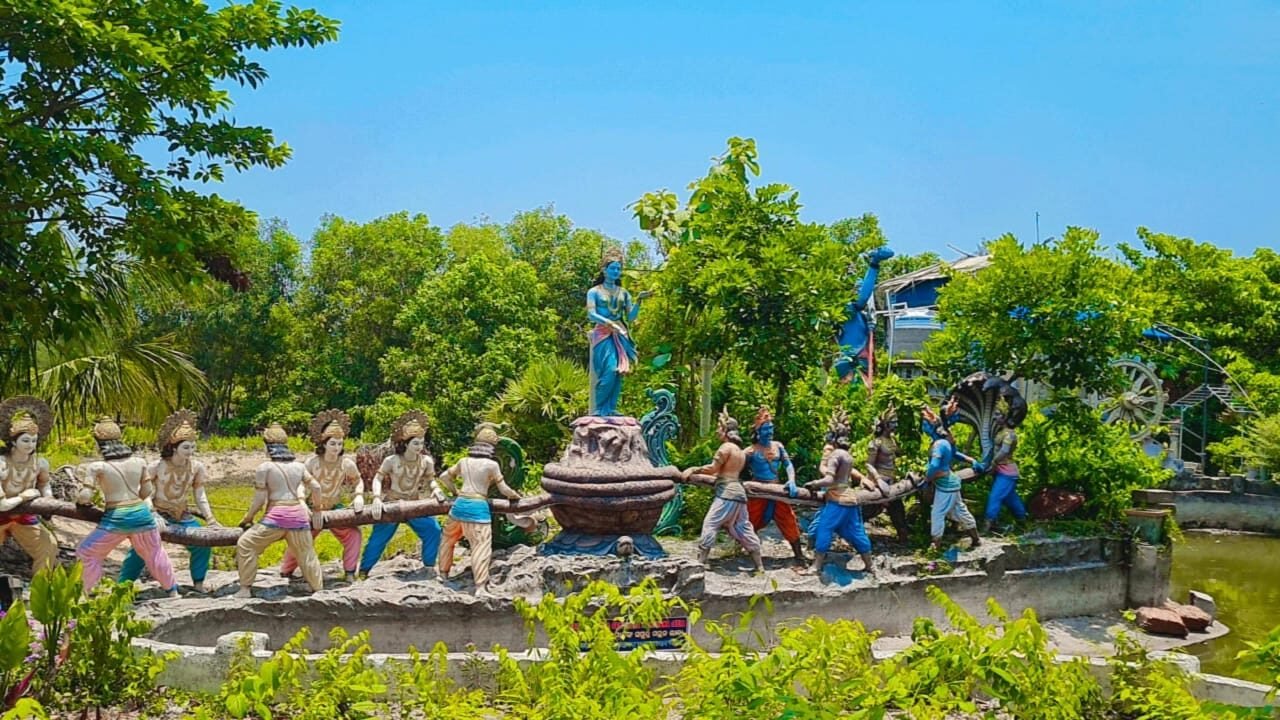
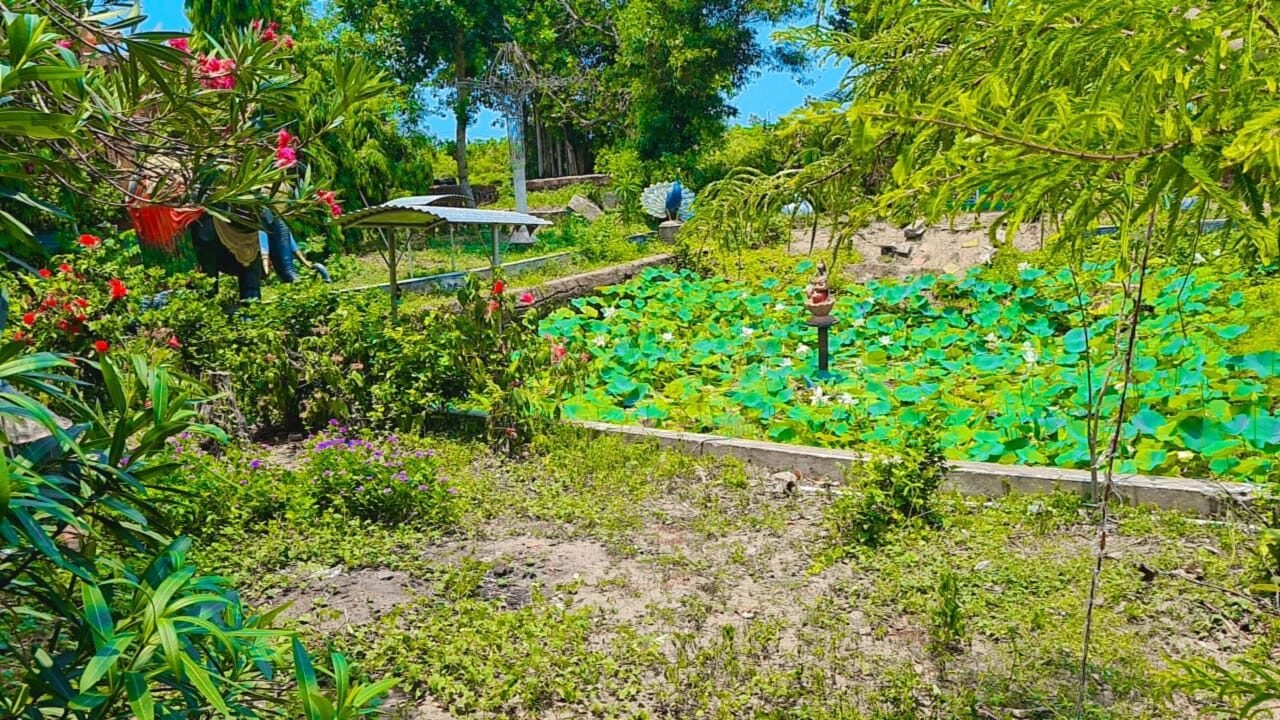
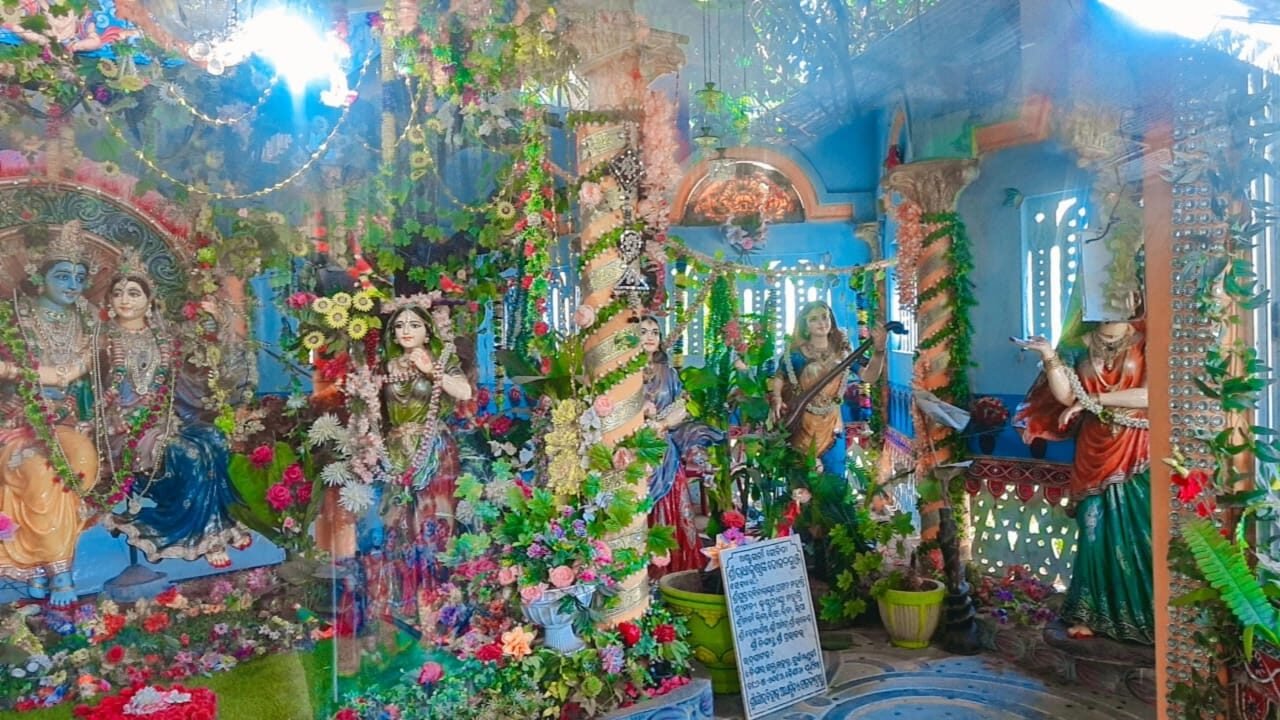
Truly a great place to give you the feel and feel of being in Vrindavan. Many idols and idols of Lord Krishna and Shri Radha are here with their blessing smiles and the biggest devotee of Lord Krishna and Shri Radha, Mahaprabhu is also present here. The place is beautiful with its small ponds, flowers, gardens and obviously the serenity of the place but simply unforgettable.Char Dham
The temple is one of the holiest Vaishnava Hindu Char Dham (four divine sites) sites also including Rameswaram, Badrinath, Puri and Dwarka. Though the origins are not clearly known, the Advaita school of Hinduism propagated by Sankaracharya, who created Hindu monastic institutions across India, attributes the origin of Char Dham to the seer. The four monasteries lie across the four corners of India and their attendant temples are Badrinath Temple at Badrinath in the North, Jagannath Temple at Puri in the East, Dwarakadheesh Temple at Dwarka in the West and Ramanathaswamy Temple at Rameswaram in the South. Though ideologically the temples are divided between the sects of Hinduism, namely Saivism and Vaishnavism, the Char Dham pilgrimage is an all Hindu affair.] There are four abodes in Himalayas called Chota Char Dham (Chota meaning small): Badrinath, Kedarnath, Gangotri and Yamunotri – all of these lie at the foothills of Himalayas.The name Chota was added during the mid of 20th century to differentiate the original Char Dhams. The journey across the four cardinal points in India is considered sacred by Hindus who aspire to visit these temples once in their lifetime. Traditionally the trip starts at the eastern end from Puri, proceeding in clockwise direction in a manner typically followed for circumambulation in Hindu temples
The most significant ritual associated with the Ratha-Yatra is the chhera pahara. During the festival, the Gajapati King wears the outfit of a sweeper and sweeps all around the deities and chariots in the Chera Pahara (sweeping with water) ritual. The Gajapati King cleanses the road before the chariots with a gold-handled broom and sprinkles sandalwood water and powder with utmost devotion. As per the custom, although the Gajapati King has been considered the most exalted person in the Kalingan kingdom, he still renders the menial service to Jagannath. This ritual signified that under the lordship of Jagannath, there is no distinction between the powerful sovereign Gajapati King and the most humble devotee. Chera pahara is held on two days, on the first day of the Ratha Yatra, when the deities are taken to garden house at Mausi Maa Temple and again on the last day of the festival, when the deities are ceremoniously brought back to the Shri Mandir.
As per another ritual, when the deities are taken out from the Shri Mandir to the Chariots in Pahandi vijay. In the Ratha Yatra, the three deities are taken from the Jagannath Temple in the chariots to the Gundicha Temple, where they stay for nine days. Thereafter, the deities again ride the chariots back to Shri Mandir in bahuda yatra. On the way back, the three chariots halt at the Mausi Maa Temple and the deities are offered Poda Pitha, a kind of baked cake which are generally consumed by the Odisha people only. The observance of the Rath Yatra of Jagannath dates back to the period of the Puranas. Vivid descriptions of this festival are found in Brahma Purana, Padma Purana, and Skanda Purana. Kapila Samhita also refers to Rath Yatra. In Moghul period also, King Ramsingh of Jaipur, Rajasthan has been described as organizing the Rath Yatra in the 18th Century. In Orissa, Kings of Mayurbhanj and Parlakhemundi were organizing the Rath Yatra, though the most grand festival in terms of scale and popularity takes place at Puri.
Moreover, Starza notes that the ruling Ganga dynasty instituted the Rath Yatra at the completion of the great temple around 1150 AD. This festival was one of those Hindu festivals that was reported to the Western world very early. Friar Odoric of Pordenone visited India in 1316–1318, some 20 years after Marco Polo had dictated the account of his travels while in a Genoese prison. In his own account of 1321, Odoric reported how the people put the “idols” on chariots, and the King and Queen and all the people drew them from the “church” with song and music.
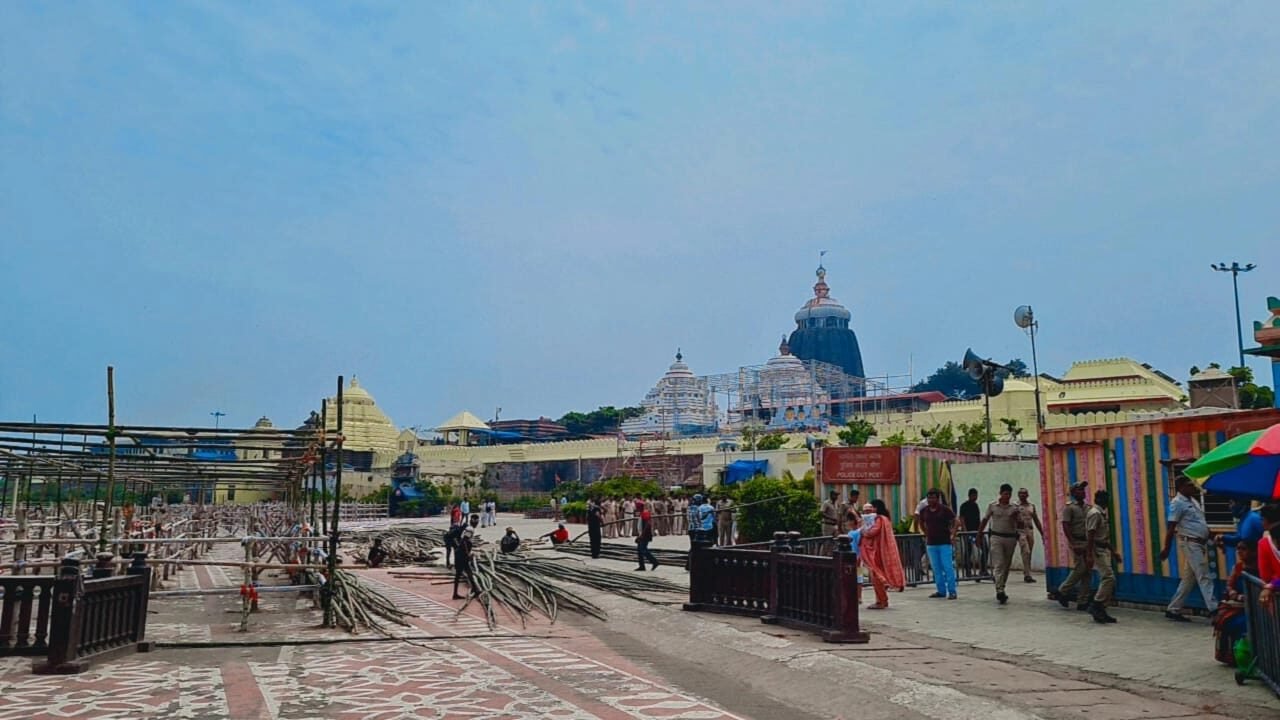
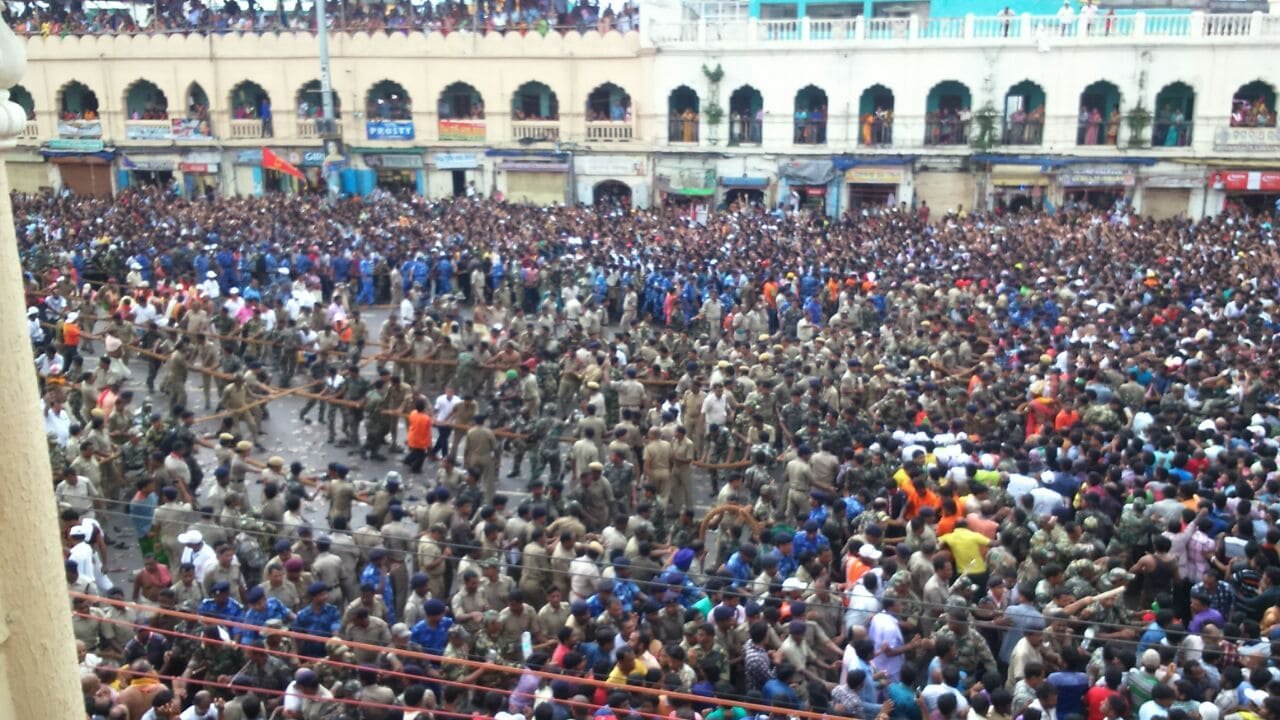
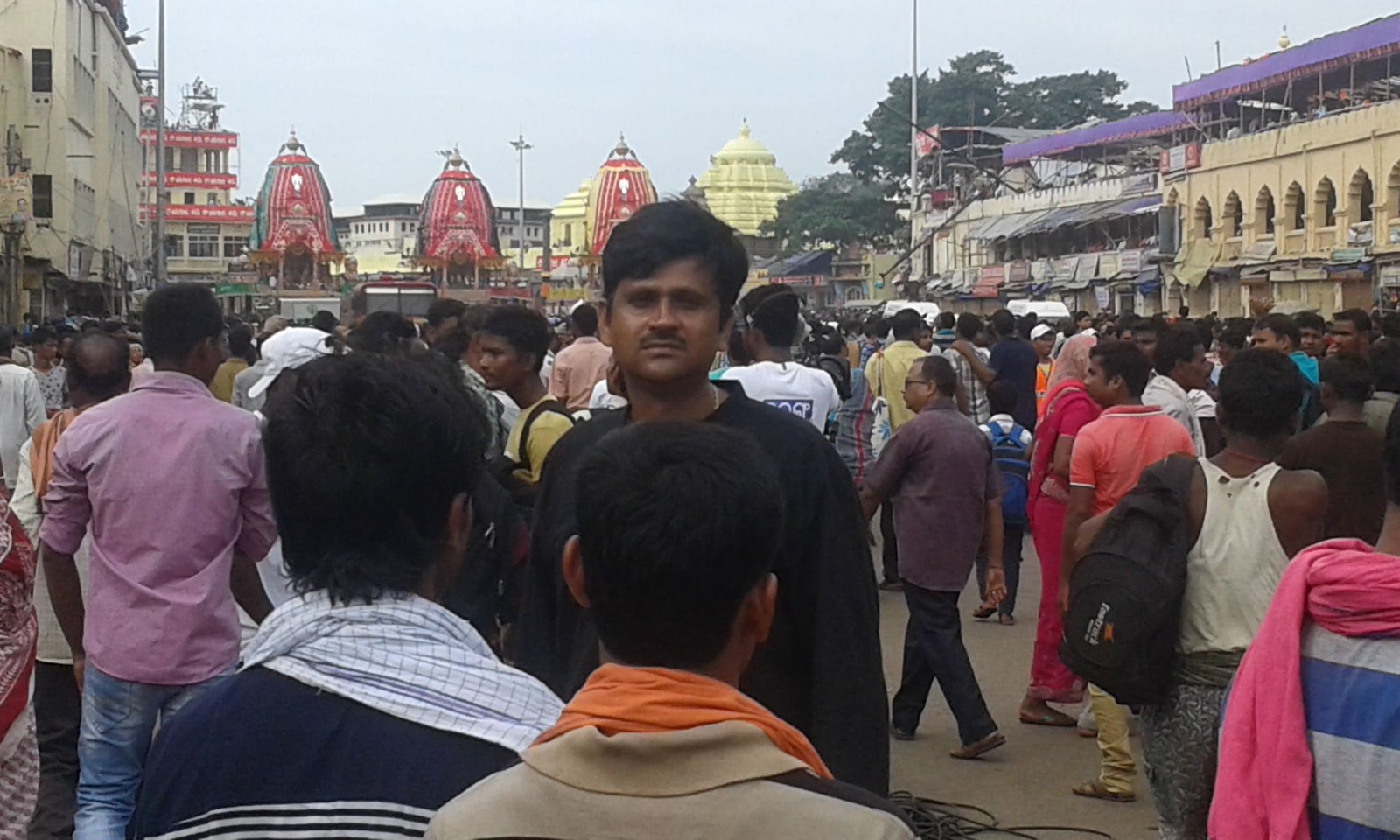
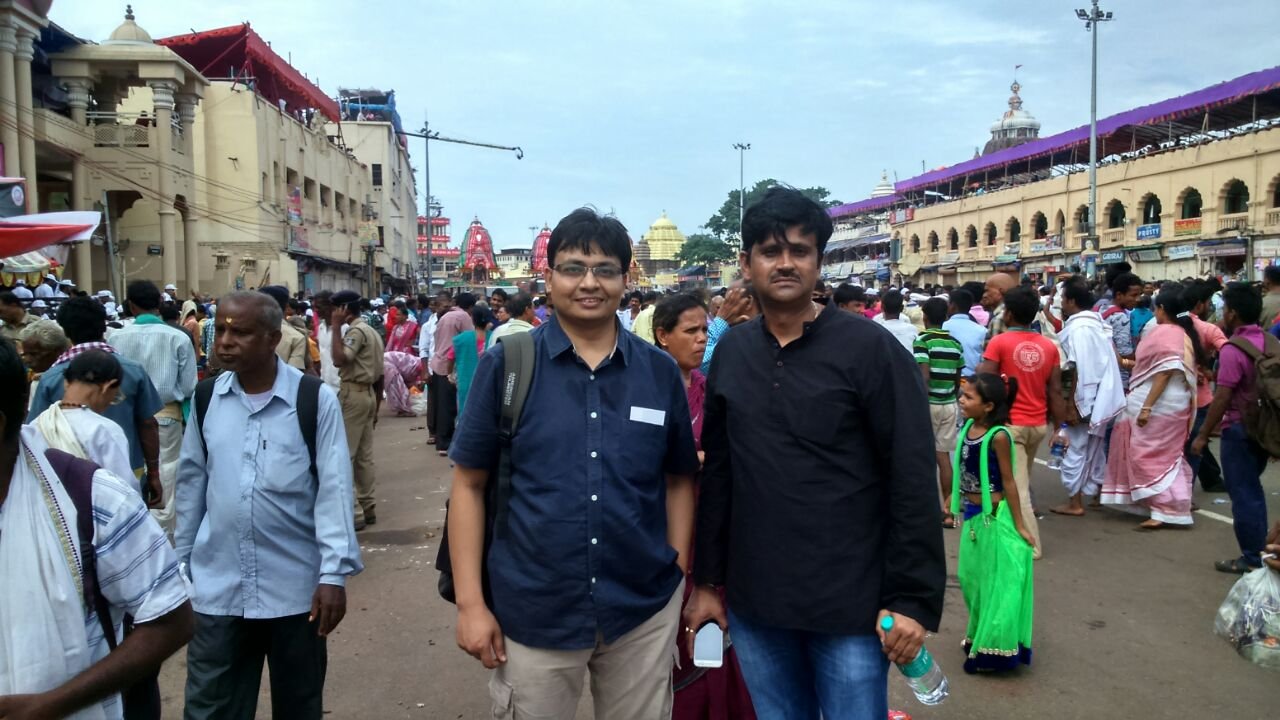
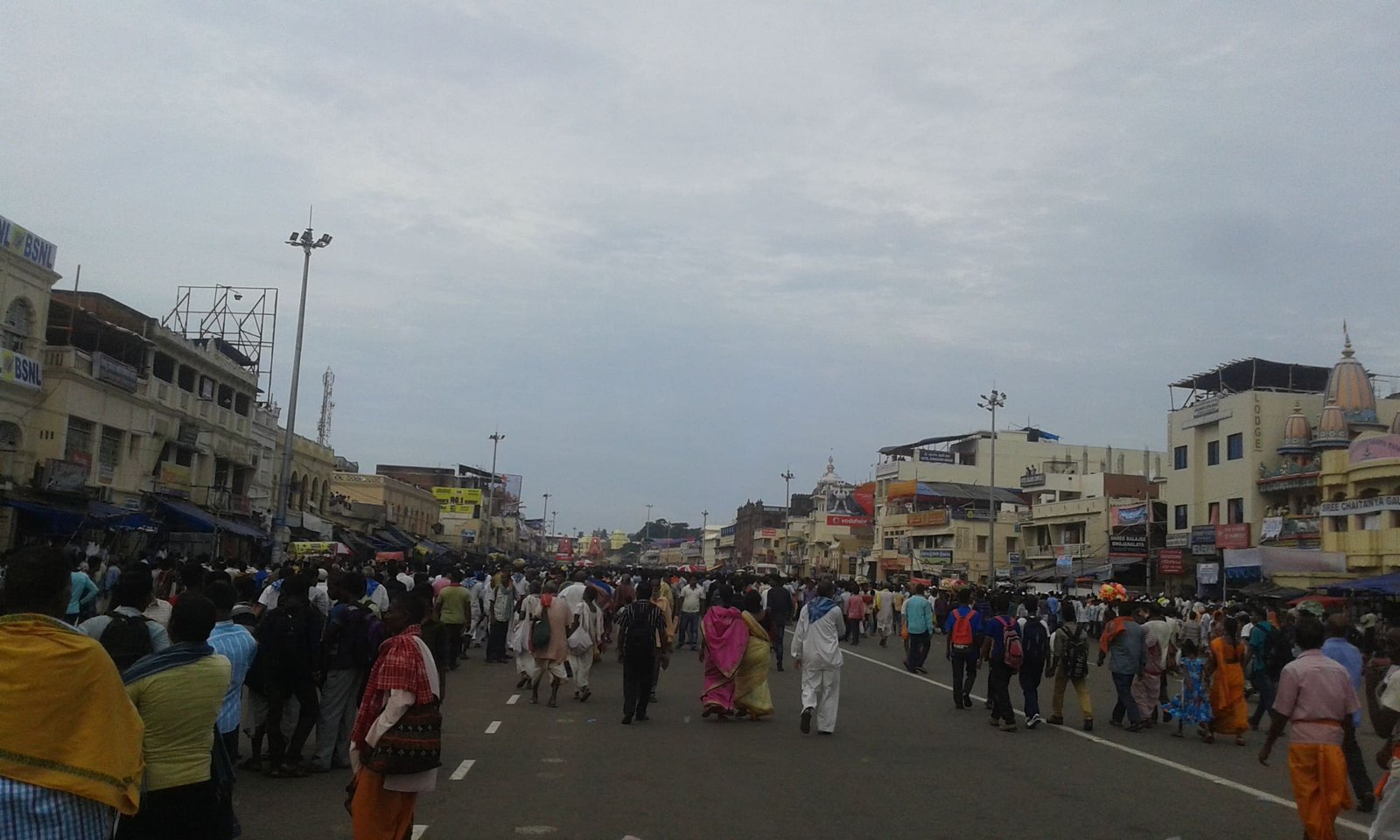
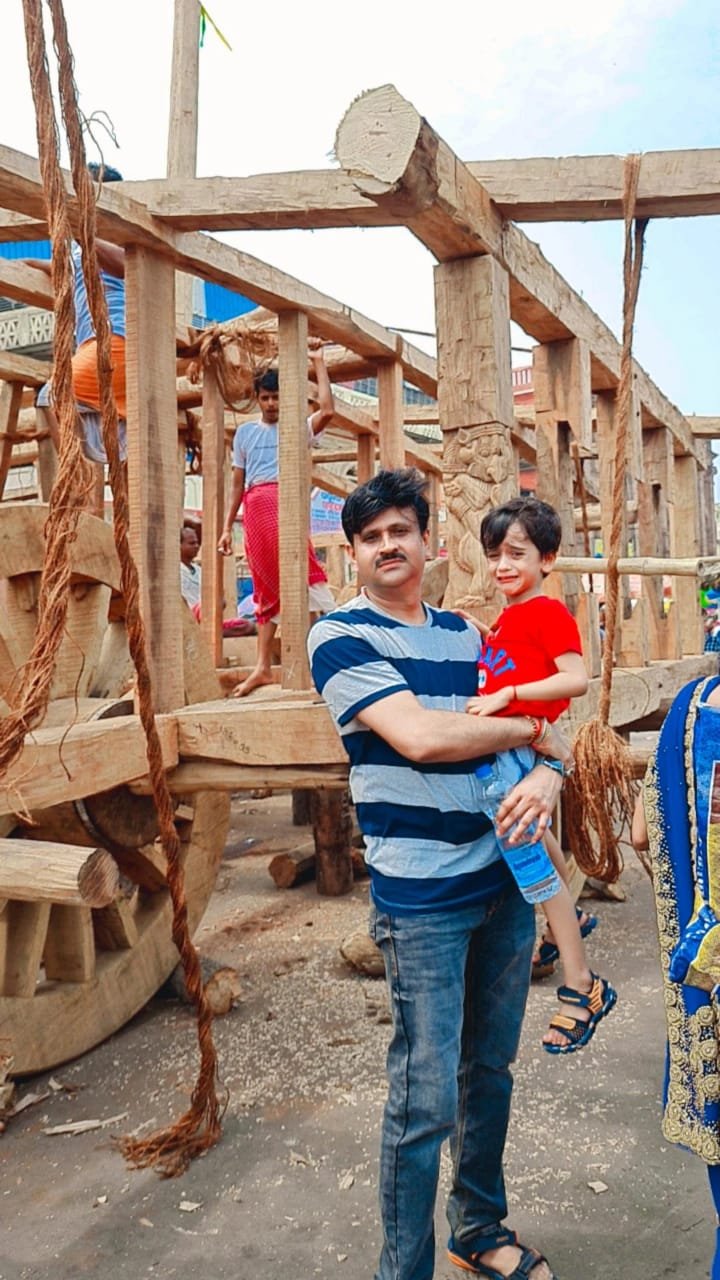
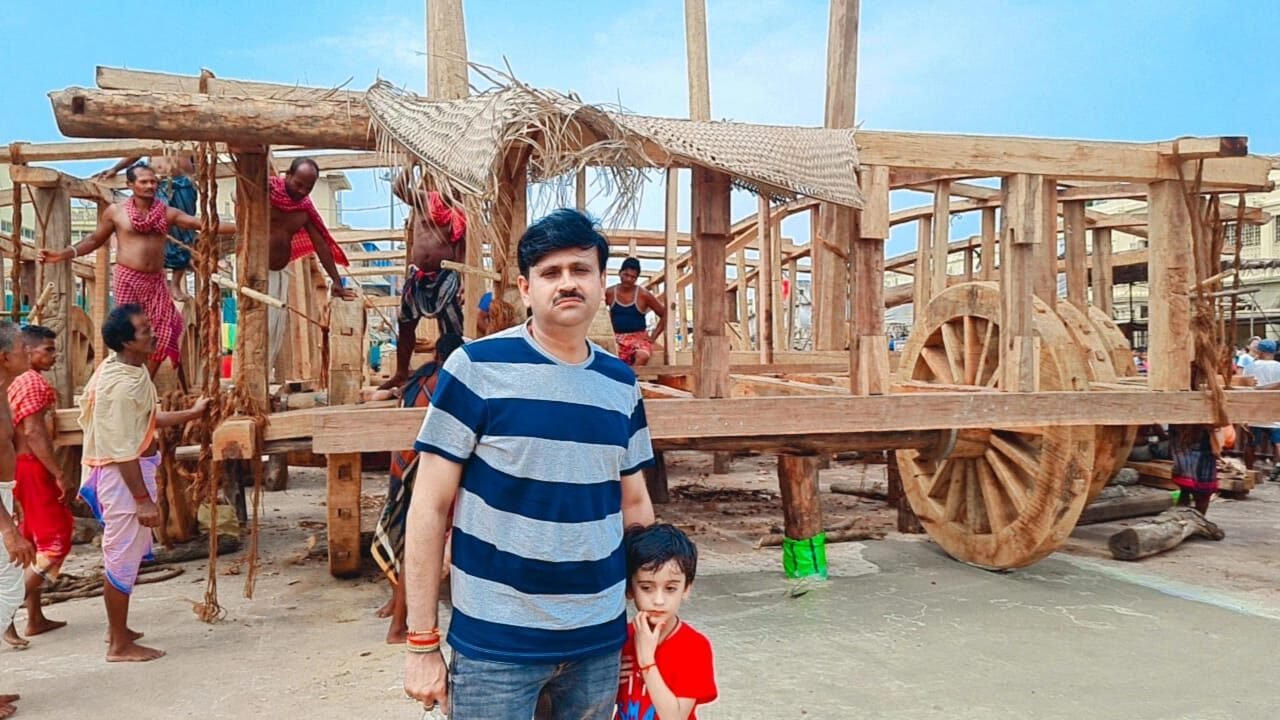
The Jagannath triad are usually worshiped in the sanctum of the temple at Puri, but once during the month of Asadha (Rainy Season of Orissa, usually falling in month of June or July), they are brought out onto the Bada Danda (main street of Puri) and travel (3 km) to the Shri Gundicha Temple, in huge chariots (ratha), allowing the public to have darśana (Holy view). This festival is known as Rath Yatra, meaning the journey (yatra) of the chariots (ratha). The Rathas are huge wheeled wooden structures, which are built anew every year and are pulled by the devotees. The chariot for Jagannath is approximately 45 feet high and 35 feet square and takes about 2 months to construct. The artists and painters of Puri decorate the cars and paint flower petals and other designs on the wheels, the wood-carved charioteer and horses, and the inverted lotuses on the wall behind the throne. The huge chariots of Jagannath pulled during Rath Yatra is the etymological origin of the English word Juggernaut. The Ratha-Yatra is also termed as the Shri Gundicha yatra
The most significant ritual associated with the Ratha-Yatra is the chhera pahara. During the festival, the Gajapati King wears the outfit of a sweeper and sweeps all around the deities and chariots in the Chera Pahara (sweeping with water) ritual. The Gajapati King cleanses the road before the chariots with a gold-handled broom and sprinkles sandalwood water and powder with utmost devotion. As per the custom, although the Gajapati King has been considered the most exalted person in the Kalingan kingdom, he still renders the menial service to Jagannath. This ritual signified that under the lordship of Jagannath, there is no distinction between the powerful sovereign Gajapati King and the humblest devotee. Chera pahara is held on two days, on the first day of the Ratha Yatra, when the deities are taken to garden house at Mausi Maa Temple and again on the last day of the festival, when the deities are ceremoniously brought back to the Shri Mandir.
As per another ritual, when the deities are taken out from the Shri Mandir to the Chariots in Pahandi vijay.
In the Ratha Yatra, the three deities are taken from the Jagannath Temple in the chariots to the Gundicha Temple, where they stay for nine days. Thereafter, the deities again ride the chariots back to Shri Mandir in bahuda yatra. On the way back, the three chariots halt at the Mausi Maa Temple and the deities are offered Poda Pitha, a kind of baked cake which are generally consumed by the Odisha people only.
The observance of the Rath Yatra of Jagannath dates back to the period of the Puranas. Vivid descriptions of this festival are found in Brahma Purana, Padma Purana, and Skanda Purana. Kapila Samhita also refers to Rath Yatra. In Moghul period also, King Ramsingh of Jaipur, Rajasthan has been described as organizing the Rath Yatra in the 18th Century. In Orissa, Kings of Mayurbhanj and Parlakhemundi were organizing the Rath Yatra, though the most grand festival in terms of scale and popularity takes place at Puri.
Some of the architectural feats of the temple
The main temple is constructed in such a way that no shadow of the temple falls on the ground at any time of the day.
The Nilachakra – Or the Blue wheel perched on top of the temple is made of eight metals or asta dhatu. It is believed that if you see the Nilachakra it is as good as seeing the Lord himself.
The flag or the Patitapabana flows in the opposite direction of the wind and is changed every day at sunset and is changed every day. The feet of changing the flag’s rests with a family appointed by the King. They have been doing this ritual for over 800 years, climbing 165 meters, bare feet without any support.
The Mahaprasad or the offering to the Lord is prepared on fire lit by wood charcoal and rice and vegetables, cereals etc. are put in earthen pots and placed on the fire one on top of the other. The pot on the top cooks first.
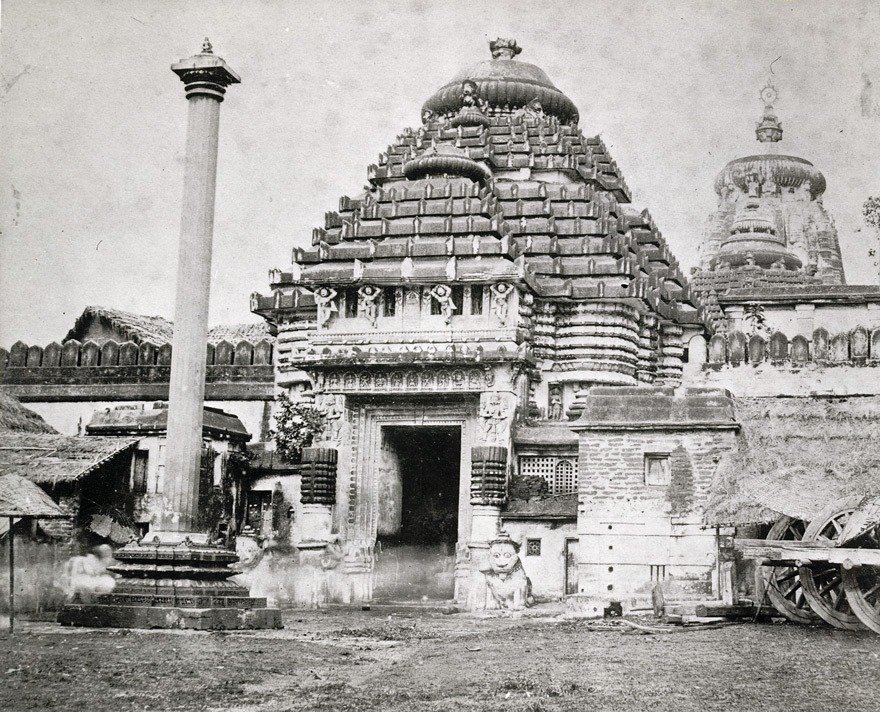
The Aruna stambha- the 33 ft monolith structure pillar in front of the Singhadwar or the main entrance of the temple was originally located at the Sun Temple, Konark.
Another unique feature of the temple is that the idols of the holy trinity are carved out of wood rather than stone or metal idols. They are also the only deity with the trappings of mortality.
How to Reach:
By Air – Biju Patnaik airport at Bhubaneswar is the nearest airport, which is nearly 56 km from the heart of the Puri city. The airport is connected to Delhi and Mumbai. …
By Train – Puri is a major railway junction. …
By Road – Puri is connected with the neighbouring cities through well-constructed roads.