

Travel - Shaktipeeth
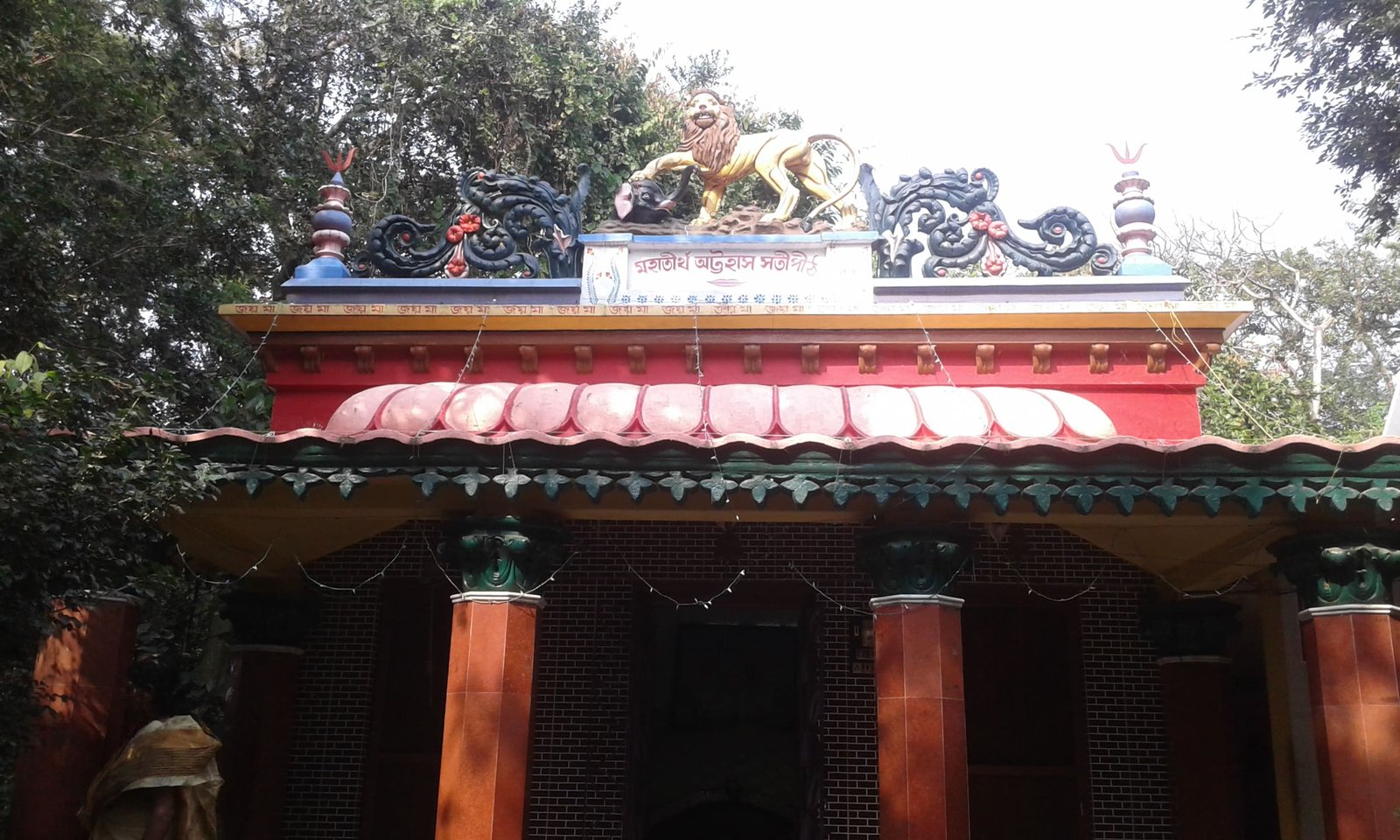
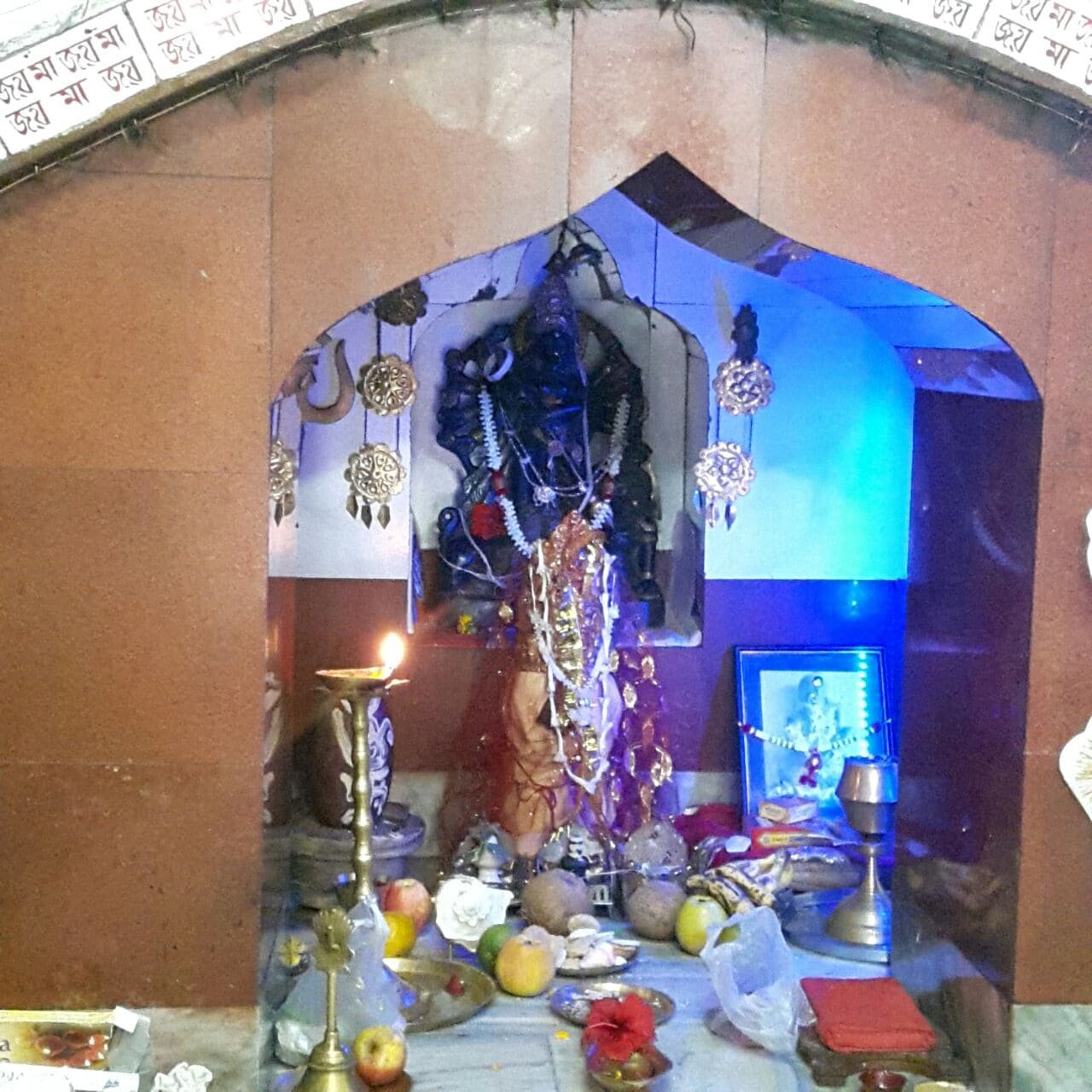
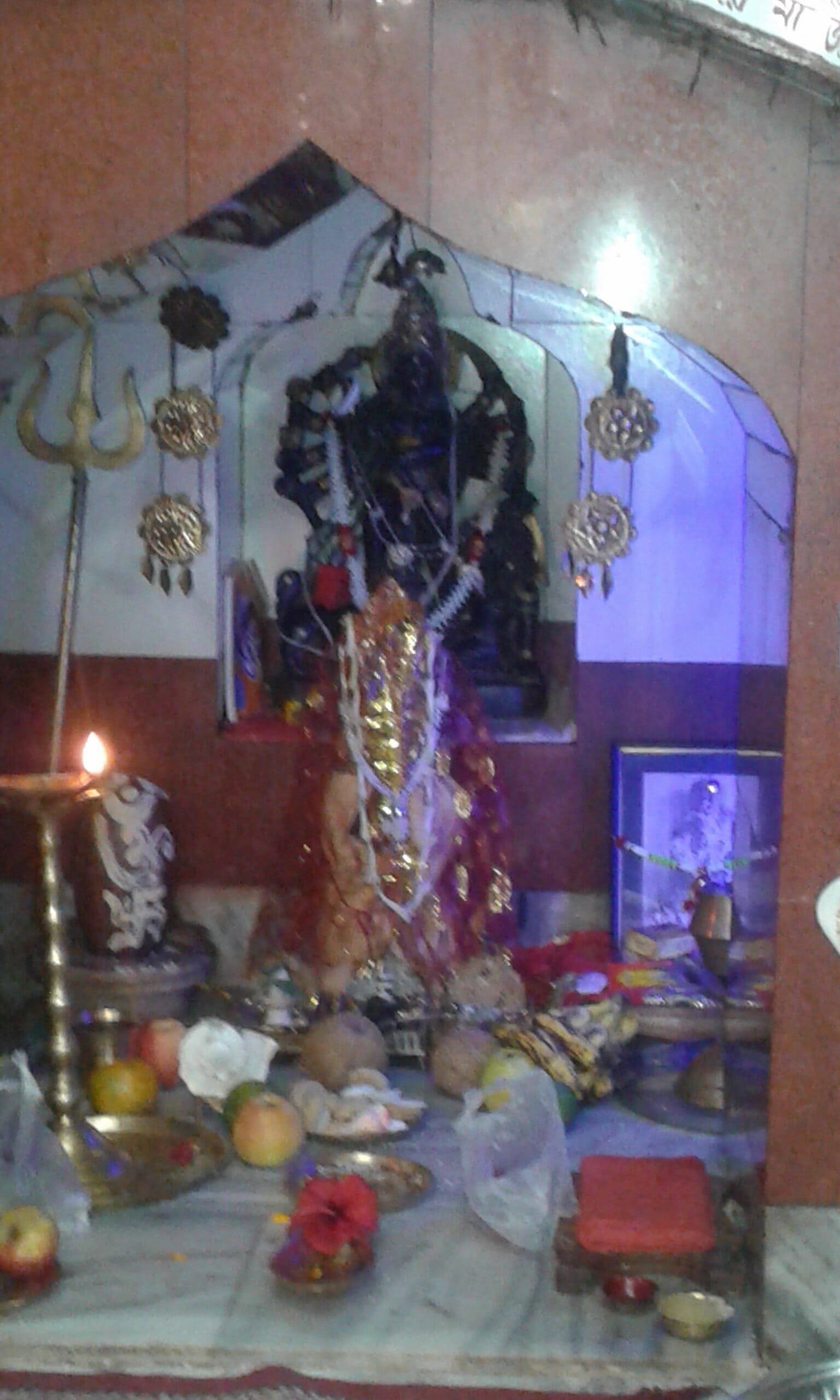
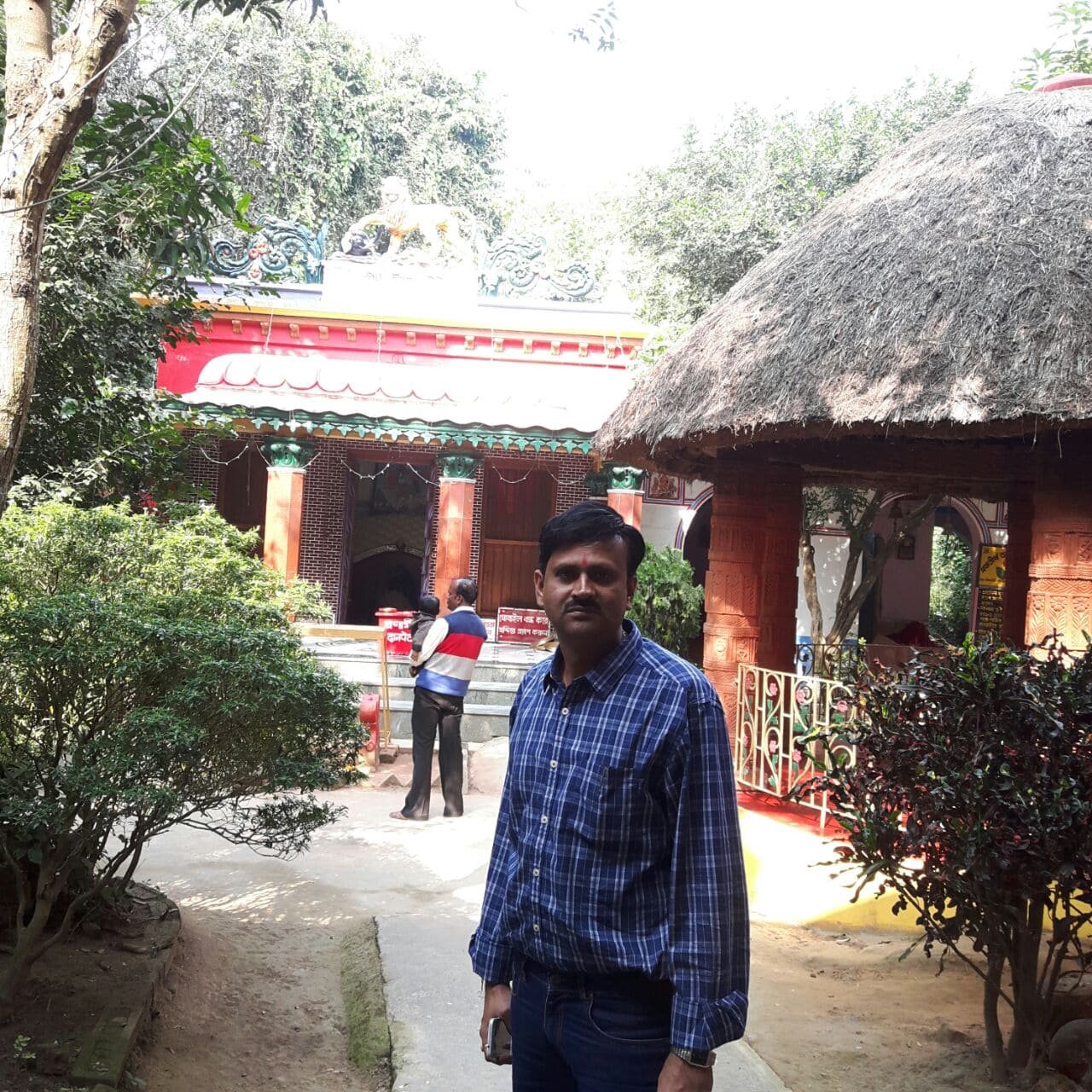
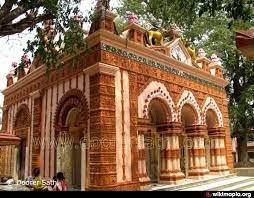
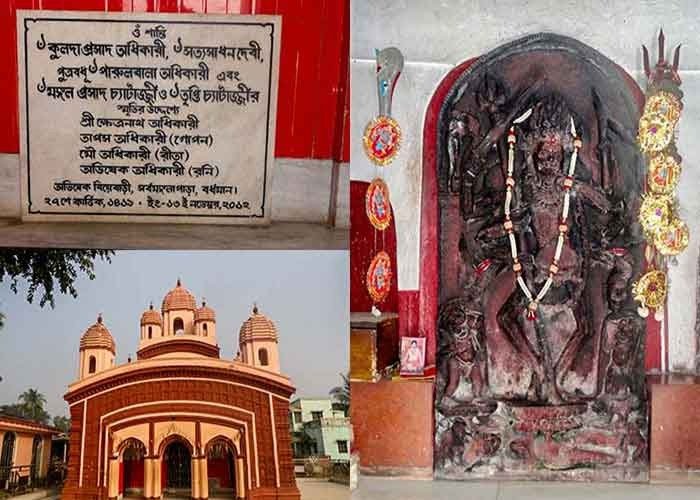
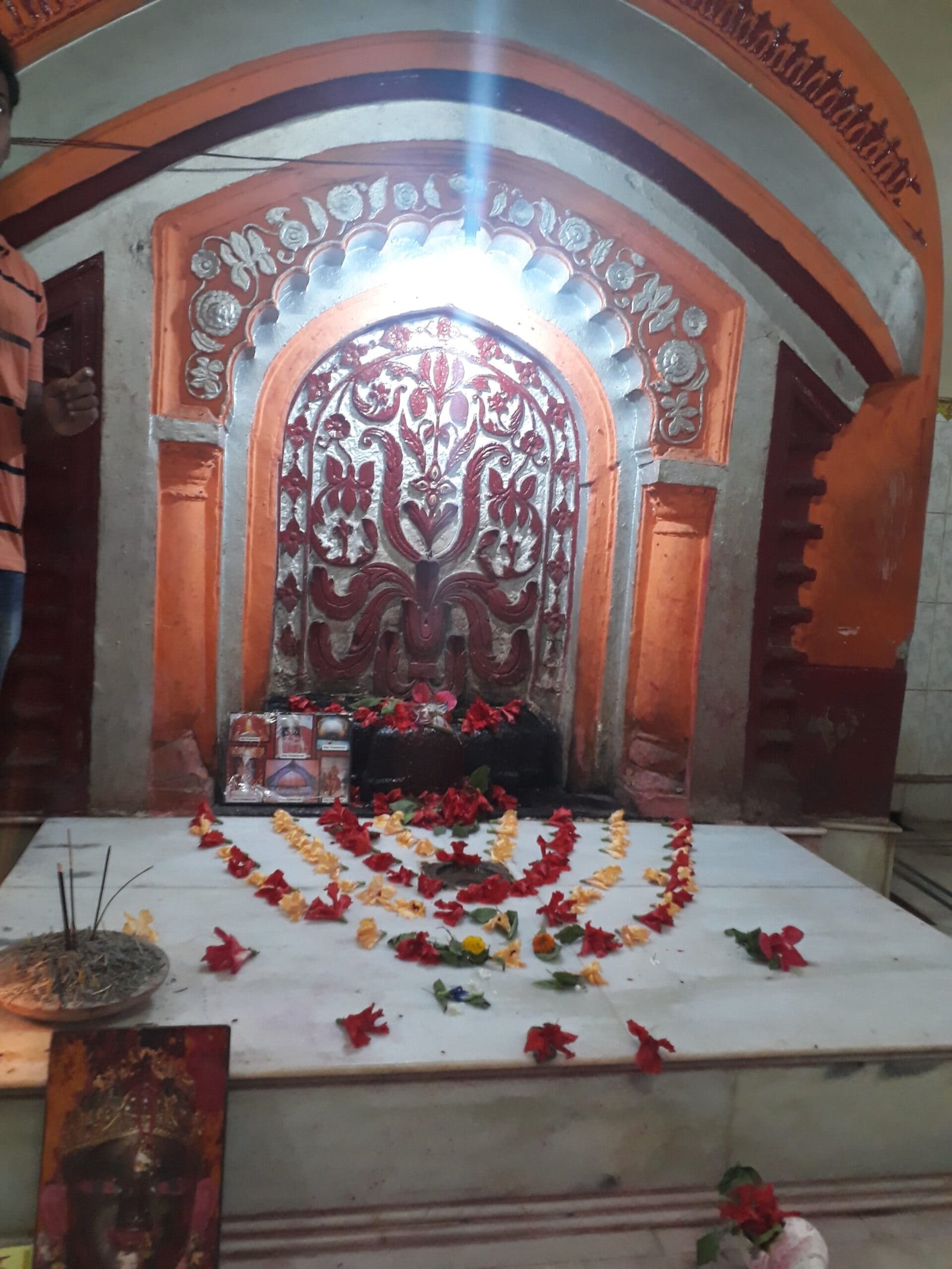
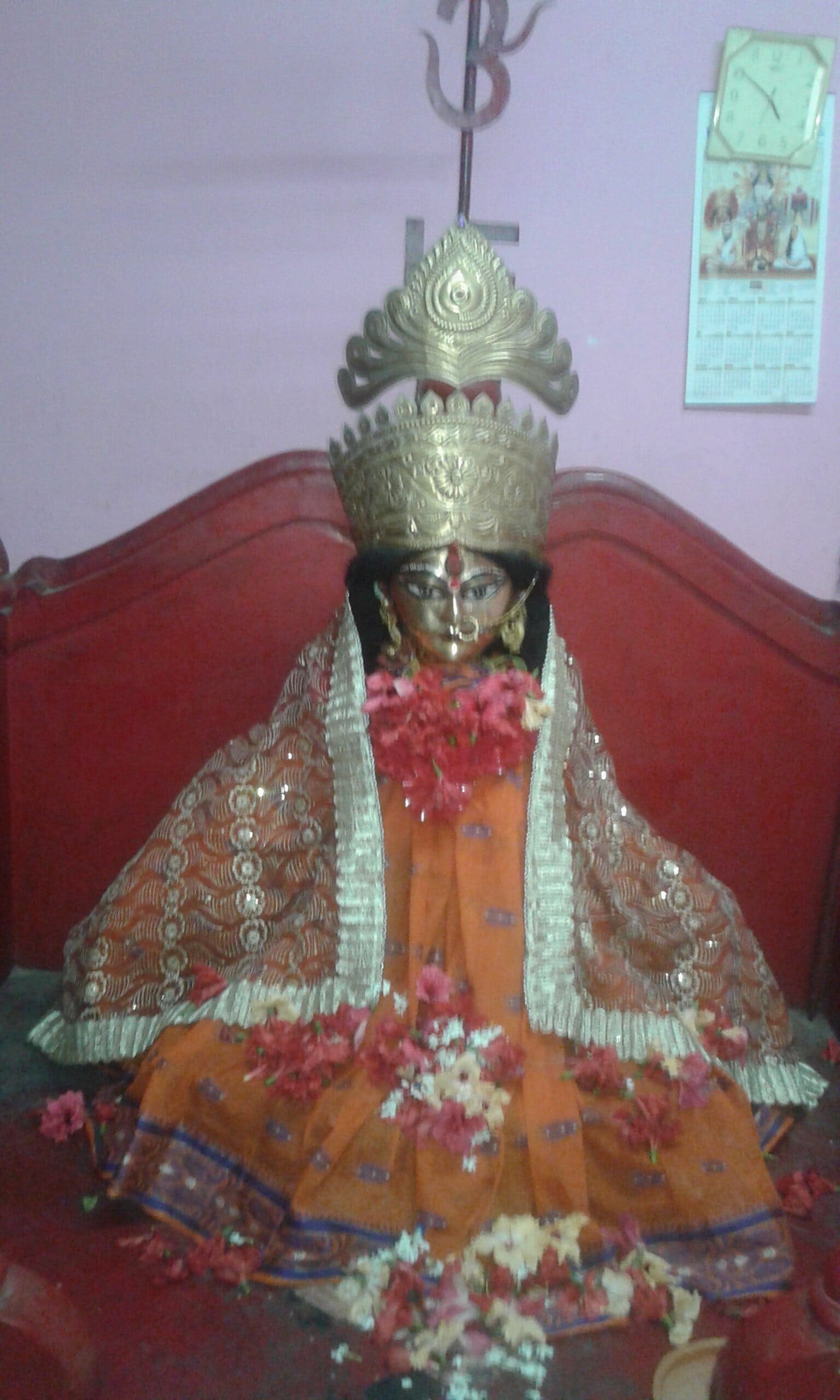
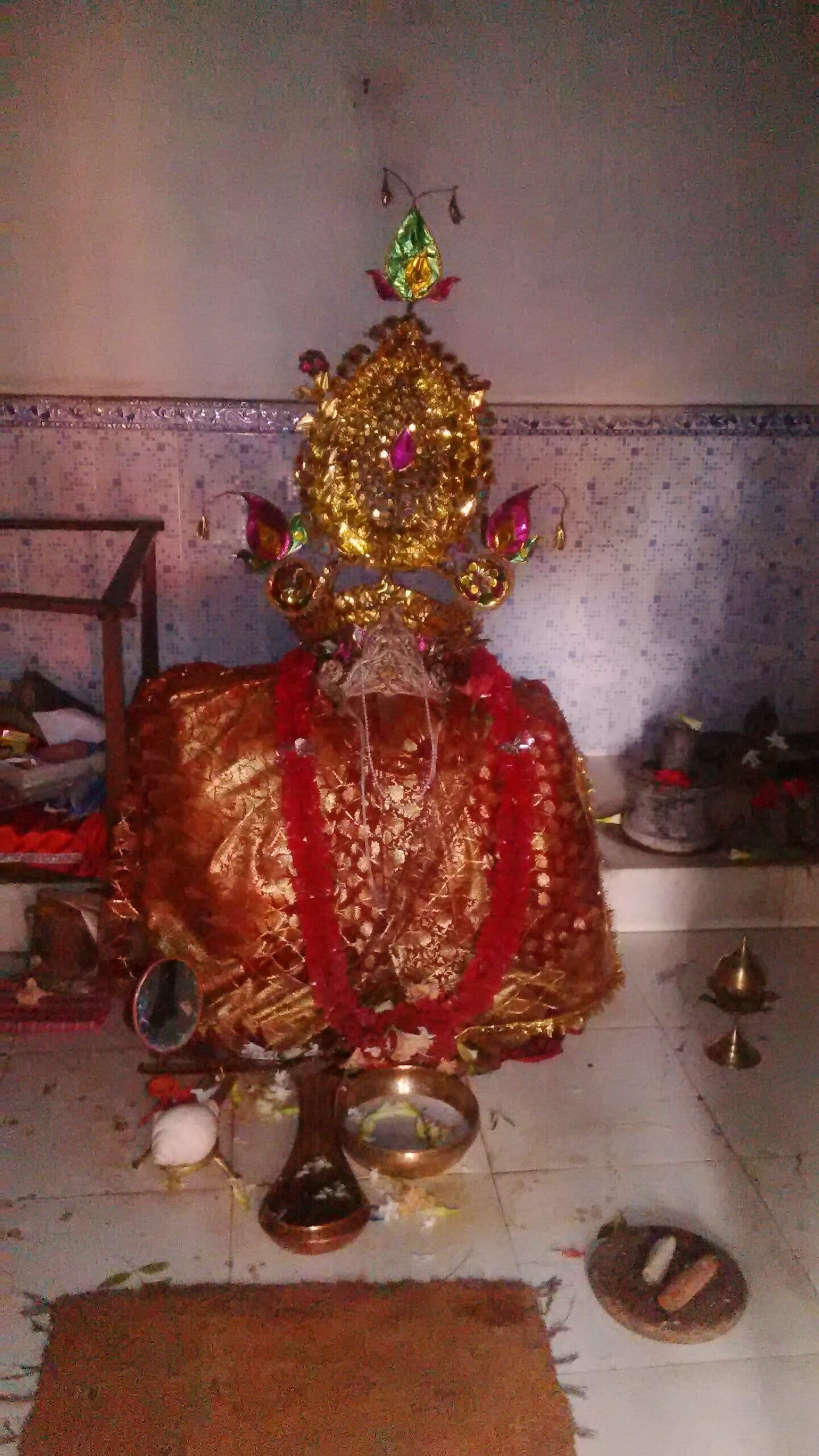
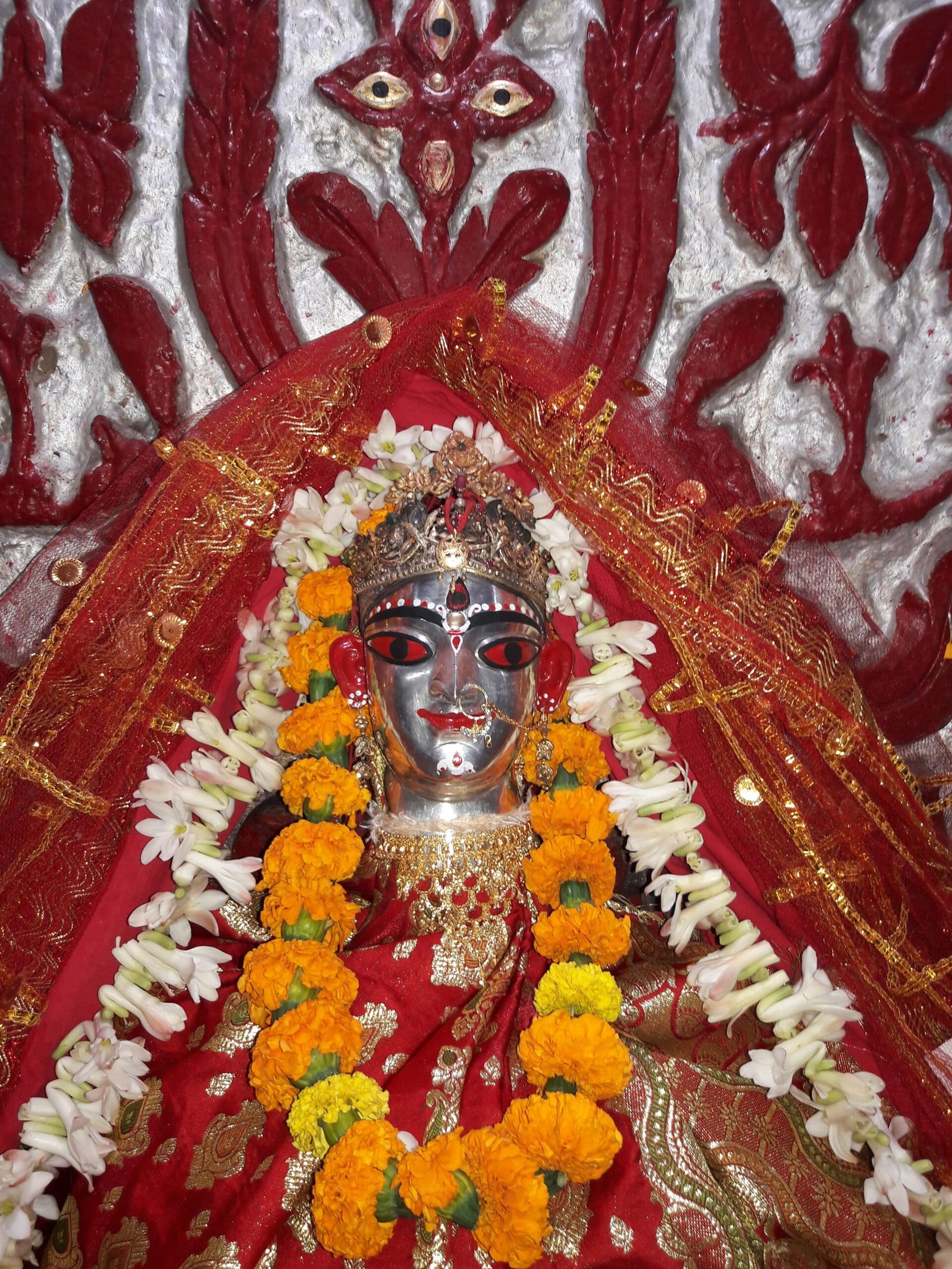
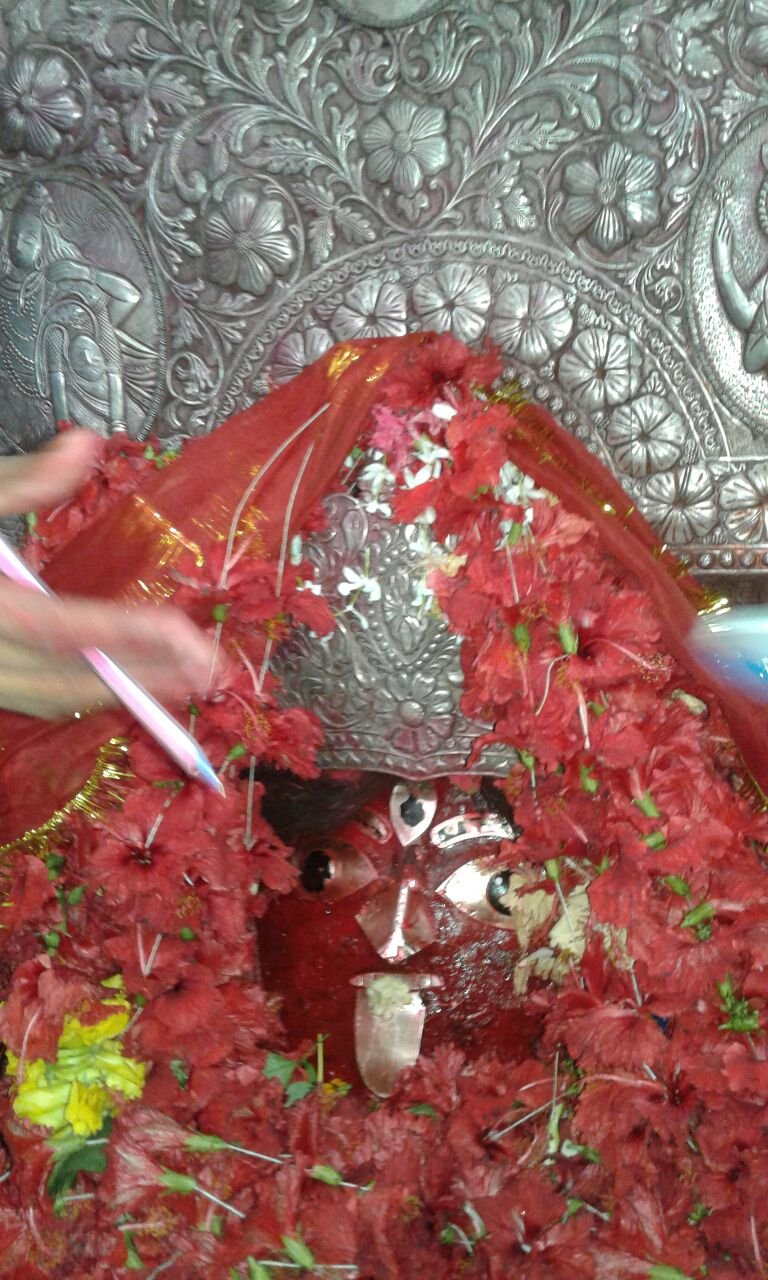
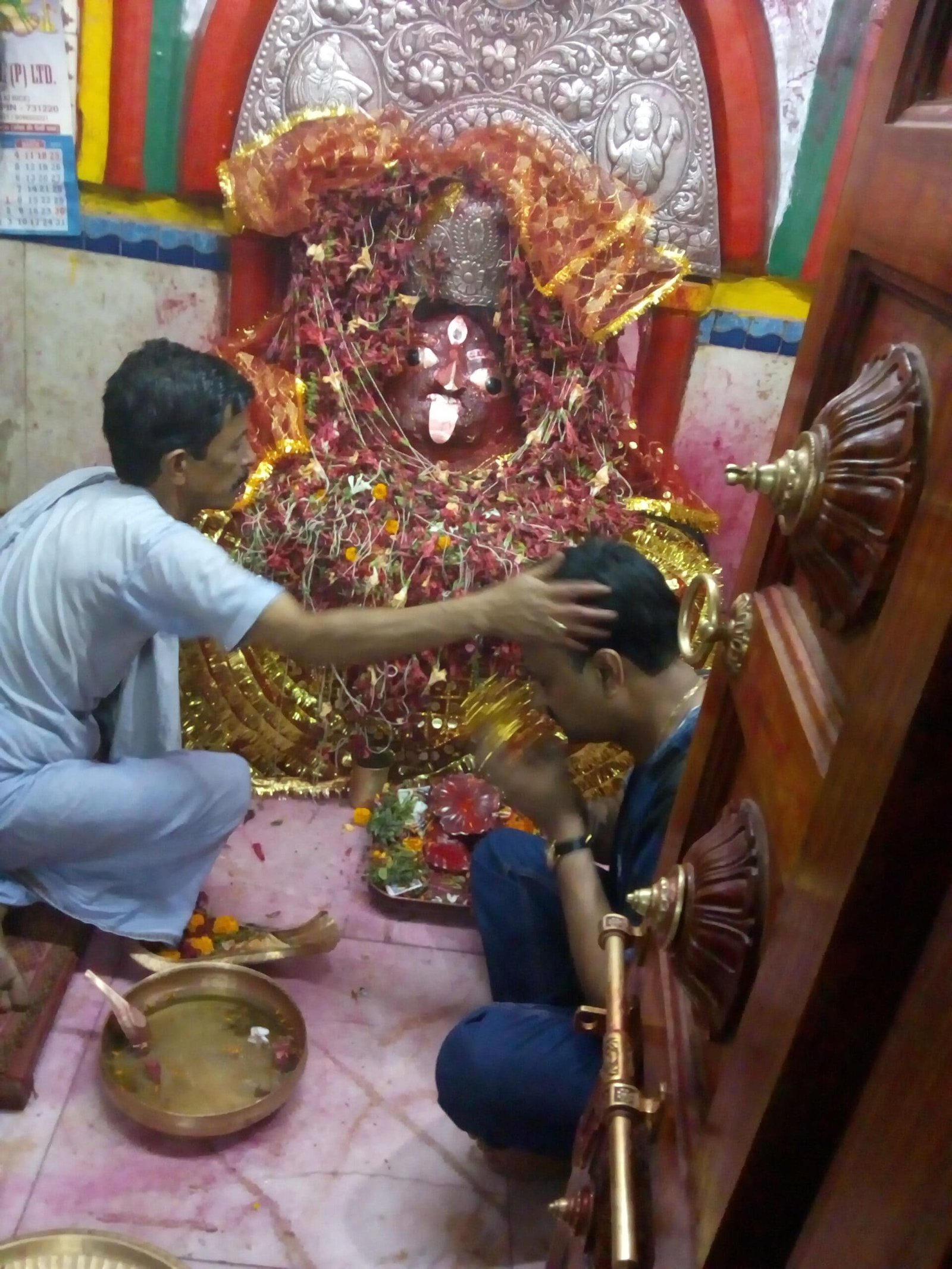
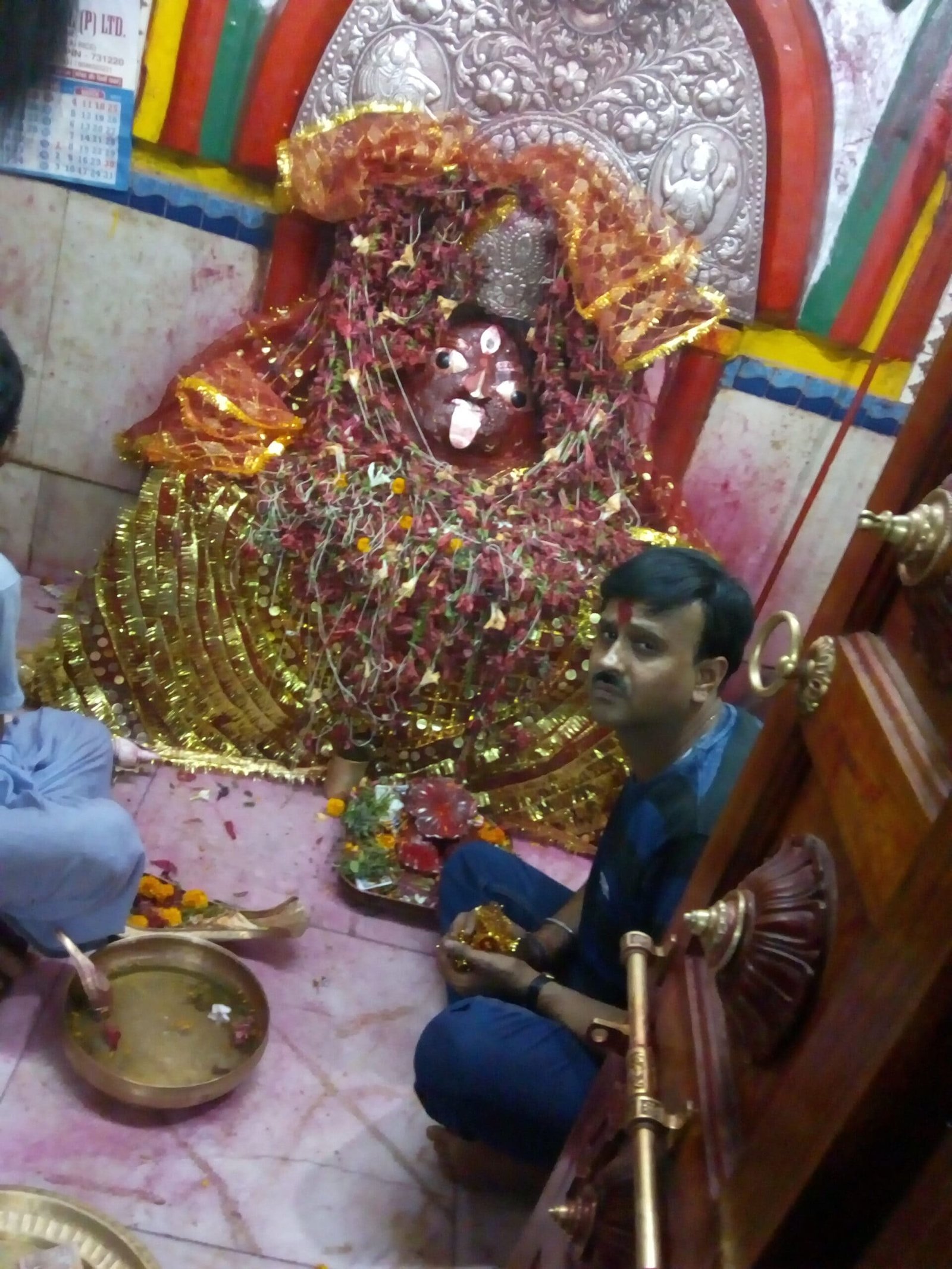
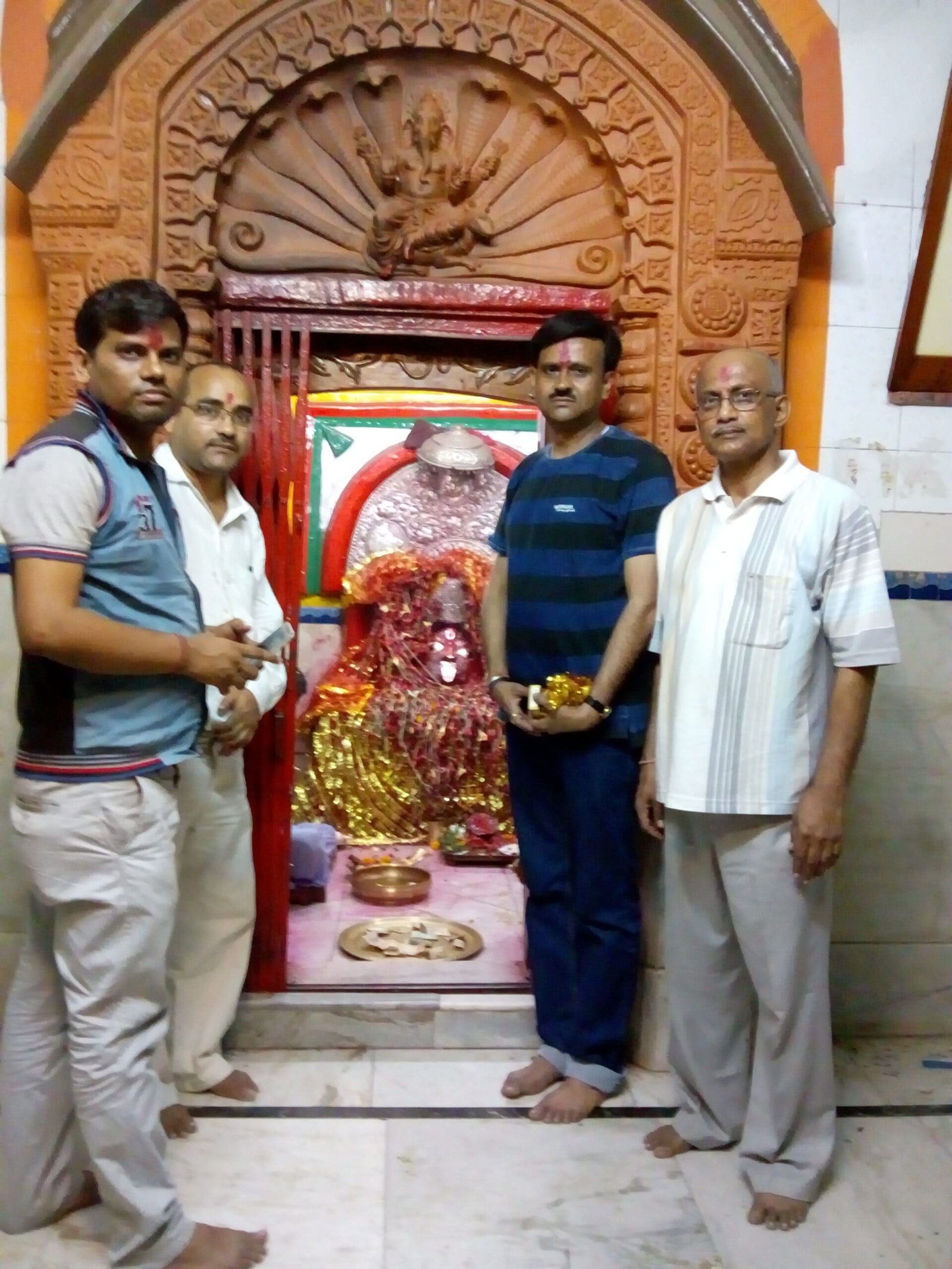
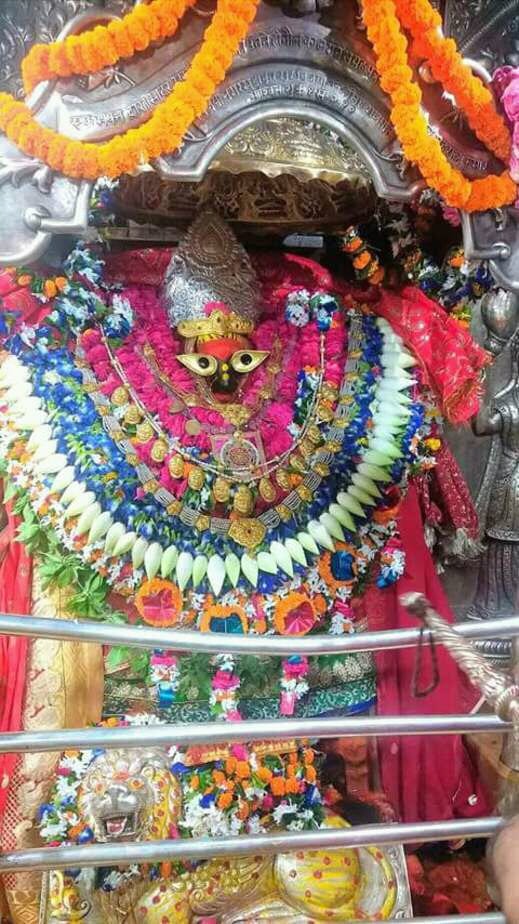
1. Maa Attahas (Katwa, Purba Bardhaman , West Bengal)
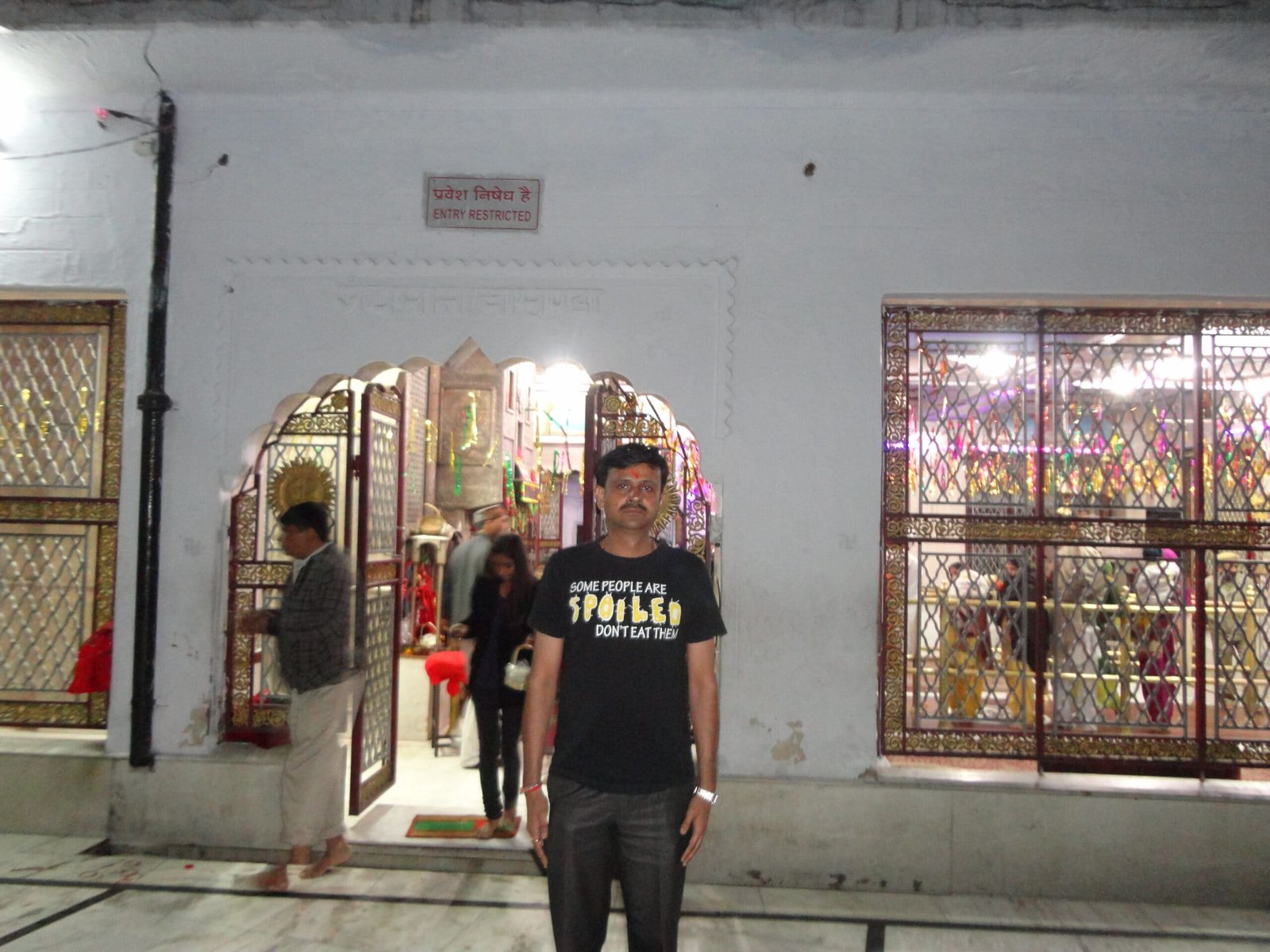
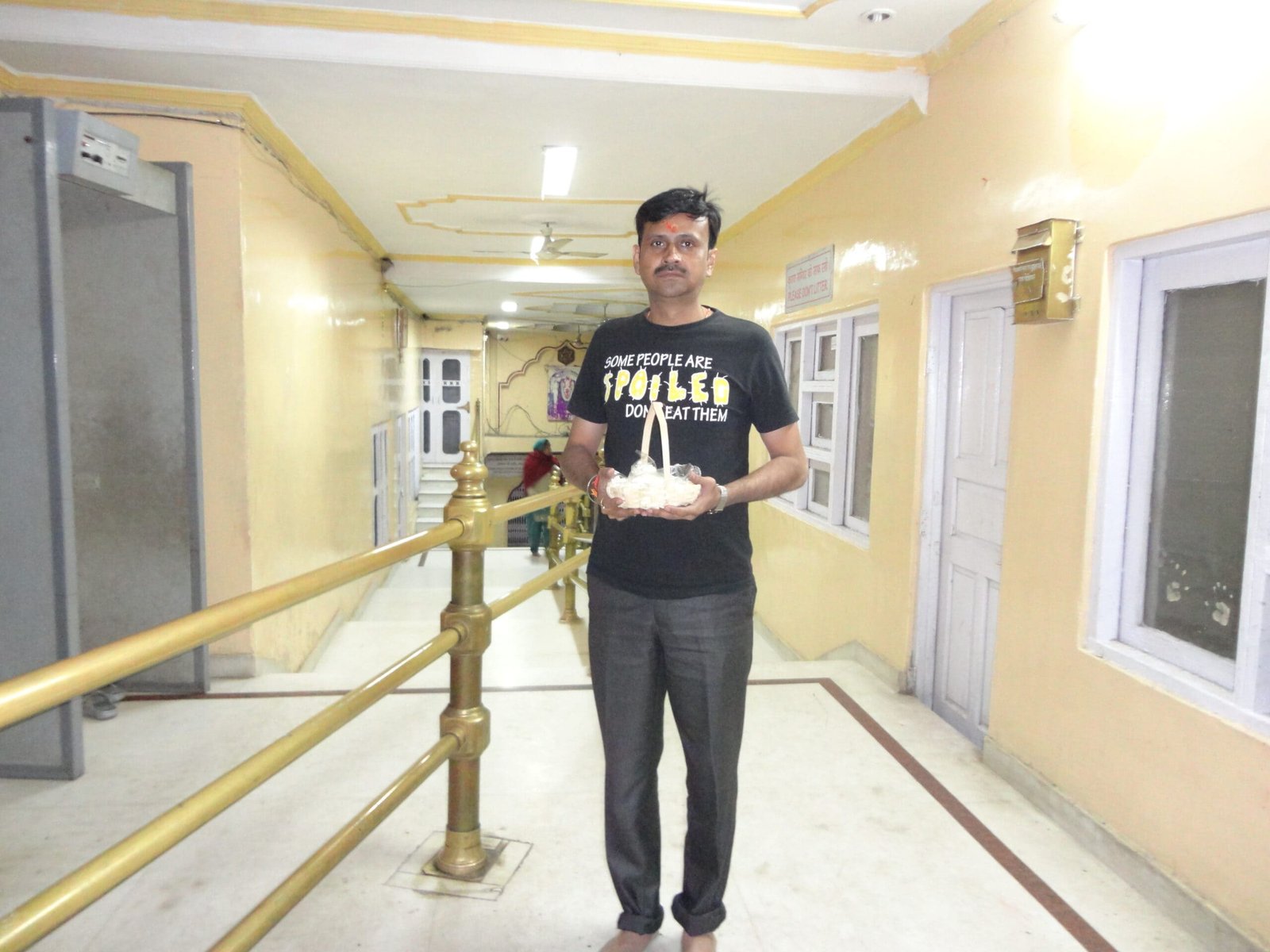
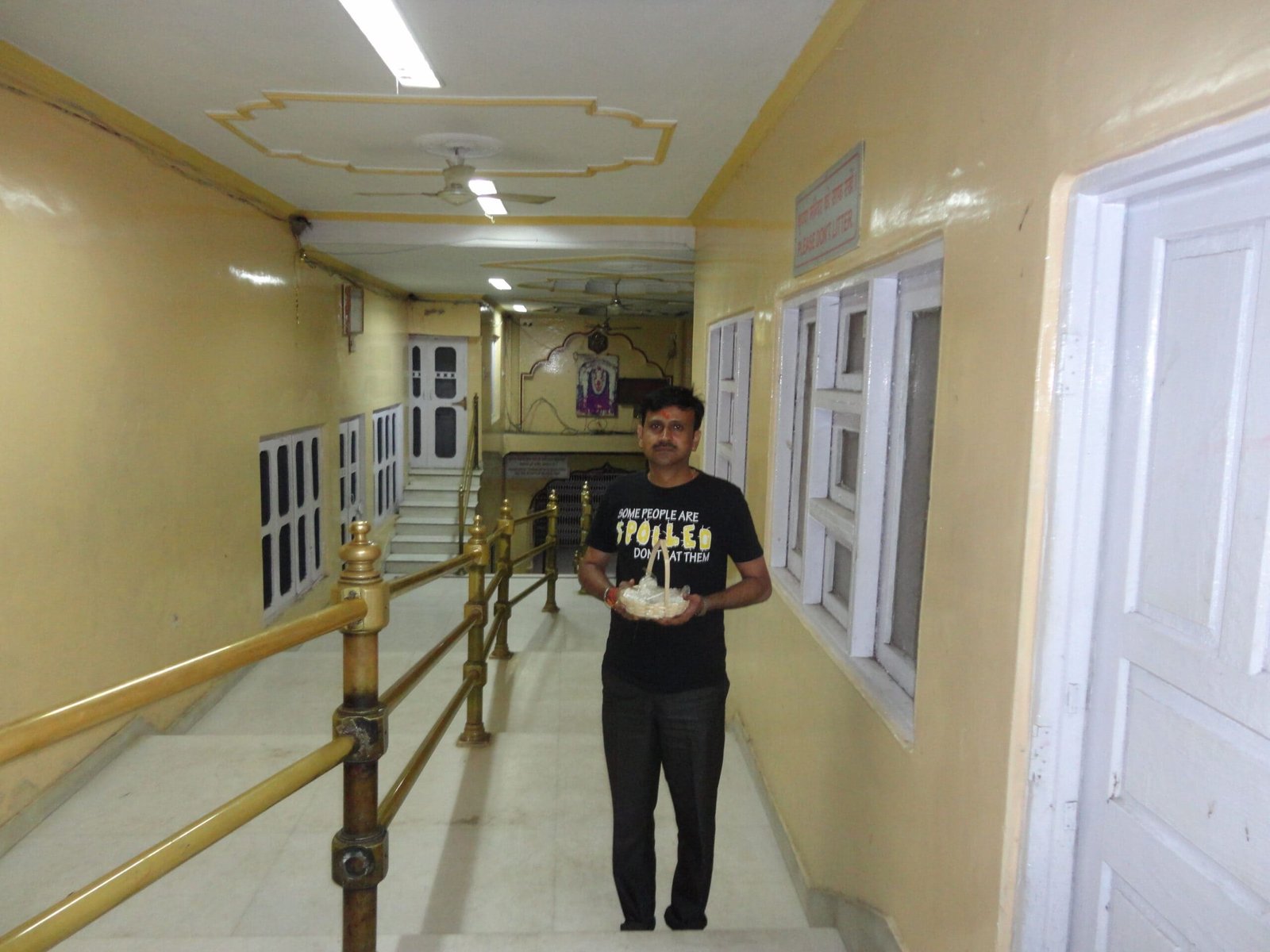
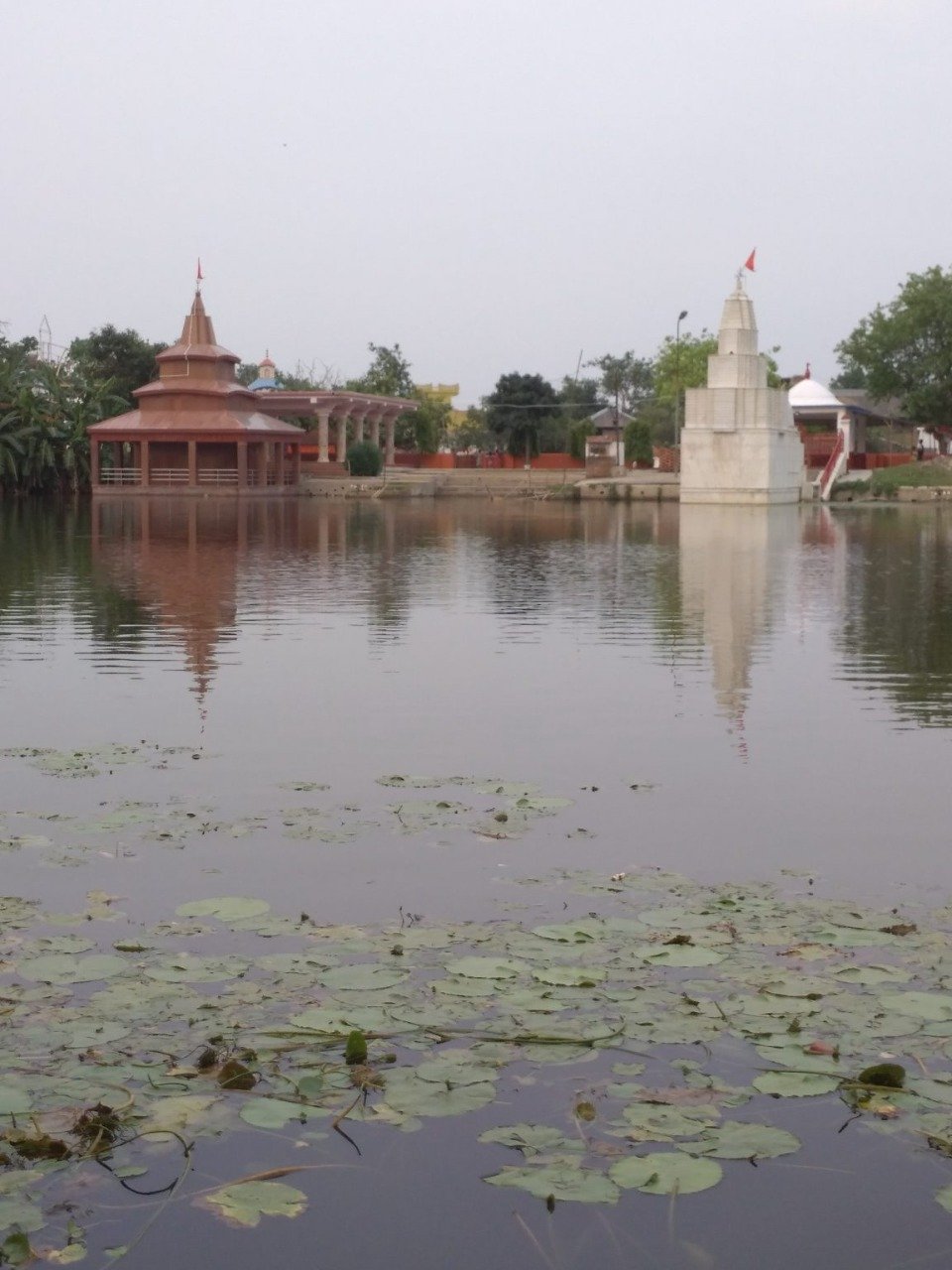
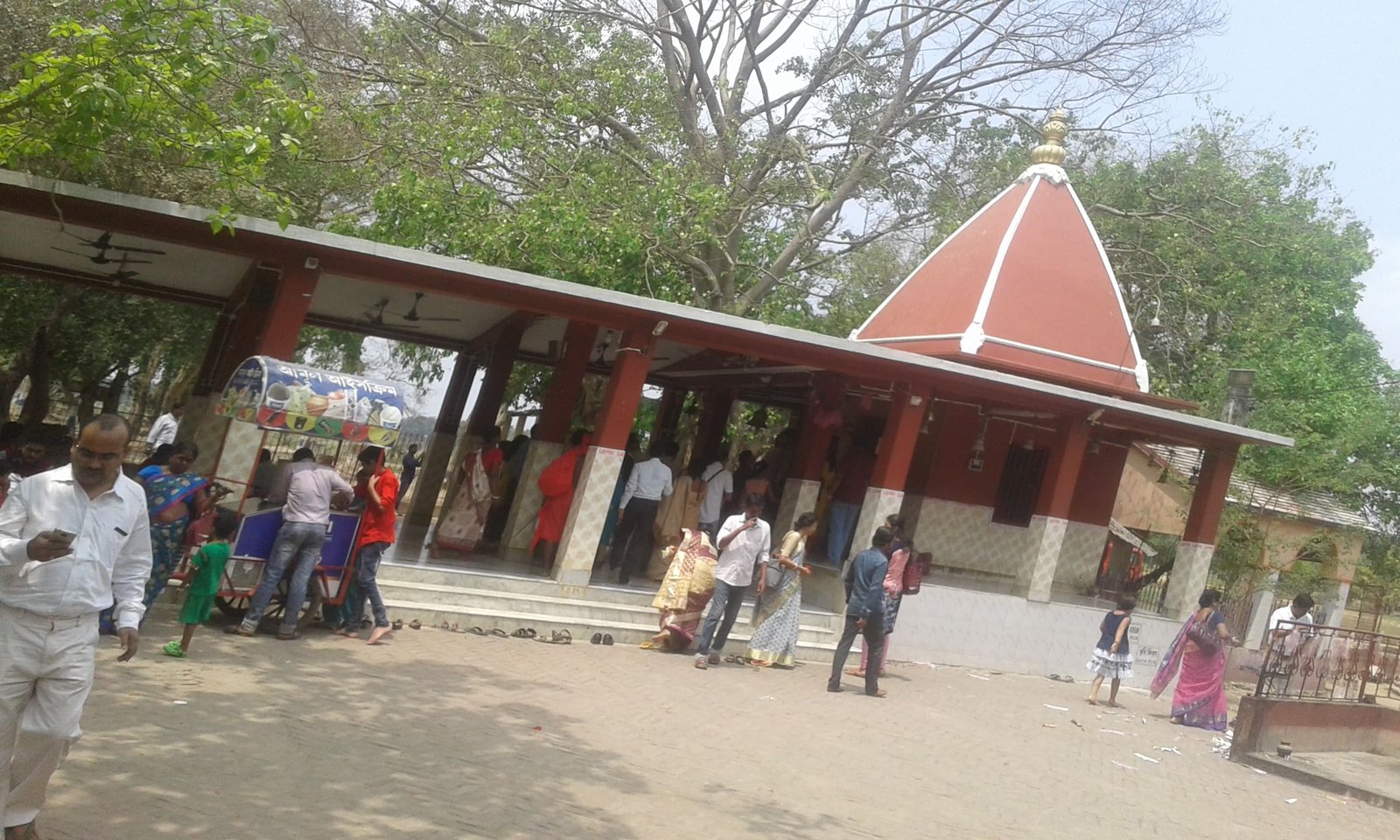
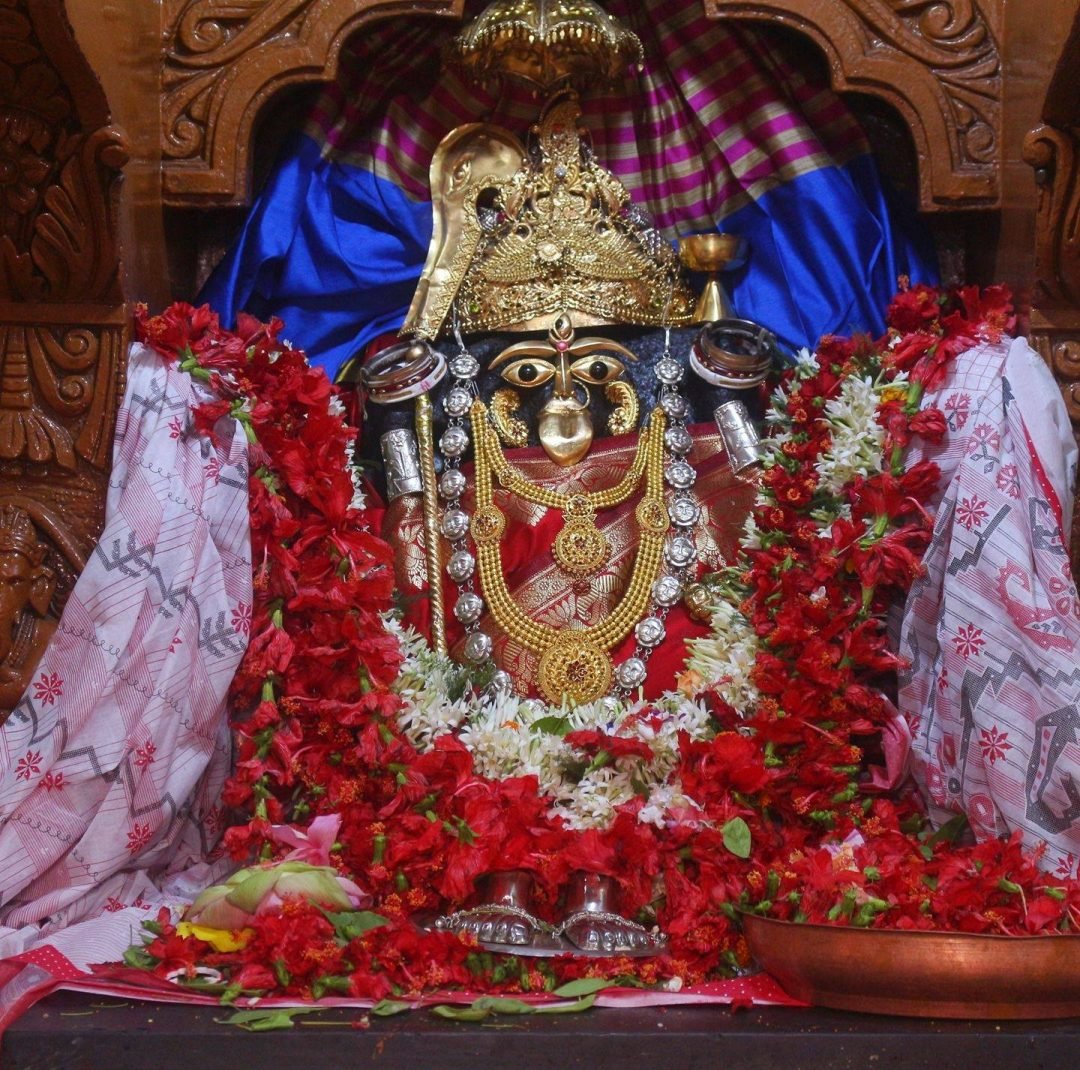
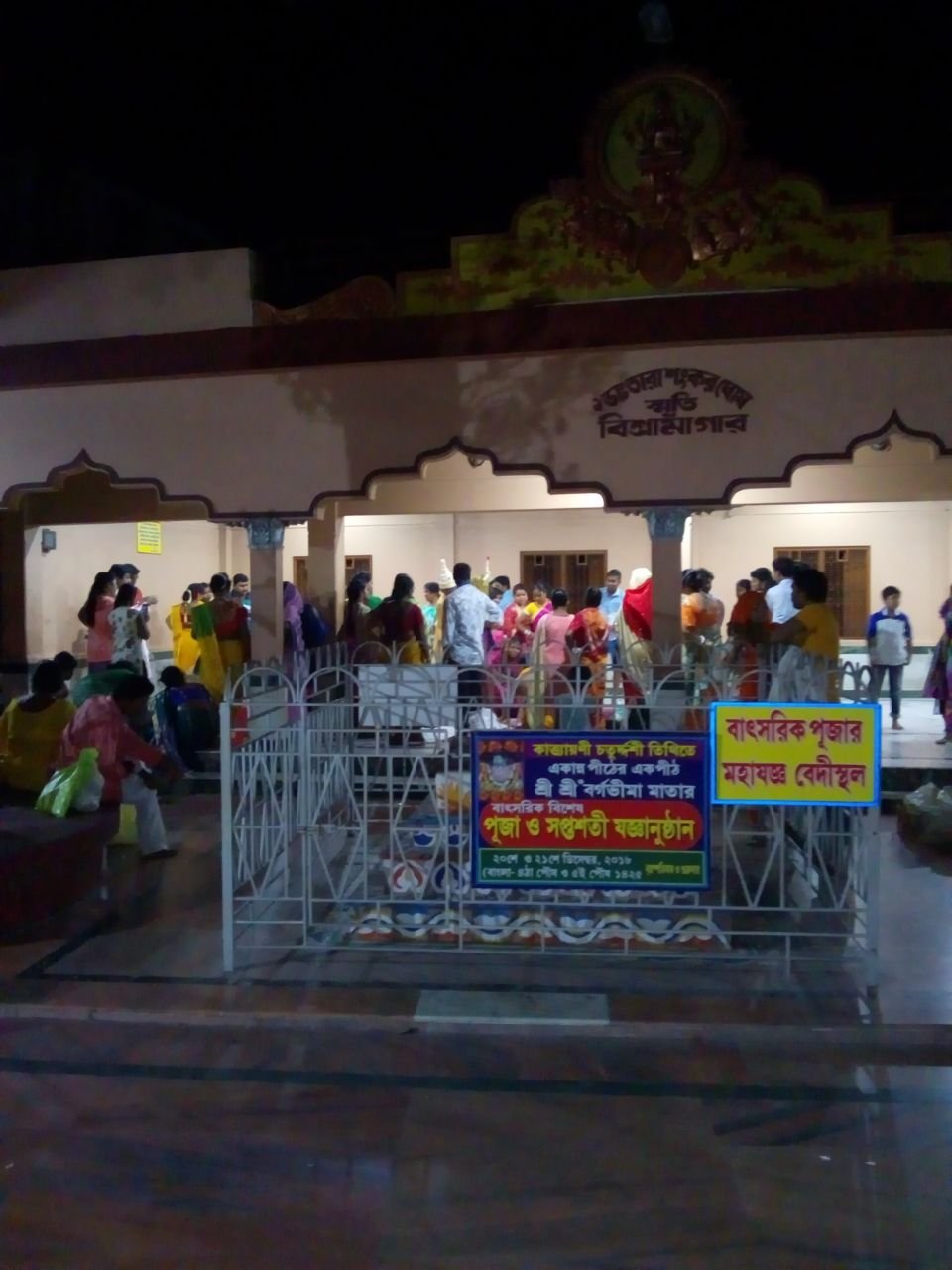
The word Atta, as well as Hasa, originates from the Sanskrit language which definition is ‘Severe loud laughter’. Attahas Temple is one of the main religious places for Hindus due to the fact that It is one of the 51 Shakti Peeth. The temple of Attahas is also known as Fullora Attahas. This temple is located in ‘Labhpur’ of West Bengal, India. The temple lies in the Nirol Gram Panchayat in the Katwa subdivision of the Purba Bardhhaman district of West Bengal. It is about 5 km from the Nirol bus stand and beside the Ishani river (locally known as Kandor River). The word Atta, as well as Hasa, originates from the Sanskrit language which definition is ‘Severe loud laughter’.
Attahas Shakti Peeth is additionally referred to as Phulara Devi Temple. This temple is a prominent area for the people of the Shaktism (Goddess is worshiped) of Hindu religious beliefs. Attahas Shaktipeeth Nature Beauty is one-of-a-kind. This place might additionally be an optimal weekend break holiday location for those that like nature. This temple lies on the banks of the river Ishani, located between the woodland with different varieties of birds and trees.
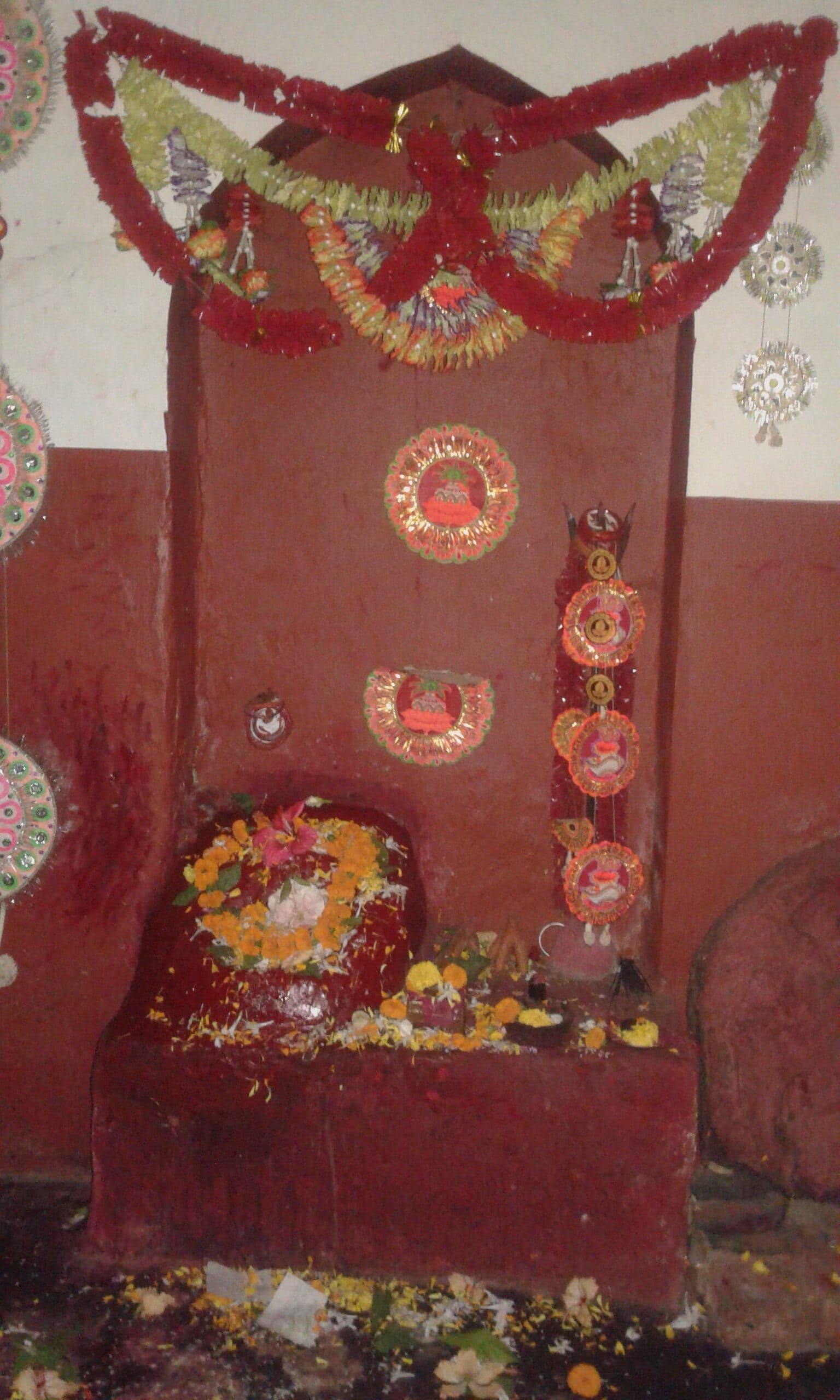
It is thought that the statue of the temple was in the temple till 1915. After that, the original Idol was kept in the Museum of ‘Bangiya Sahitya Parishad’. This statue was constructed from metal. After the re-installation of the statue, the idol was robbed. Devi Sati gave her life by jumping into the fire of Havan organized by her father King Daksheshwara. When Lord Shiva was running around the planet carrying her body that Lord Vishnu divided the body into 51 parts utilizing his Sudarshan chakra. Out of those 51 parts, from which the ‘Lower lip’ of Sati fell to this place. An inscription of Terracotta (Shila Lippi) was also discovered in the place. Research study on the script of this inscription is still taking place.
It is expected that if this inscription is correctly read, the proper details concerning the Attahas Temple can be obtained. The lower lip had actually after that take on the form of a stone as well as a shrine was erected around it. Shiva had designated Vishvesh as the Bhairav guarding the temple
How to Reach
This temple is located in ‘Labhpur’ of West Bengal, India. The temple lies in the Nirol Gram Panchayat in the Katwa subdivision of the Purba Bardhaman district of West Bengal. It is about 5 km from the Nirol bus stand and beside the Ishani river (locally known as Kandor River).
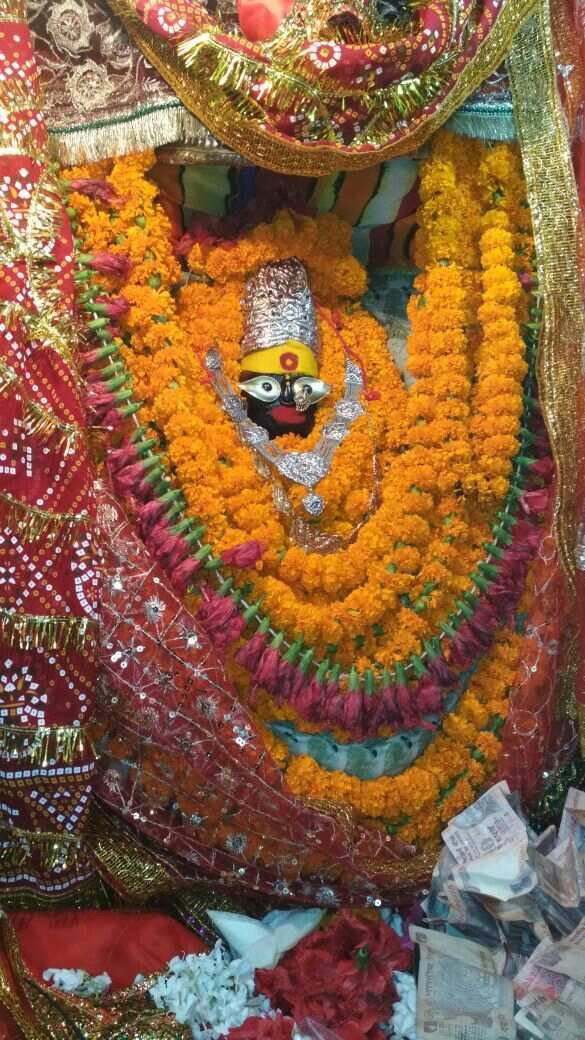
2. Maa Bahula (Ketugram ,Purba Bardhaman, West Bengal)
An awe-inspiring power of the Universe - "Bahula shakti peetha" is one of the historic places in India, where the divine power is worshipped as a Devi Shakti by Hindu devotees and daily offered with sweets and fruits in the morning. According to the Hindu mythology, it is whispered that Devi Sati’s “Left Arm” fell here. The main idols of this legendary divine place are Devi as “Bahula” (lavish) and Lord Shiva as “Bhiruk” (sarvasiddhidayak), worshipped here. The holy place is dedicated to Maa Durga and Lord Shiva.
Temple timing - From 6 a.m. to 10 p.m. daily
How to Reach
Bahula Devi Temple is located in Ketugram village, around 8 kms from Katwa Station, Burdwan district. The Temple is near the banks of Ajay River and from Kolkata the Temple is about 190 kms, from Burdwan district, it is about 56 kms. The Temple is connected by bus route also.
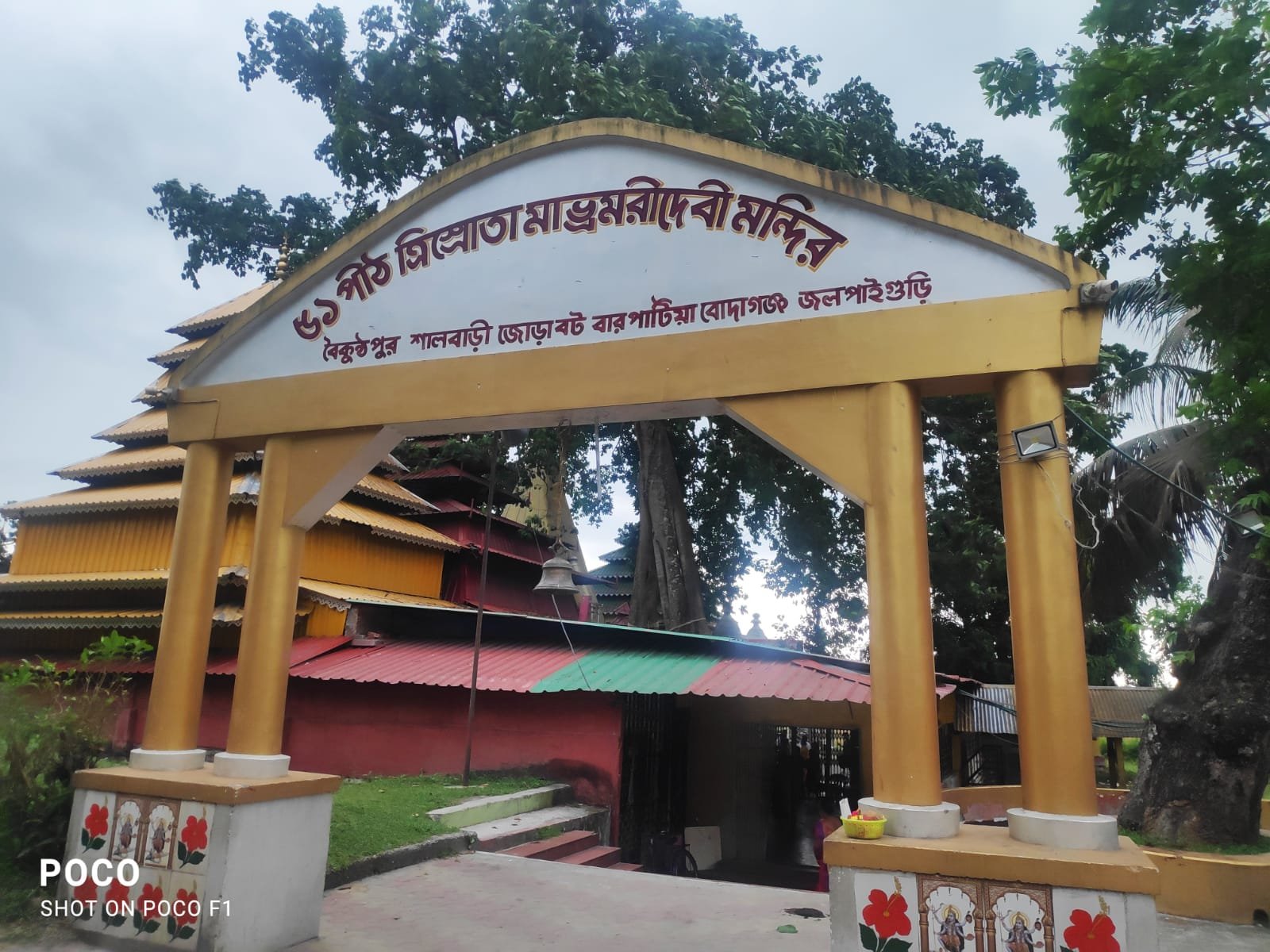
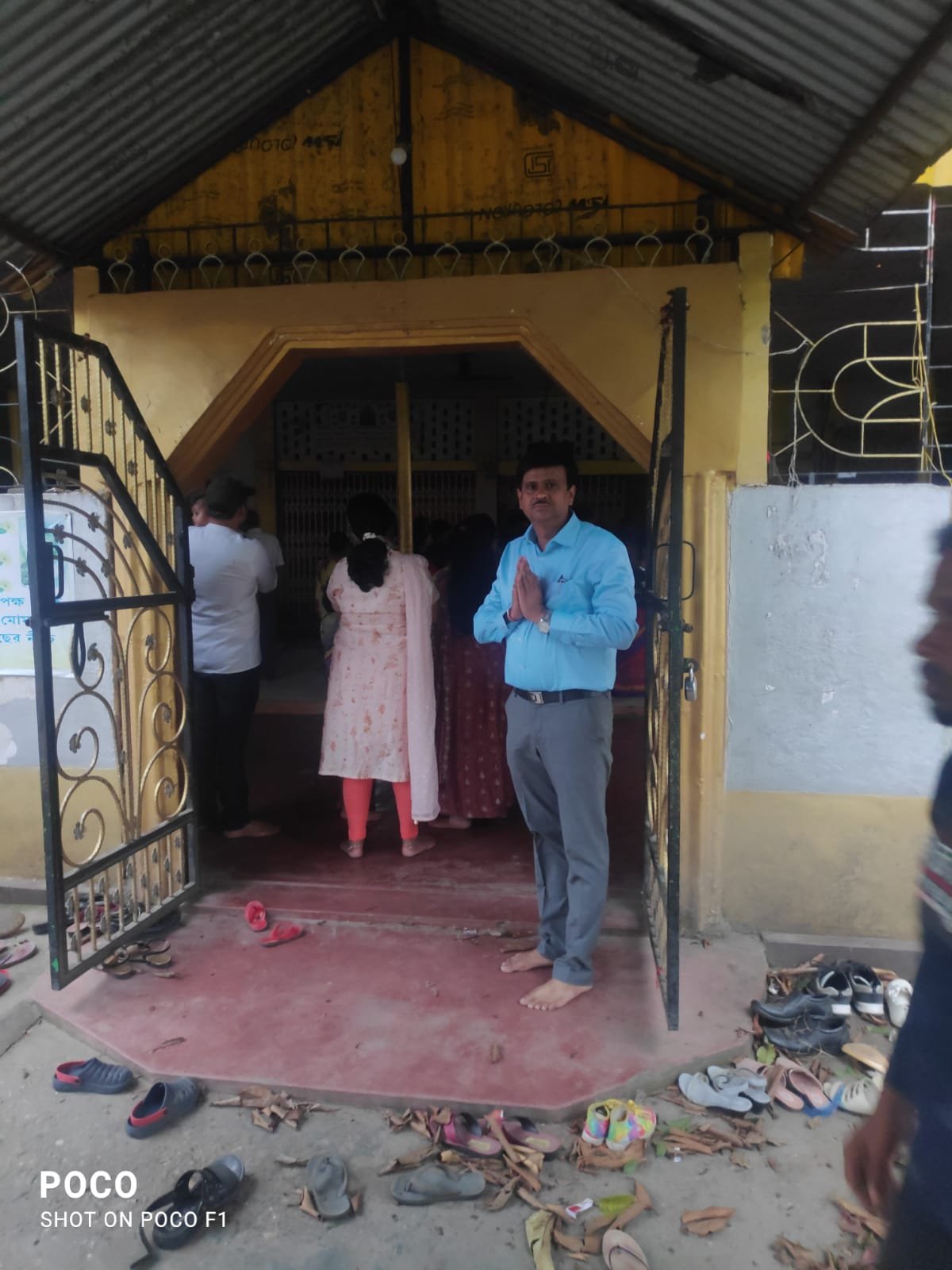
3. Maata Bhramari Devi Temple (Bodaganj,Jalpaiguri,West Bengal)
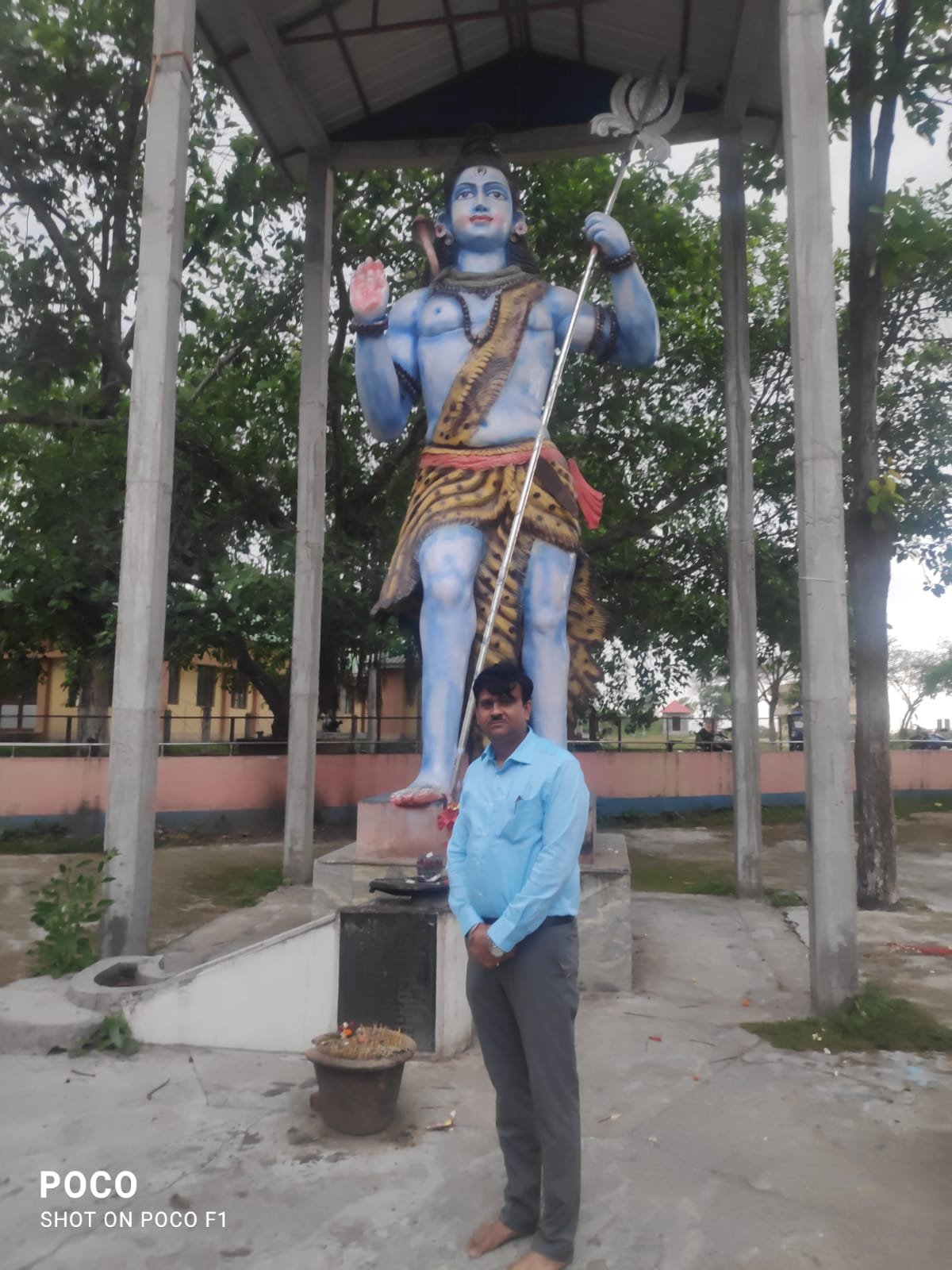
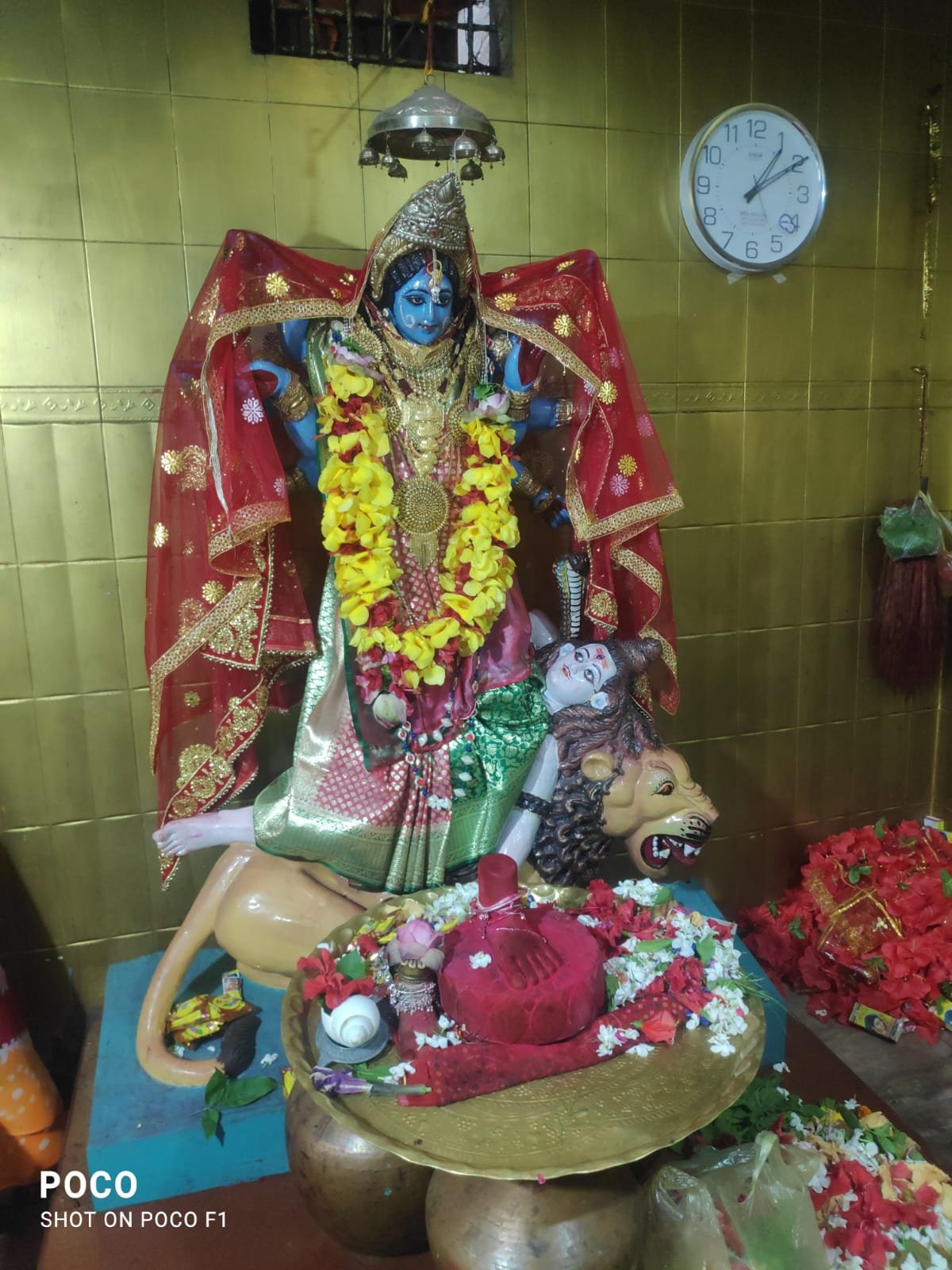
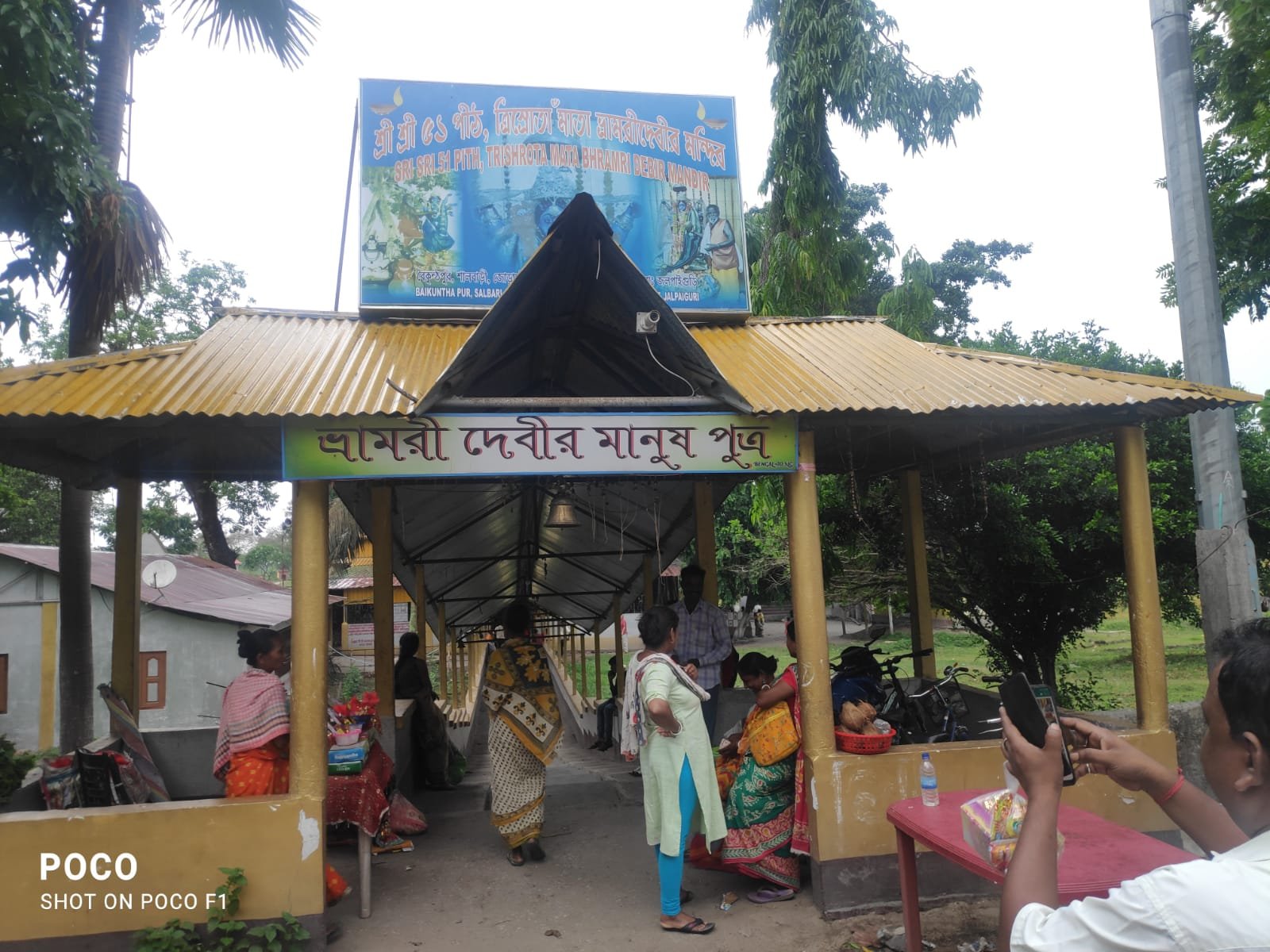
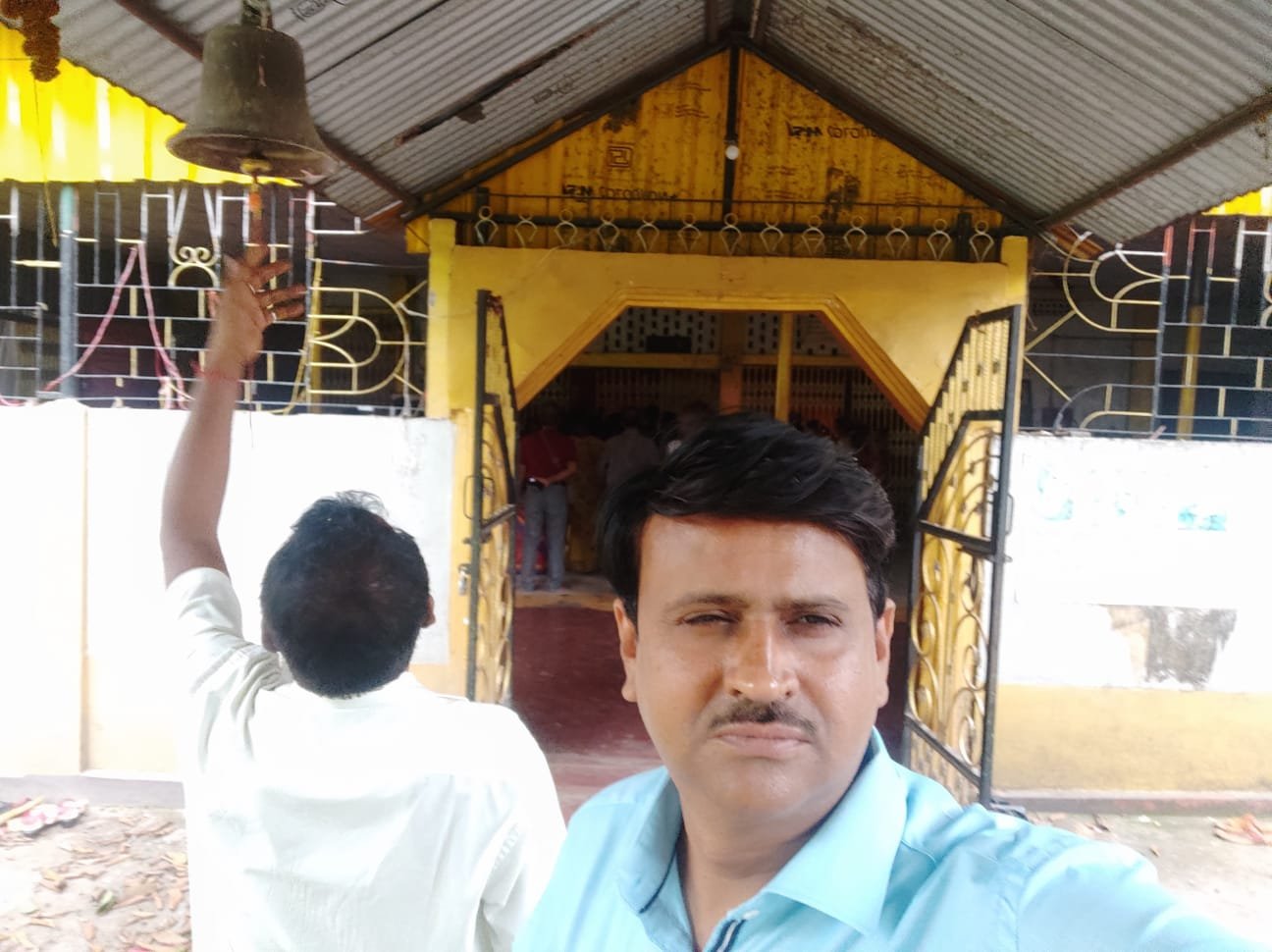
Locally known as Bhramari Devi in Jalpaiguri near a small village Boda on the bank of river Teesta or Tri-shrota (combination of three flows) mentioned in Puranas’ Bhramari Devi Temple is situated in Bodaganj, Jalpaiguri, West Bengal. It is one of the 51 Shakti Peethas. It is believed that the “Vama Pada” or the left leg of Devi Sati/ Durga fell at this place to form the Maa Bhramri Devi Mandir (Bhramri Devi Temple. The area is close to Teesta river and there are places around Bodaganj that are attractive for nature lovers as well. Shikarpur Tea garden nearby is also a good place to spend some time Nestled beside the green lush Baikunthapur Forest, Bodaganj is a small village popular for Bhramari Devi Temple. Just about 40 km distance away from the main town of Siliguri, Bodaganj holds a past with rich historical significance. According to the ancient legend, Decoit Queen Devi Choudhurani and her master Bhabani Pathak ruled the area and surrounding forest. Apart from its past full of history, there are some of the attractions in and around the village which make it a worth visiting tourist destination. Bhramari Devi Temple dedicated to Goddess Sati is one of the major attractions of Bodaganj. It is one of the 51 piths of the Shakti Sect and being so, it is considered to be one of the holiest sites among the Hindus. According to Hindu Mythology, the leg of Devi Sati has fallen at this very site neat Teesta river. Because of its unique location near the Teesta River, the temple is also called Tristrota Shakti Peeth. Thousands of devotees visit this Bodaganj Bhramari Devi Temple every year to worship the goddess and seek blessings from her. Apart from this beautiful temple of Bhramari Devi, there is a huge statue of Lord Shiva at the entrance of the mandir. There is also a pond near the temple and the surrounding forested area looks truly captivating. Just about 31 km distance away from Bodaganj, Teesta Barrage is a popular tourist site nearby. This Barrage attracts countless migratory birds coming from Central Asia and Ladakh. The place is truly the avid bird watcher's paradise. The mythical Baikunthapur Forest is also quite adjacent to the village. The green lush vegetation and the complete serenity of nature here will make you spellbound for sure. Shikarpur Tea Garden is another tourist attraction near to this village. The great view of the vast stretch of Tea Gardens, Bodagonj Forest Bungalow makes this tea estate worth visiting.
B. Also known as Maa Malai Chandi Temple at Amta, Howrah.How to Reach
By Air: Bhramari Devi Temple is around 47 km distance away from Bagdogra Airport. This popular airport is connected with most of the major airports in India. From the airport, taxis are available to reach the village.
By Road: Jalpaiguri Bus Stand is just a 20 km distance away from the temple. Maynaguri is around 32km distance away whereas Siliguri is about 38 km distance away from the temple. Cars and even buses are available from these places.
By Road: Jalpaiguri Bus Stand is just a 20 km distance away from the temple. Maynaguri is around 32km distance away whereas Siliguri is about 38 km distance away from the temple. Cars and even buses are available from these places.
By Train: The temple is a 20 km distance away from Jalpaiguri Railway Station and 31 km away from New Jalpaiguri Junction respectively. Board a train to any of these railway stations and from these railway stations, cab or taxis are available to hire.
4. Maa Bajreshwari (Kangra, Himanchal Pradesh)4
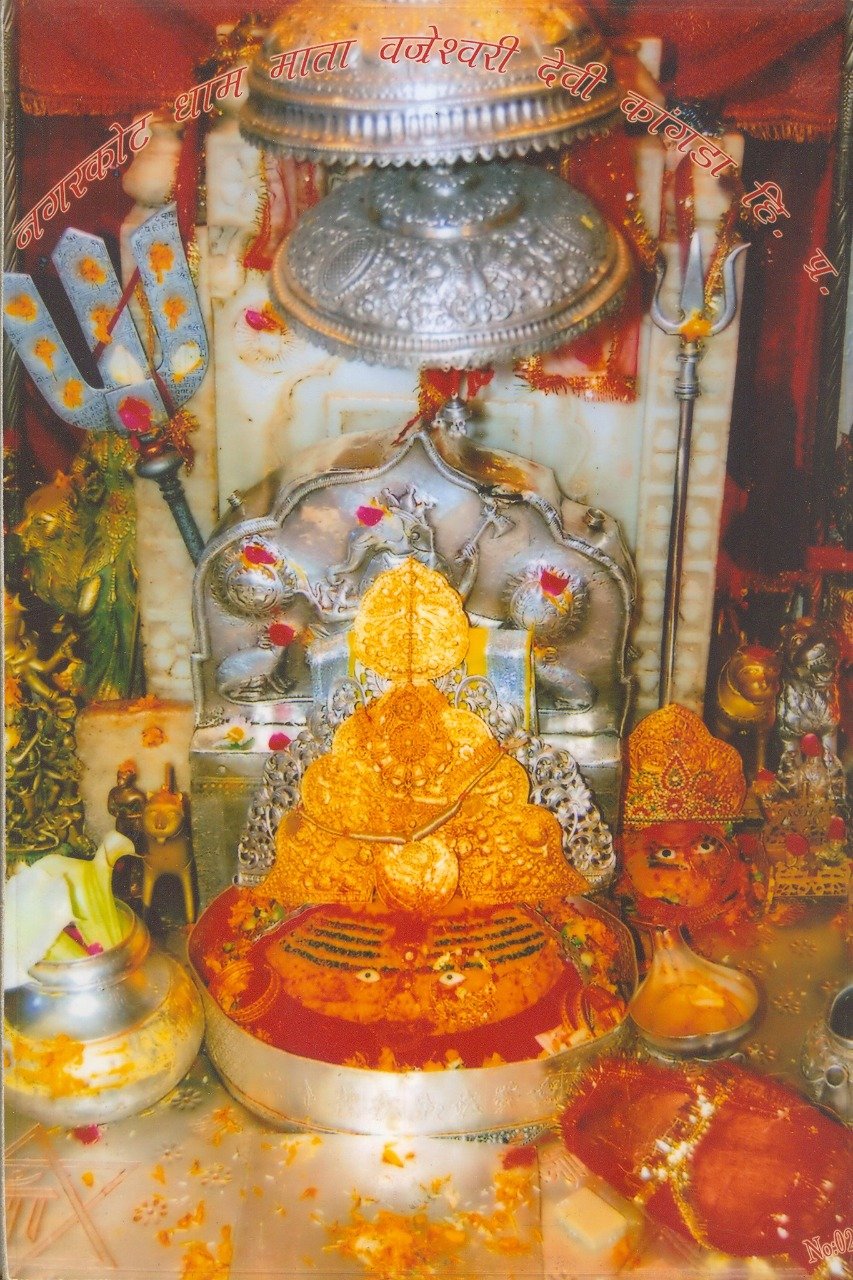
The Vajreshwari temple is located in the town of Kangra, Kangra district, Himachal Pradesh, India and is 3 km away from both the railway stations of Kangra Mandir and Kangra of Kangra City . Kangra Airport is just 9 kilometers from the temple . The Kangra Fort is situated nearby. Its location on a mountain near Shri Chamunda Devi Mandir, is 16 km from Nagarkot ( Kangra ) .
A legend says that after Goddess Sati sacrificed herself in the honor of Lord Shiva in her father’s Yagya. Shiva took her body on his shoulder and started Tandav. In order to stop him from destroying the world Lord Vishnu divided the body of Sati into 51 parts with his Chakra. The left breast of Sati fell at this spot, thus making it a Shakti Peetha. The original temple was built by the Pandavas at the time of Mahabharatha. Legend says that one day Pandavas saw Goddess Durga in their dream in which she told them that she is situated in the Nagarkot village and if they want themselves to be secure they should make a temple for her in that area otherwise they will be destroyed. That same night they made a magnificent temple for her in the Nagarkot village. This temple was looted a number of time by the Muslim invaders. Md Gaznavi looted this temple at least 5 times, in the past it used to contain tonnes of gold and many ghantas made of pure silver. In 1905 the temple was destroyed by a powerful earthquake and was subsequently rebuilt by the government.
The main gate entrance has a Nagarkhana or drum house and is built similar to the Bassein fort entrance. The temple is also surrounded by a stone wall like a fort.
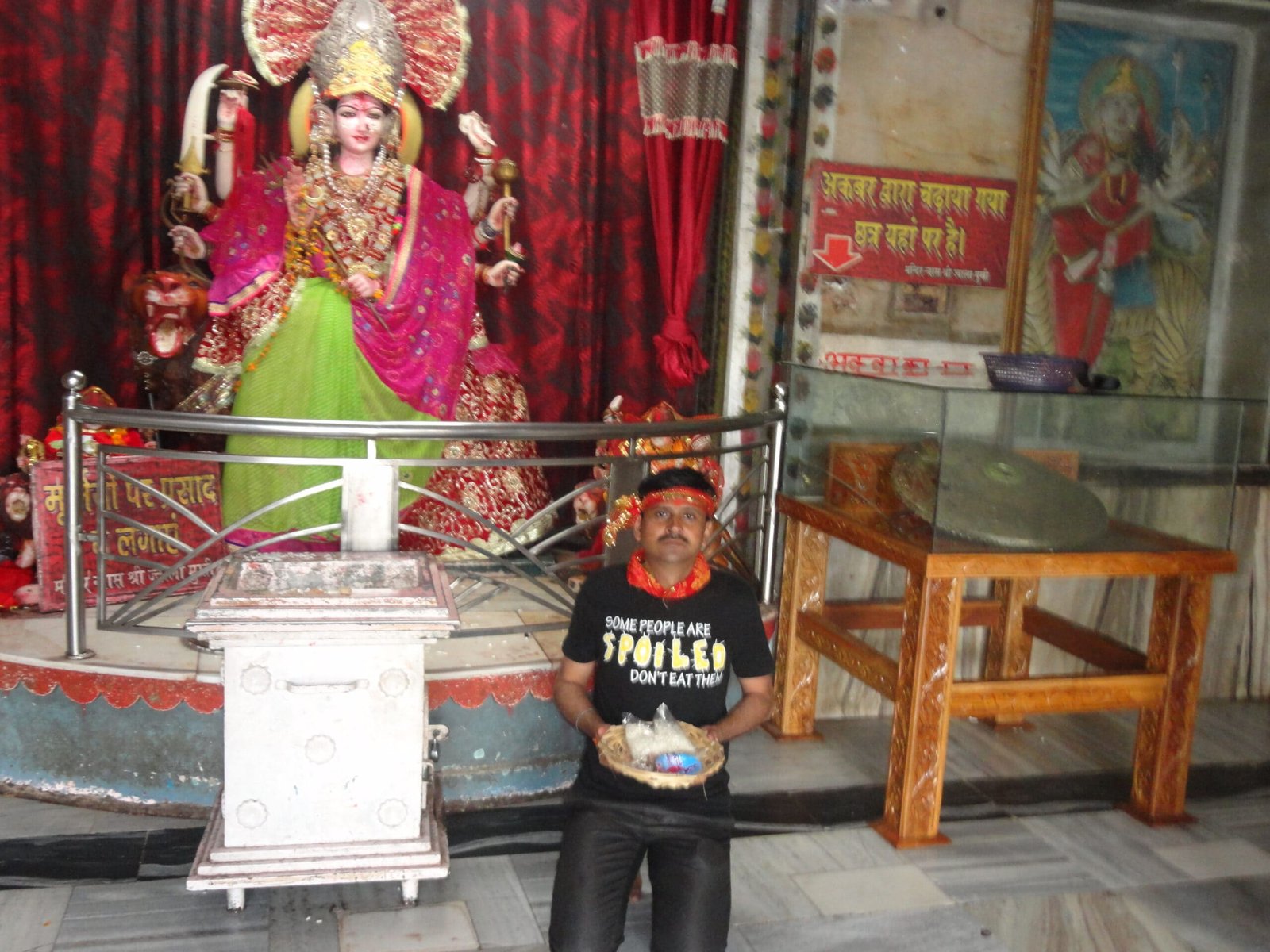
Inside the main area Goddess Bajreshvari is present in the form of Pindi. The temple also have a small temple of Bhairav. In front of the main temple an idol of Dhayanu Bhagat is also present. He had offered his head to the Goddess at the time of Akbar. The present structure has three tombs in it, which is unique in itself.
A huge fair in honour of Goddess Vajreshwari is held on Amavasya (new moon day) in the month of Chaitra. The fair commences on the 14th day of fortnight of waning moon of the month with ceremonial worship of the Goddess. On Amavasya at night, lamps are worshipped. On the next day, the first day of Hindu month Vaisakha, the ceremonial procession with a Palkhi (palanquin) carrying an image of the goddess, is taken out. Other festivals the temple celebrates are Shiva worship in Hindu month of Shravana; Kojagiri Poornima – full moon day of Hindu month Ashvin; Diwali (festival of lights); Holi (festival of colours); Datta Jayanti (birthday of the deity Datta); Hanuman Jayanti (birthday of monkey god Hanuman) and Godhadebuwa Jayanti (birthday of the saint Godhadebuwa).
Makar sakrantri, which comes on second week of January, is also celebrated in the temple. Legend says that after killing Mahishasura in the battle, devi had got some injuries. to heel those injuries Goddess had applied Makhan (butter) on her body, in Nagarkot. Thus to mark this day the Pindi of Goddess is covered with Makhan and the festival is celebrated for a week in the temple.
Place to visit in Kangra
- Gupat Ganga
- Achhra Kund
- Jayanti Mata
- Suraj Kund
- Fort Kangra
- Chakkar Kund
- Kurukshetar Kund
- Virbhadra Temple
- Lanka Kund (Lanka Garh)
How to Reach –
By Air: The nearest airport is located at Gaggal which is 8 km away from Kangra.
By Rail: The nearest railway station is Kangra (11 km).
By Road: Buses and other private vehicles are available to access Vajreshwari Devi temple from various towns of Himachal Pradesh.
5. Maa Mahishmardini (Bakreshwar, Dubrajpur, Birbhum, West Bengal)
Bakreswar or Bakreshwar is a popular pilgrimage destination. Located in Birbhum, Bakreswar is known as one of the 51 Sakthi Peethas of India. Bakreswar is famous for its Bakreswar temple which is dedicated to lord Bakranath (Shiva) and goddess Kali. The temple is believed to be erected at the spot where the forehead and brows of Goddess Sathi fell. The main temple of Bakreswar is surrounded by many small shrines which are dedicated to lord Shiva. There is a Temple Tank and Sacred Tree. Bakreswar is also known for its eight hot springs which has varying temperatures. The hottest of these springs is called Agnikund and it has a temperature of about 93.33° C. It is believed that the water of these springs have healing properties. They all discharge in to a rivulet, which joins Pamphra river. A big mela is held every year on the day of Shiva-Ratri.
How to Reach: Bakreswar is situated around 24 kms South West of Suri (the district headquarter of Birbhum) and about 7 kms from Dubrajpur Rail station. KANKHALESHWARI TEMPLE Kankalitala is a Temple town in Bolpur subdivision of Birbhum district. One of the fifty-one Shakti Pithas of the country is the Kankhalitala Temple which is located about 8 kms northeast of Shantiniketan town in Bolpur. Kankhalitala Temple is located in Kankhalitala town on the banks of River Kopai on the Bolpur-Labpur Road.
6. Maa Chamunda (Palampur, Kangra, Himanchal Pradesh)
Chamunda (Sanskrit: चामुण्डा, ISO-15919: Cāmuṇḍā), also known as Chamundeshwari, Chamundi or Charchika, is a fearsome form of Chandi, the Hindu Divine Mother Durga or Shakthi and is one of the seven Matrikas (mother goddesses).
She is also one of the chief Yoginis, a group of sixty-four or eighty-one Tantric goddesses, who are attendants of the warrior goddess Parvati. The name is a combination of Chanda and Munda, two monsters whom Chamunda killed. She is closely associated with Kali, another fierce aspect of Parvati. She is identified with goddesses Parvati, Kali or Durga.
The goddess is often portrayed as residing in cremation grounds or around holy fig trees. The goddess is worshipped by ritual animal sacrifices along with offerings of wine. The practice of animal sacrifices has become less common with Shaivite and Vaishnavite influences
In the Kangra district of Himachal Pradesh, around 10 kilometres (6.2 mi) west of Palampur, is the renowned Chamunda Devi Temple which depicts scenes from the Devi Mahatmya, the Ramayana and the Mahabharata. The goddess’s image is flanked by the images of Hanuman and Bhairava. Another temple, Chamunda Nandikeshwar Dham, also found in Kangra, is dedicated to Shiva and Chamunda. According to a legend, Chamunda was enshrined as chief deity “Rudra Chamunda”, in the battle between the demon Jalandhara and Shiva.
In Hinduism, Chamunda or Camunda is an aspect of Devi, the supreme mother goddess. The name is a combination of Chanda and Munda, two monsters which Devi killed.
The famous temple of Ma Chamunda is in Kangra district of Himachal Pradesh, India. It is around 10 km west of Palampur, on the Baner river. Around 400 years ago the king and a Brahmin priest prayed to Devi for permission to move the temple to some easily accessible location. Devi appeared to the priest in a dream giving her consent. She directed him to dig in a certain spot and an ancient idol would be found and that idol should be installed in the temple and worshipped as Her form.
The king sent out men to bring the idol. Although they were able to locate it but were not able to lift it. Again Devi appeared to the priest in a dream. She explained that the men could not lift the holy relic because they considered it an ordinary stone. She instructed him to get up early in the morning, take a bath, wear fresh clothes and go to the place in a respectful manner. He did as he was told and found that he could easily lift what a large group of men could not. He told the people that it was the power of the Goddess that brought the idol to the temple.
The temple now depicts scenes from the Devi Mahatmya, Ramayan and Mahabharata. The Devi’s image is flanked by the images of Hanuman and Bhairo on either side.
The famous Chamunda Nandikeshwar Dham is an abode of Shiva Shakti since the saga of Puranas. According to a legend, the Goddess Chamunda was enshrined as chief Goddess with the title of Rudra in the battle between demon Jalandhra and Lord Shiva which made this place famous as “Rudra Chamunda”. Another legend has it that “Savarni Manamantra” battle between the gods and demons, Chamunda emerged as Chandika from an eyebrow of Goddess “Kaushiki” and was assigned the task of eliminating the demons “Chand” and “Mund”. Chandika fought a fierce battle with these two demons and at last killed them. Goddess Chandika took the slain heads of the two demons “Chand” and “Mund” to the Goddess “Kaushiki” who being immensely pleased, blessed Chandika and bestowed upon her the title of “Chamunda,” the name which is famous all around the world.
Chamunda Devi temple is located in Kangra District of Himachal Pradesh. Chamunda Devi is an incarnation of the Goddess Durga. The Chamunda Devi temple is 10 km away from the Palampur. The name of the goddess is combination of the Chanda and Munda. These two demons are killed by the Goddess. The goddess is very close to Maa kali and the temple is located same spot where goddess Kali killed two demons Shumbh and Nisumbh. The temple is also known as Chamunda Nandikeshwar Dham among Hindus. This is because it is considered the home of ‘Shiva and Shakti’. Chamunda Devi is set at a beautiful location which is amid the beautiful Mountains and green scenery.
Mythology & History of Chamunda Devi Temple
According to Hindu Scripture, Devi Mahatmaya Chamunda emerged from an eyebrow of goddess Kausiki. Devi Kausiki assigned Devi Chamunda to kill demons Chanda and Munda. After killing the Chanda and Munda the goddesss got the name Chamunda.
In another epidose of Devi Mahatmaya, Goddess Durga created matrika from herself to kill the demons Chanda and Munda. In this episode Goddess kali is incarnation of Chamunda, who suked all the blood of the demon Raktbija.
In Matasya Purana, the story is different about Goddess Chamunda. Goddess was created by the Lord Shiva to kill the demon Andhkasura wha had ability that his blood drop rose another demon. Goddess sucked the blood of the Andhkasura with other Matrikas to help Lord shiva that he can kill him.
Goddess Chamunda was chief of the Yogini. Yoginis wad daughters and manifestations of the Yogini. Chamund adeci believed to create seven other Yoginis.
Hundreds year ago, once a king and priest prayed to Chamunda Devi for build her temple then Godess came into the dream of Preist and told him that dig a certain area and he would found an idol. The priest told about this dream to King then the king sent his men to brought that idol but the men could not brought that idol. Then the Godeess told the priest to get up early in the morning and take a bath. After wearing fresh clothes, he should go to the place. The priest did the same what was told to him. He found that he could lift the idol easily. He placed the idol in its present location.
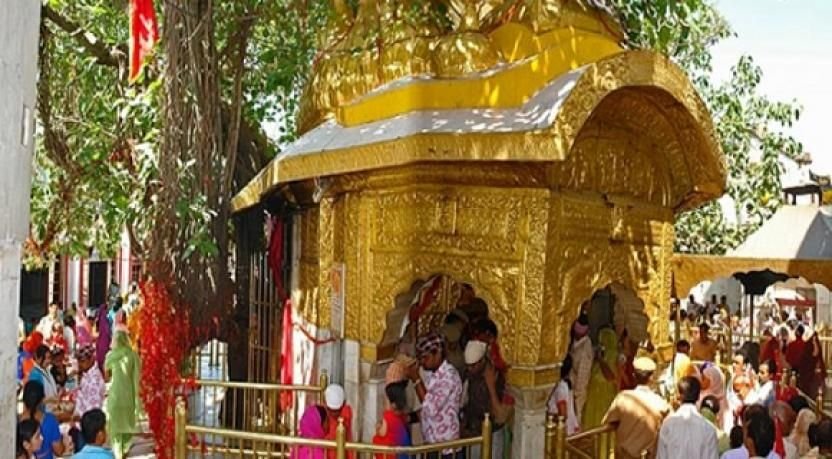
The Chamunda Devi temple is situated at bank of small river. The architecture of the temple is very simple. In the complex of the temple there is a large pond with the idol of the Lord Shiva and people also can take bath. The walls of the main temple are carved with beautiful creativity. There are several other temples of Lord Shiva and Hamuman. The main image of Goddess Durga is visible from the main entrance and is draped in rich clothes. The inner walls of main temple are carved with silver. The shikhara of the temple is coated with gold. There is another temple of the Lord Shiva which is known as Nandiswar temple. Idols of the many other gods are placed in the centre of the temple complex.
The temple is 700 years old, dedicated to the goddess Chamunda. The main idol of the temple is made up with black and red stone. The idol is wearing the garland of the skull. The goddess also wears the Yajnopavit of skulls. Yajnopavit is worn by the Male Hindu priest. There is a scorpion sitting on her navel like a decoration. Chamunda depicted adorned by ornament of bones, skull, scorpion symbol of disease and death.
Navaratri – Navaratri is a major festival at the Chamunda Devi temple. During the Navaratri there is huge crowd in the temple. Devotees are come from the various parts of India to take blessings.
The temple opened for visitors every morning at 6.00 a.m. and close 12.00 p.m. and then 1.00 a.m to 9.00 p.m.
Chamunda Devi Temple Pooja Timing
Morning Aarti – The morning Aarti performed in the morning at 8.00 a.m.
Evening Aarti – The evening Aarti performed at 6.00 p.m.
The temple is located at Kangra district of the Himachal Pradesh. The temple is 15 km away from the Dharamshala. And the distance is 10 km from Palamur.
How to Reach
By Air : The nearest airport is Gaggal airport in Kangra district. This is 28 km away from the temple. The airport is connected with some specific cities of the India.
Rail : The nearest railway station is Moranda Railway station, which is 30 km away from the temple.
Road : The temple is situated 10 km away from the Dharamshala. State transport buses are also available from the Haryana, Punjab, Uttarpradesh, Delhi, Uttarakhand.
8. Maa Chinmastika (Ramgarh, Ranchi, Jharkhand)
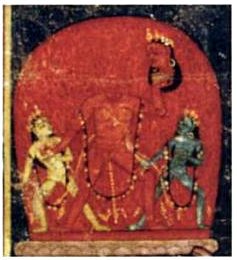
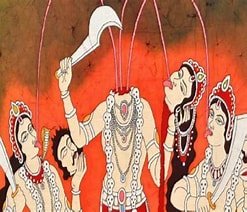
Chhinnamasta (Sanskrit: छिन्नमस्ता, Chinnamastā, “She whose head is severed”), often spelled Chinnamasta, and also called Ch(h)innamastika and Prachanda Chandika and Jogani Maa (in western states of India), is a Hindu goddess (Devi). She is one of the Mahavidyas, ten goddesses from the esoteric tradition of Tantra, and a ferocious aspect of Parvati, the Hindu Mother goddess. The self-decapitated nude goddess, usually standing or seated on a divine copulating couple, holds her own severed head in one hand and a scimitar in another. Three jets of blood spurt out of her bleeding neck and are drunk by her severed head and two attendants.
Chhinnamasta is a goddess of contradictions. She symbolises both aspects of Devi: a life-giver and a life-taker. She is considered both a symbol of sexual self-control and an embodiment of sexual energy, depending upon interpretation. She represents death, temporality, and destruction as well as life, immortality, and recreation. The goddess conveys spiritual self-realization and the awakening of the kundalini – spiritual energy. The legends of Chhinnamasta emphasise her self-sacrifice – sometimes coupled with a maternal element – sexual dominance, and self-destructive fury.
Chhinnamasta is worshipped in the Kalikula sect of Shaktism, the Goddess-centric tradition of Hinduism. Though Chhinnamasta enjoys patronage as one of the Mahavidyas, temples devoted to her (found mostly in Nepal and eastern India) and her public worship are rare. However, she is a significant Tantric deity, well known and worshipped among esoteric Tantric practitioners. Chhinnamasta is closely related to Chinnamunda – the severed-headed form of the Tibetan Buddhist goddess Vajrayogini.
The Pranatoshini Tantra (18th century) narrates two tales of Chhinnamasta’s birth. One legend, attributed to the Narada-pancharatra, tells how once, while bathing in Mandakini river, Parvati becomes sexually aroused, and turns black. At the same time, her two female attendants Dakini and Varnini (also called Jaya and Vijaya) become extremely hungry and beg for food. Though Parvati initially promises to give them food once they return home, the merciful goddess beheads herself with her nails and gives her blood to satisfy their hunger. Later, they return home after Parvati rejoins her head.
The other version, from the Pranatoshini Tantra and attributed to Svatantra Tantra, is narrated by Shiva. He recounts that his consort Chandika (identified with Parvati) was engrossed in coitus with him in reverse posture, but became enraged at his seminal emission. Her attendants Dakini and Varnini rose from her body. The rest of the tale is similar to the earlier version, although the river is called Pushpabhadra, the day of Chhinnamasta’s birth is called Viraratri, and upon seeing the pale Parvati, Shiva becomes infuriated and assumes the form of Krodha Bhairava. This version is retold in the Shaktisamgama Tantra (c. 16th century), in which Chhinnamasta forms a triad with Kali and Tara.
The Chintpurni (“She who fulfills one’s wishes”),Himachal Pradesh temple of Chhinnamastika, is one of the Shakti Peethas (considered the holiest goddess temples) and is where the goddess Sati’s forehead (mastaka) fell. Here, Chhinnamasta is interpreted as the severed-headed one as well as the foreheaded-one. The central icon is a pindi, an abstract form of Devi. While householders worship the goddess as a form of the goddess Durga, ascetic sadhus view her as the Tantric severed-headed goddess.
Another important shrine is the Chhinnamasta Temple near Rajrappa in Jharkhand, where a natural rock covered with an ashtadhatu (eight-metal alloy) kavacha (cover) is worshipped as the goddess. Though well-established as a centre of Chhinnamasta by the 18th century, the site is a popular place of worship among tribals since ancient times. Kheer and animal sacrifice are offered to the goddess.
Chhinnamasta’s shrines are also found in Nepal’s Kathmandu Valley. A shrine in the Changu Narayan Temple holds a 13th-century icon of Chhinnamasta. A chariot festival in the Nepali month of Baishakh is held in honour of the goddess. In the fields near the temple sits a small shrine to Chhinnamasta. A temple of the goddess in Patan built in 1732 contains her images in different postures and enjoys active worship.
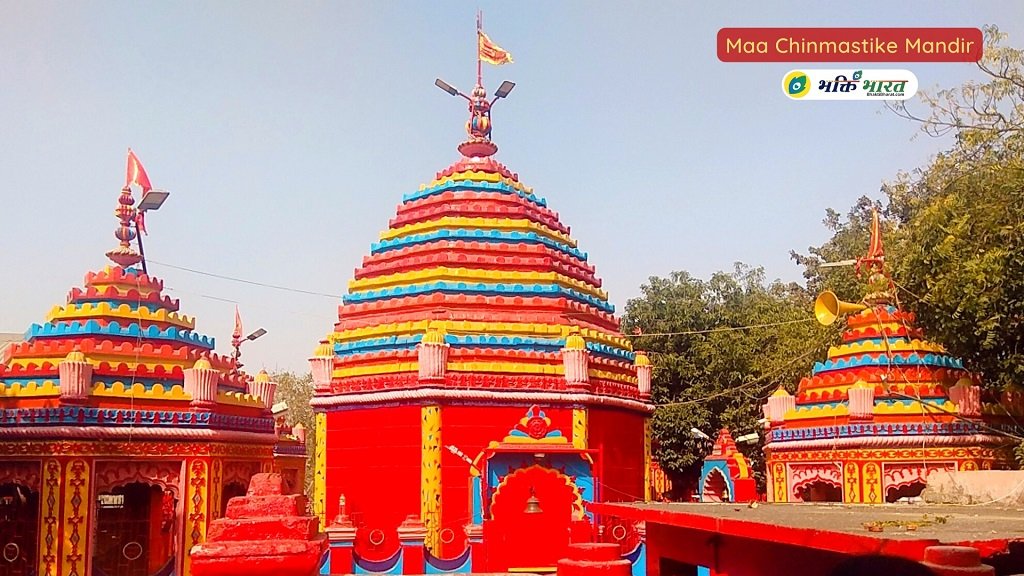
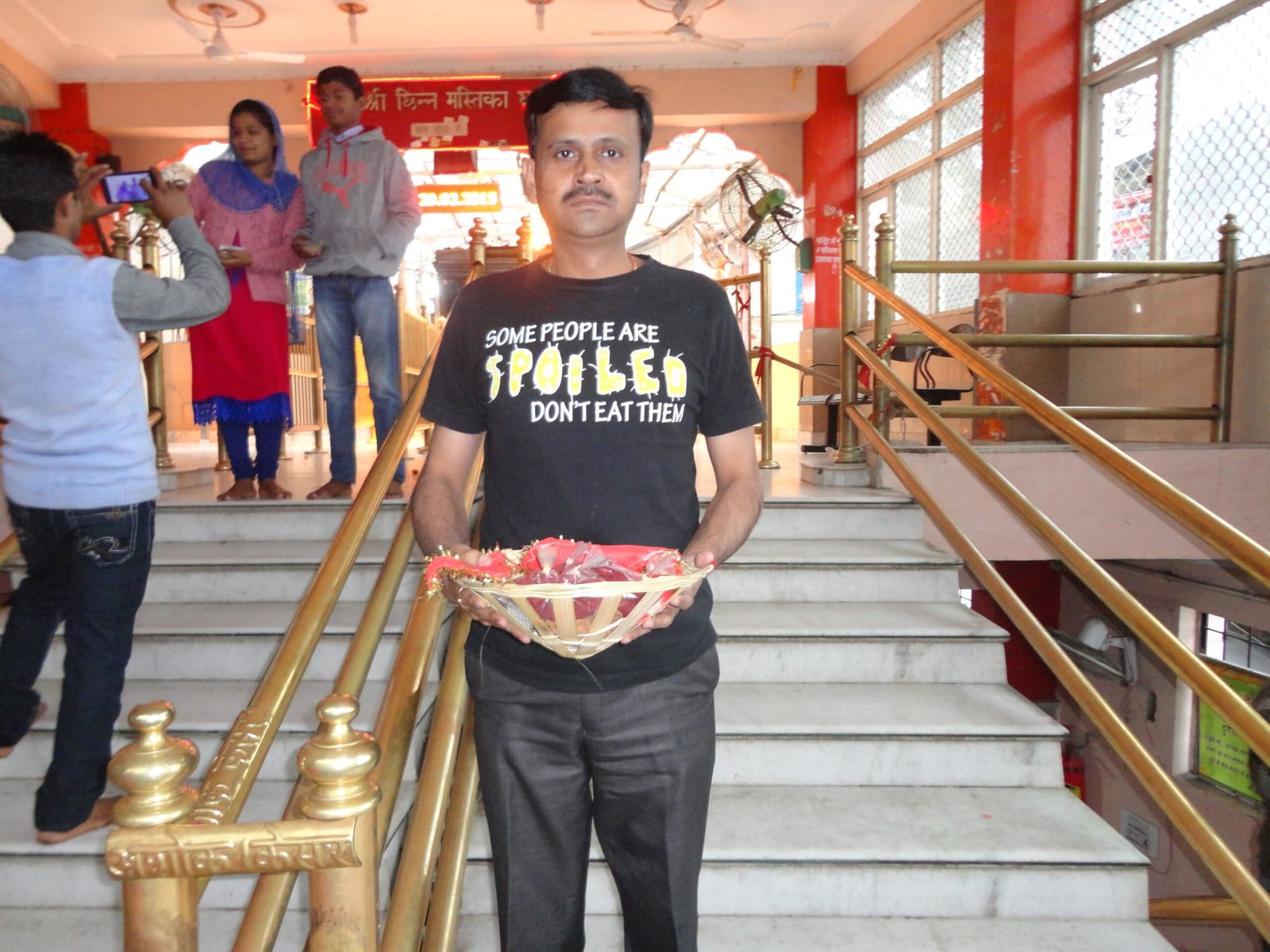
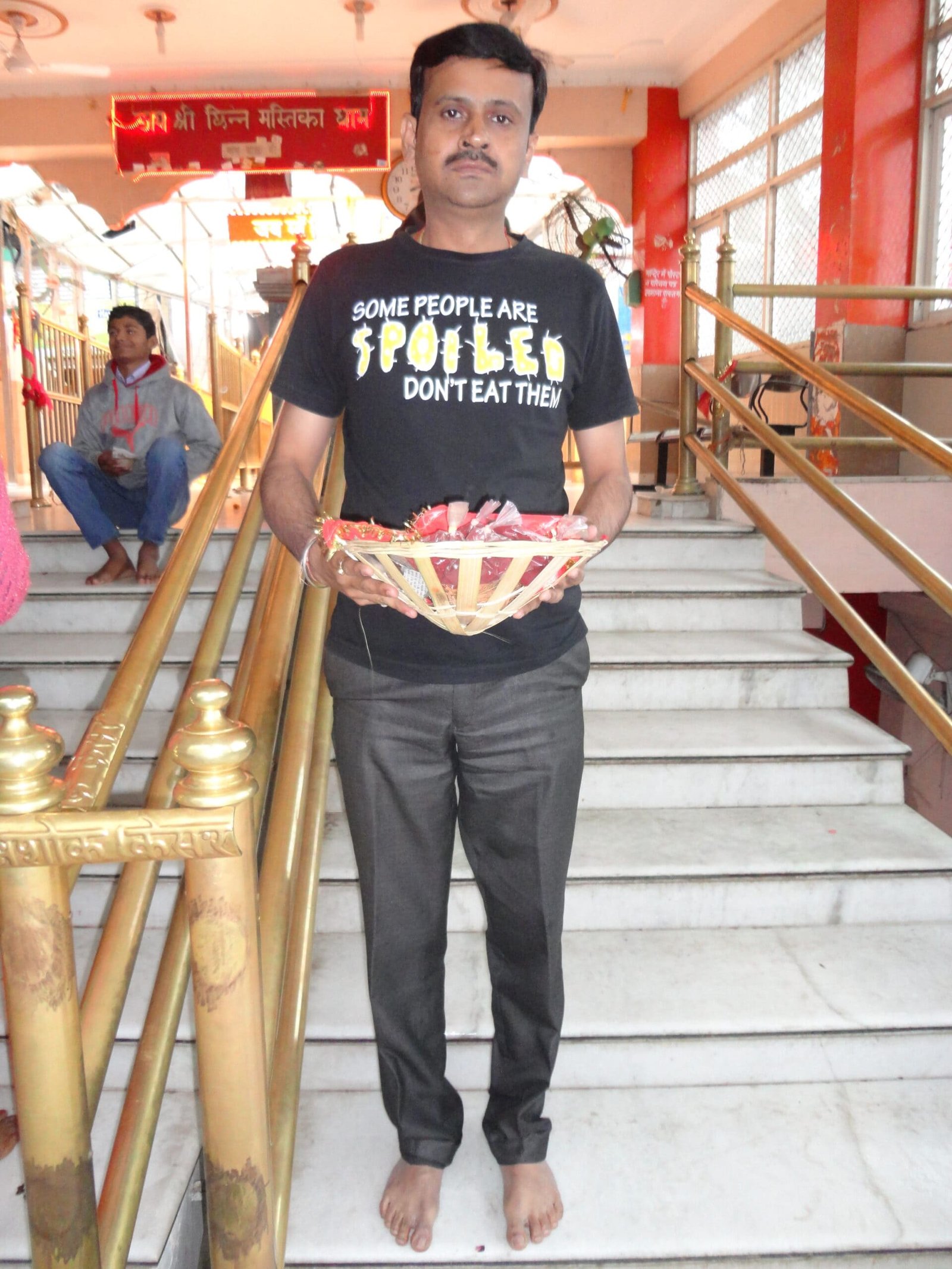
Maa Chinmastike Mandir is located in Rajrappa, about 80 km from Ranchi, the capital of Jharkhand. It is one of the oldest temples in India. Situated at the confluence of Bhairavi-Bhera and Damodar rivers, the divine form of Mata Chinnamastika is seen on the rock placed along the northern wall of the temple, facing south.
This Chinnamasta Temple was built about six thousand years ago. Devi has three eyes in the rock inside the temple. Her throat is adorned with Sarpamala and Mundmal. Open hair, Jihya outside, devi adorned with ornaments is naked. He holds a sword in his right hand and his severed head in his left hand. Dakini and Shakini are standing on either side of them, whom she is making her drink blood and is doing the same herself. Three streams of blood erupt from her throat. The main entrance of the temple is towards the east. In front is the place of sacrifice, where goats are sacrificed daily. There is also Mundan Kund here. There is also Papanashini Kund, which cures diseases of devotees.
There were ancient bricks, mythological idols and yagya kundas and mythological evidence around the temple, which were destroyed or went underground. This temple has been built according to the architecture. The sculpture of its circular dome is similar to that of the Kamakhya Temple of Assam.
Along with Maa Chhinnamasta, Lotus Temple of Maa Durga, Rajrappa Temple on the Sangam, Sun Temple, Krishna Temple and Naulakha Temple are also established in the temple premises.
Thousands of years ago humans and gods were terrorized by demons and demons. At the same time, humans started remembering Mata Shakti. Then Parvati (Shakti) was incarnated as ‘Chhinnamasta’. The other name of Chhinnamasta is also ‘Prachanda Chandika’. Then Mata Chinnamastika started killing the demons and demons with Khadag. Even hunger and thirst were not taken care of, only wanted to destroy the sinners. Rivers of blood started flowing. There was an uproar on the earth. Mata had assumed her fierce form. Apart from the sinners, she also started killing the innocent. Then all the deities went to Bhagwan Shiva after being frightened by the tremendous power, after hearing the prayers of the gods, Bhagwan Shiva reached Maa Chhinnamasta.
Seeing Bhagwan Shiva, Mata Chinnamastika said – \”Oh Nath! I am hungry. How can I satisfy my hunger?\” Bhagwan Shiva said that- \”You are the goddess of the whole universe. You are a power yourself. Then Bhagwan Shiva told the remedy that if you drink ‘Shonit’ (blood) after cutting your neck from the khadag, then your hunger will end. Will go.\” Then Mata Chinnamastika, after listening to Shiva, immediately cut her neck with a knife and took her head in her left hand. With the separation of the neck and head, three streams of blood came out of the neck, which were ‘Dakini’-‘Shakini’ on the left and right. Two streams went into the mouth of both of them and in the middle the third stream went into the mouth of the Mata, due to which the Mata was satisfied.
How to Reach
Nearest Railway Station : Ramgarh Cantonment railway station at a distance of nearly 27.6 kilometres from Chhinnamasta Temple.
Nearest Airport : Birsa Munda Airport at a distance of nearly 70.3 kilometres from Chhinnamasta Temple.
9. Maa Chintpurni (Bharwain, Kangra, Himanchal Pradesh)
Chintpurni Temple is one of the Shakti Peeth Temples. There are a total of 51 Shaktipeeths in the whole of India, the story of their origin is the same. The beautiful view of nature can be seen at this place. The mesmerizing scenes in the journey captivate the mind of the travelers. By coming here, the devotees of Mata get spiritual bliss.
Chintpurni Maa “Chinta” Means”worry”, stresses go about as a moderate toxin. Mathaa spares her bhaktas (Devotees) from it, giving tonic of life, by satisfying their wishes and henceforth properly known as CHINTAPURNI. The goddess is otherwise called the home of Chhinnamastila.
Himachal Pradesh is considered the land of gods and goddesses. There are many temples here. Among them, Chintpurni temple located in Una district of Himachal Pradesh is also one. This place is one of the major religious places of Hindus.
All these temples are associated with Shiva and Shakti. According to religious Hindu Books, the parts of the goddess Sati had fallen at all these places. King Daksha, the father-in-law of Shiva, organized a yagna in which he did not invite Shiva and Sati as he did not consider Shiva as his equal. Sati felt very bad about this. She reached the yagya uninvited, where Shiva was greatly insulted. Sati could not bear this and she jumped into the Havan Kund.
When Lord Shankar came to know about this, he took out Sati’s body from the Havan Kund and started doing tandav, due to which there was an outcry in the whole universe. To save the entire universe from this crisis, Lord Vishnu divided the body of Sati into 51 parts with his Sudarshan Chakra.
The part where it fell became the Shakti Peeth. It is believed that the feet of Mother Sati had fallen in Chintpurni. She is also known as Chhinnamastika Devi. There are temples of Lord Shankar around the Chintpurni temple.
Chintpurni Temple is situated on the hill of Sola Singhi range. Bharwain village is located on Hoshiarpur-Dharamshala road, Chintpurni is 3 km away from here.
This road is connected to the state road. Tourists can take their private vehicles to the Chintpurni Bus Stand. Bus stand is situated at a distance of 1.5 kms from Chintpurni Temple. Half of the climb is straight and the next is steep.
The Chintpurni temple opening hours are from 4 am to 11 pm in summer and from 5 am to 10 pm in winter. Bhog is offered from 12 noon to 12.30 and evening aarti is done from 7.30 to 8.30.
Devotees who come for darshan bring semolina pudding, laddus, barfi, batasha, coconut etc. as bhog for the mother. Some devotees offer flag and red chunari as a gift to Mata after their vow is fulfilled.
There are many shops on the way of the climb from where devotees buy items to offer to the mother. Every tourist washes hands before darshan and has to cover his head with handkerchief or cloth.
As soon as you enter the main entrance of the temple, you will see a stone on the right hand side. This stone is of Maidas. This is the place where the mother had given darshan to the devotee Maidas.
In the middle of the building there is a round shaped pindi of the mother, whose darshan is seen by the devotees in a queue. Devotees circumambulate the temple. Devotees of Mata keep chanting bhajan kirtan continuously inside the temple.
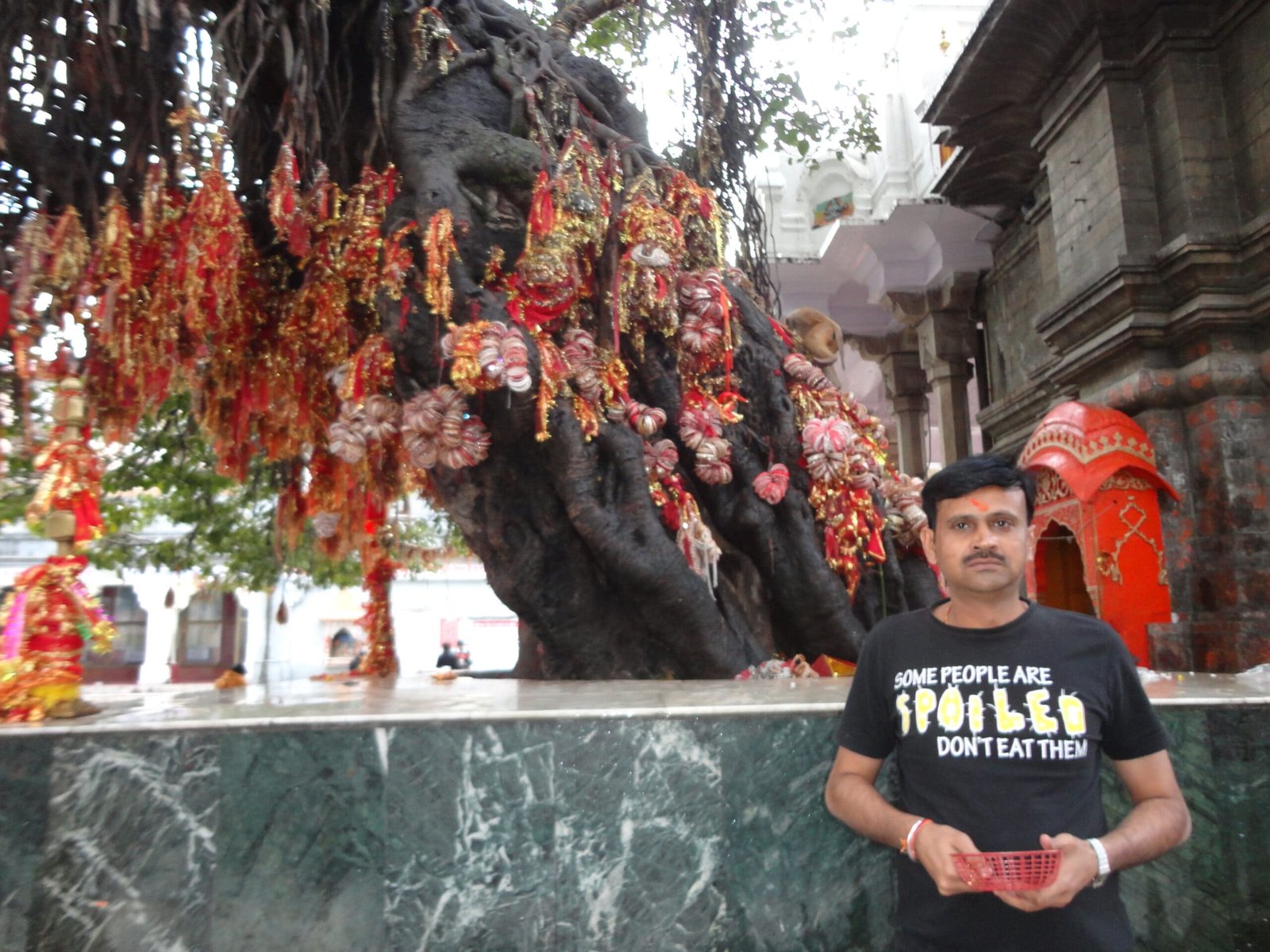
The Chintpurni temple is accompanied by a banyan tree where devotees tie raw mollis to fulfill their wishes. On moving towards the west, there is a big tree, inside which Bhairon and Ganesh are seen.
The main entrance of the temple is plated with gold. This main gate is used during Navratri. If the weather is clear then you can see the Dhauladhar mountain range from here.
While descending from the steps of the temple, there is a pond of water in the north direction. The Samadhi of Pandit Maidas is also on the west side of the pond. This holy abode of the mother was discovered by Pandit Maidas only.
The weather remains pleasant from mid-February to April. Summer starts from mid-April. The day weather becomes quite hot during the summer time.
The weather at night is mildly cold. It rains here from June to September. During the period from October to November, the day is warm while the morning and night are cool. The month of December to January is quite cold here and the temperature reaches minus 5 degrees.
This Shaktipeeth have been going to for quite a long time by enthusiasts to supplicate at the lotus feet of goddess Mata Chhinnamastika Devi. This temple is worshipped by the Hindus in Punjab, Haryana and Himachal Pradesh and it is trusted that the Goddess Chintapurni is the remover of all inconveniences.
From the goddess Devi, the aficionados bring their common concerns and look for favors. It is said that your desire will be allowed and satisfied, in the event that you ask something from the Devi with a genuine heart.
The Pilgrims carry with them their common concerns and look for favors from the Devi. It is said that on the off chance that you ask something from the Devi with a genuine heart, your desire will be conceded and satisfied.
How to Reach
By Air: Gaggal airport in Kangra is the nearest airport, 65 km from the town. Chandigarh, about 175 km from Chintpurni, offers better connectivity. Chandigarh Airport is linked with Delhi, Mumbai, Bengaluru, and Kolkata. Taxis are available to reach Chintpurni.
By Train: The nearest railway station is at Una which is 55km away from Chintpurni. Taxis and buses are available at the station.
By Road: State-owned buses connect Chintpurni with all major cities of Himachal Pradesh and neighboring states. Regular bus services are available between Chintpurni and Dharamsala, Palampur, Pathankot and Jammu. The nearest bus stand is Bharwain which is 7 km away. AC Deluxe buses to New Delhi, Chandigarh, Dharamsala or Baijnath stops at Bharwain.
10. Maa Fullora (Labhpur, Birbhum, West Bengal)
The temple is located in Labhpur in Birbhum district. The temple is situated at 1.2 km north-east from Labpur railway station. There is another Attahas in Ketugram, Katwa. Phulwara shakti peeth is a disputed one. One is in burdwan and and other in birbhum. both are known as attahas. The burdwan one is near ketugram katwa. One more shaktipeeth near this place is bahula. Hence a person going to katwa can do bahula and attahas as more are very nearby. The attahas at burdwan is a very large temple when compared with the attahas of birbhum
The temple of Attahas, also known as Fullora Attahas, is believed to be one of the 51 Shakti Peethas at which the body parts and jewelry of the Hindu goddess Shakti fell to Earth. The goddess is so large that the lower lip is about 15 to 18 feet wide. The temple is a site of Hindu pilgrimage throughout the year. December is a particularly popular time for visitors to picnic at the site.
Attahas Sanskrit comes from Atta and Hasa (laughter) meaning extreme loud laughter. The temple of Attahas is considered as a Shakti Peetha. Shakti Peethas are shrines that are prominent places of worship for the Shakta sect (Shaktism) of Hinduism. These are places where the body parts of Sati Devi’s corpse fell when Lord Shiva carried her body after her death. The place where her body parts fell were enshrined by the divine presence of Shakti. The story of origin is the mythology of Daksha yaga and Sati’s self-immolation. The Lips of Sati Devi is said to have fallen here. Each Shakti Peetha has a name for the Shakti an Kalabhairava associated with the temple. The Shakti of the Attahas shrine is addressed as Phullara and the Kalabhairava as Vishvesh.
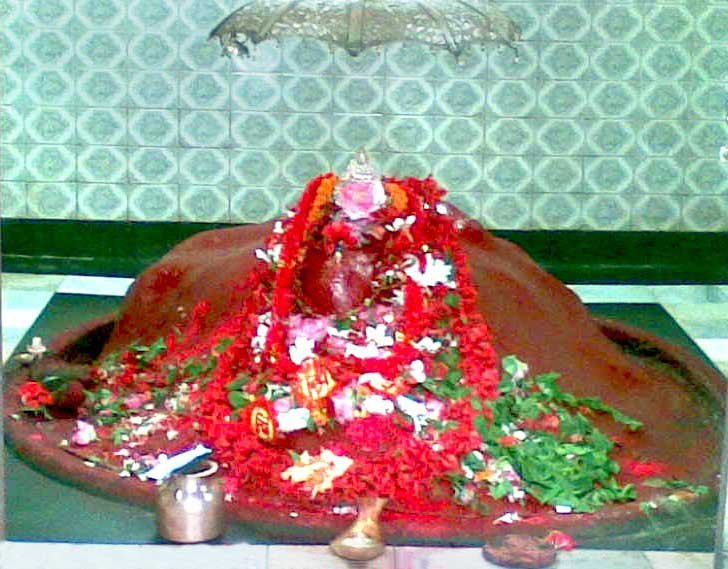
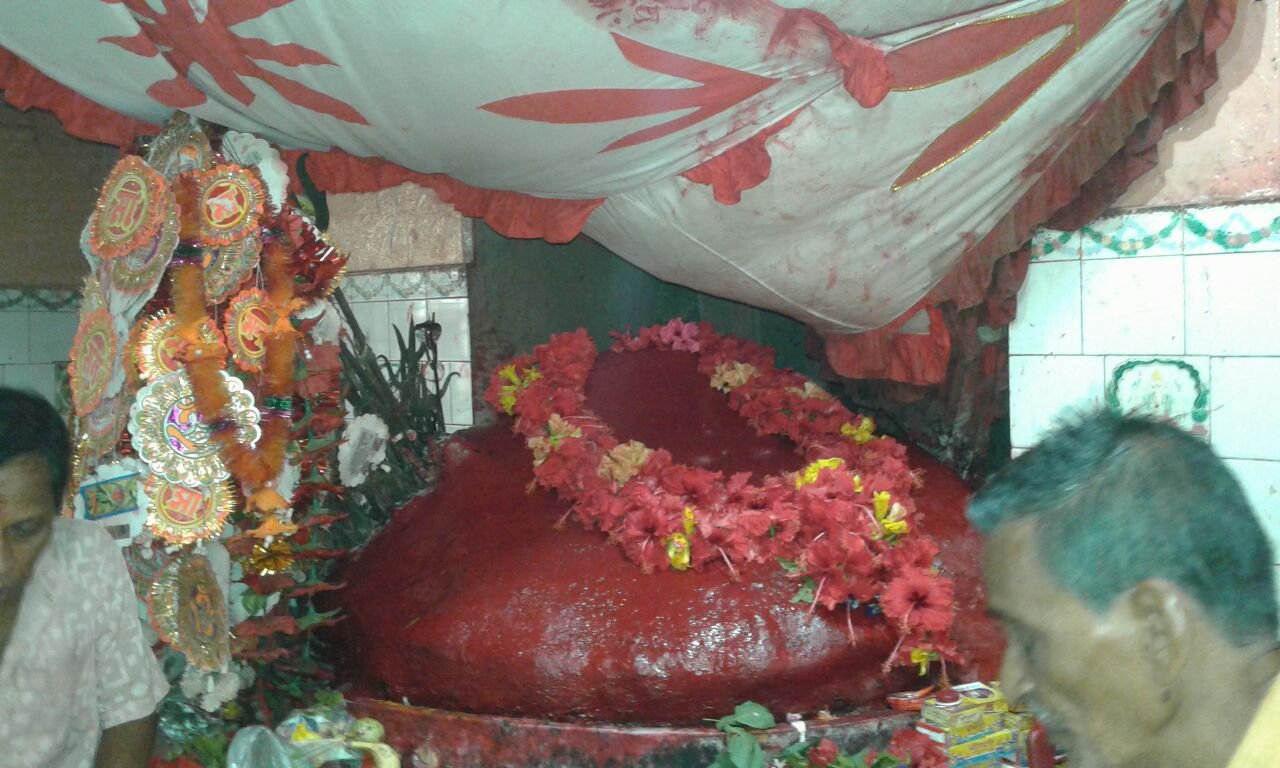
The main attraction of the place is the beautiful temple of Fullara Maata. Fullora Devi Temple is one of the Shakti Peethas – places where the body parts of Goddess Sati fell to Earth. There is no proper idol of the goddess is consecrated. A stone of around 15 feet symbolizes the lower lip of Sati. The temple is surrounded by dense foliage, giving the place a mysterious look. The overall ambiance of the place is very divine and tranquil.
Places to Visit in Labhpur – Kankalital Temple, Tagore’s Ashram, Rabindra Bhawan.
How to Reach – It can be reached by rail Labhpur station, on the Ahmedpur Katwa Railway line.
11. Maa Ghadhkalika (Ujjain, Madhya Pradesh)
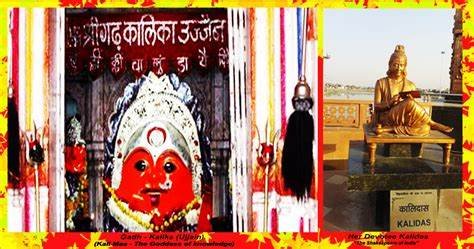
A temple where Kalidas got his boon from Maa.It is located on the suburban of Ujjain, Gadkalika Temple is devoted to Goddess Kalika. It is a famous Shakti Peeth of India and at the time of Navaratri, thousands of people assemble here. Kalika is supposed to be the Goddess of poet Kalidas, who is believed to have lived around the turn of the Christian era. This pretty shrine holds an astonishing legend which states that, Kalidas, the great poet had obtained his actual skills by his genuine devotion to this deity. It is the temple where Kalidas got his boon from Maa. The Maa with her beautiful eyes is a joy to behold. The present temple is not very old. It is believed that it stands in the same site where the older temple stood.
There are some scholars who believe that, during 7th century this ancient temple Kalika was reconstructed by King Harshwardhan of Thaneshwar when he visited Ujjain. It is indeed the most ancient temple of Ujjain. The former Gwalior rulers rebuilt this holy shrine to its former glory. Digging which was held near the temple premises unearthed bricks, a part of the plinth and other sculptures that were affiliated to various periods. The area around the Garh Kalika had been the site of the ancient settlement from around the 8th century BCE right upto Paramara period. Even today people find ancient coins in this area.
How to Reach –
By Air –The nearest airport to Ujjain is Ahilyabai Holkar Airport of Indore. Airplanes fly all major cities of the country. Ujjain is 55 km away from Indore.
ByRail – Ujjain is connected to all major railway stations in India. Trains run from Mumbai, Pune, Chennai, Delhi, Kolkata, Bhopal, Jaipur, Varanasi, Gorakhpur, Ratlam, Ahmedabad, Baroda, Gwalior, Hyderabad, Bangalore, Jammu and many major cities.
By Road – Ujjain is connected by public buses of state transport.
12. Maa Birija (Jajpur, Odisha)
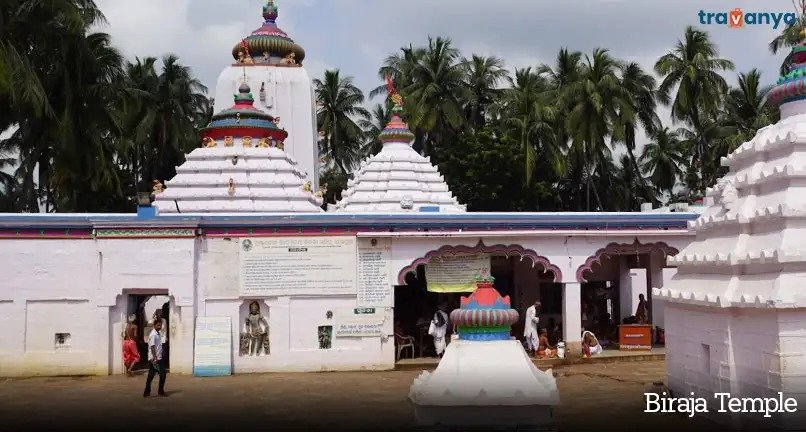
The Biraja Temple, or Birija Kshetra is a historic Hindu temple located in Jajpur (about 125 kilometres (78 mi) north of Bhubaneswar), Odisha, India. The present temple was built during the 13th century. The principal idol is Devi Durga, who is worshiped as Viraja (Girija), and the temple gave Jajpur the nicknames “Viraja Kshetra” and “Biraja Peetha”. The Durga idol has two hands (dwibhuja), spearing the chest of Mahishasura with one hand and pulling his tail with the other. One of her feet is on a lion, and the other is on Mahishasura’s chest. Mahishasura is depicted as a water buffalo. The idol’s crown features Ganesha, a crescent moon and a lingam. The temple covers a large area, and has several shrines to Shiva and other deities. According to the Skanda Purana it cleanses pilgrims, and it is called the Viraja or the Biraja kshetra. Jajpur is believed to have about one crore of Shiva lingams.
This devi temple is one of Ashtadasha shakti peetha and is described as Oddiyana Peetha and the goddess as Girija. The place signifies its name. Girija Devi Temple is one of the Ashtadasha Shaktipeetha Temples. The 11th Shakti Peetha, Jajpur was consecrated as Dakshayanis navel part fallen here. The presiding deity of Jajpur Asta dasha shakti peetha is Goddess Girija Devi. Goddess Girija Devi is also worshipped with various names such as Goddess Birija Devi, Goddess Virija.
he Brahmayamala Tantra has a hymn, “Aadya Stotra”, dedicated to Shakti. In the hymn, Vimala is the goddess of Puri and Viraja (Girija) is the goddess worshiped in the Utkala Kingdom, which became Odisha.
According to the Tantra Chudamani, Sati’s navel fell in the Utkala Kingdom, also known as “Viraja kshetra”. Adi Shankara, in his Ashtadasha Shakti Peetha Stuti describes the goddess as Girija. In Tantra literature, the Oddiyana Peetha (Devnagari:ओड़्याण पीठ) is located in eastern India near the Vaitarani River (an Oddiyana is an ornament worn by a woman around her navel).
There is a separate shrine for Sree Bagalamukhi Devi, which is right of Maa Biraja. One can find very few temples for this Roopa of Dasamahavidya,
Pitapuram holds the Pada Gaya, the Siro Gaya is found in Bihar, the Nabhi Gaya is found here in the form of a well. Pitru Pooja (Pinda Dhaan, Tharpanam, Thithi) are performed here. The temple itself arranges the priests and the pooja item
How to Reach –
The nearest railway station is Cuttack and Jajpur Keonjhar Road. From there regular buses can be availed to Jajpur town. Mostly private buses run regularly in Orissa. Autos connect Cuttack railway station to Barabati bus stand, which is hardly 3 km away. The bus from Cuttack to Jajapur town takes 2 to 2+1⁄2 hours. From Jajpur road to Jajpur town travelling time by road will be more than one hour. Also buses are available from Bhubaneswar. Buses which have express written on the buses are quicker than local buses.
13. Maa Harsiddhi (Ujjain, Madhya Pradesh)
Harsidhhi, one of the aspects of Durga is a regional Hindu goddess, popular in Gujarat, Madhya Pradesh, adjoining Maharashtra states of India.
Harsiddhi, a contracted form or, at its very least, a form of “Harshad Amba” – The Happy Mother, is considered one of the aspects of Amba and Kalika, the Hindu Devi. She is also known by the names like Harshal, Harshad, Harshat, Harsidh Bhvani.
She is worshiped as Kuldevi by many Kshatriya, Brahmin, Rajput and Vaishya communities. The Chandarana clan of Lohanas, Brahmakshatriyas, Harsana clan of Gurjars, many Jain castes as well Brahmins like Panchariya and many other communities also worship her as their Kuldevi. She is also religiously worshiped by fishermen and other sea-faring tribes and people of Gujarat as she is considered protector of ships at sea.
Harshidhhi Mata Temple also known as Harshal Mata Temple located at Gandhvi village, some 30 km away from Porbandar en route to Dwarka. The main temple was originally located on a hilltop facing the sea. It is said Krishna had worshiped her during his lifetime and has since been living atop hill called Koyla Dungar. The original temple atop the hill is said to have been built by Krishna himself. Krishna wanted to defeat the asuras and Jarasandha so he prayed to Amba Mata for power. With the blessings of the goddess, Krishna was able to defeat the Asuras. After this success, he built the temple. When Jarasandha was killed, all Yadavas over overjoyed (harshit) and they celebrated their success here. Hence the name Harshad Mata or Harsiddhi Mata. She has since been worshiped as kuldevi of Jadejas(Yadavs)
Another famous temple is located at Ujjain, which is said to have been built by famous King Vikramāditya. Vikramaditya is said to have visited Koyla Dungar at Miyani, then known as Minalpur, a port city ruled by Prabhatsen Chavda of Chawda dynasty. Vikramadiya was blessed by the Devi. He requested Harsidhhi Mata, to come to his kingdom at Ujjain, where he would worship her daily. She is also known as Vahanvati Mata.
The Harsiddhi temple is one of the 52 Shakti Peeth situated all over India. According to legend, Shiva married Sati, the daughter of Daksha, a Prajapati who was proud of his position and disliked his ascetic son-in-law. In an effort to put his son-in-law in his place, Daksha organized a yagna and deliberately did not invite Shiva. Hearing of the grand yagna, sati visited it by herself, ignoring her husband’s advice, and, furious with her father for thus deliberately ignoring her husband, cast herself into the flames lit for the yagna. Her act led to Shiva’s ganas going berserk with rage, and Shiva himself arriving at the scene and dancing the Tandava (the angry dance) with sati’s body in his arms. While Shiva was later calmed down and amends made, it is believed that parts of Sati’s body fell on earth as He danced, and each of these (totaling 52 in number) are revered as Shakti Peeth.
There is a small shrine just outside the temple dedicated to Mahamaya. This shrine is situated a little below ground level and is approachable by steps, but is closed to visitors. The importance of this shrine is a lamp which burns day and night and has been burning so for ages. The only person who enters the sanctum is the pujari who visits it several times a day for offering prayers to the goddess and maintaining the lamp.
One among the shaktipeeth of Hindu Mythology, Harsiddhi Temple, in Ujjain is the abode of numerous Goddesses of Hindu Pantheon. One among the fascinating aspect of this shrine is the structure which is made up of a rock smeared with turmeric paste and vermilion. The temple turns magnificent on the eve of the Navaratri festival, when hundreds of lamps on the 15 feet lamp stand being lit together.
Yet another characteristic feature of the marvelous shrine is the presence of Sri Yantra, or nine triangles that represent nine names of Goddess Durga. This lovely shrine also houses images of other goddess also. The famous dark vermilion image of Annapurna, the Goddess of Nourishment, and the idol of Mahasaraswati, the Goddess of Wisdom and Knowledge are significant for their typical Maratha architecture.
One more famous temple is located in Rajpipla, where she is worshiped as Kuldevi by former princely State of Rajpipla, where she had come from Ujjain.
Another temple is located at Ladol, which was built by Jayasimha Siddharaja in 11th century. Other temples are located at Palaj, Ruppur near Chanasma, Patan, Porbandar, Indore, Jabalpur, Dwarka, Wadhwan, Aurangabad, Badod, Varvala, Lunavada, Chand Baori, Haripura, Kutch. Another Temple is located in Rajasthan at Lampolai which is Centre point of Rajasthan and it is near by Ajmer approx 60 km by road.
How to Reach –
By Air –The nearest airport to Ujjain is Ahilyabai Holkar Airport of Indore. Airplanes fly all major cities of the country. Ujjain is 55 km away from Indore.
ByRail – Ujjain is connected to all major railway stations in India. Trains run from Mumbai, Pune, Chennai, Delhi, Kolkata, Bhopal, Jaipur, Varanasi, Gorakhpur, Ratlam, Ahmedabad, Baroda, Gwalior, Hyderabad, Bangalore, Jammu and many major cities.
By Road – Ujjain is connected by public buses of state transport.
14. Maa Jawala (Gaggal, Himanchal Pradesh)
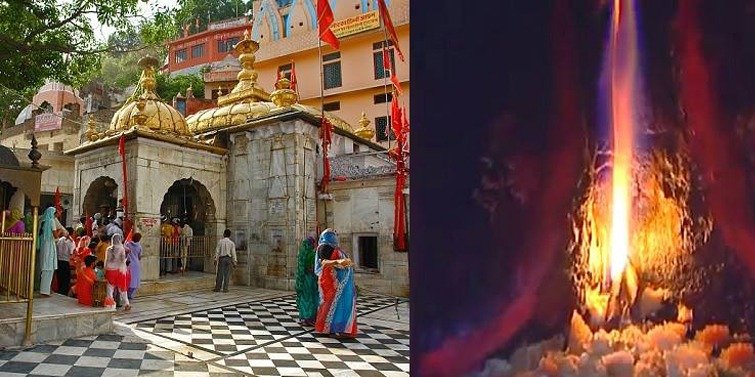
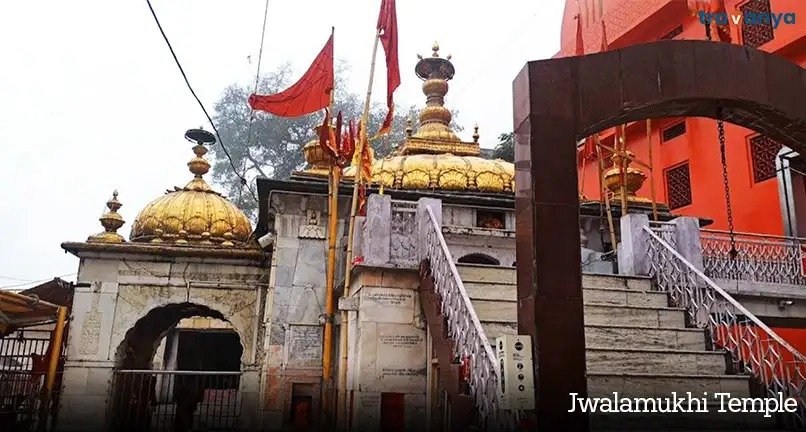
Jawala Ji or Jwala devi temple is one of the 51 Shaktipeeths of India and Jawala Ji Temple is one of the highly venerated Shakti Temples in India. It is situated in the lap of Shivalik range of Kangra valley called “Kalidhar”. This is believed to be the first ever temple built by the Pandavas. Jwala Ji is a Devi Temple Dedicated to the “GODDESS OF LIGHT”, located in Jawala Mukhi, district Kangra of Himachal Pradesh.
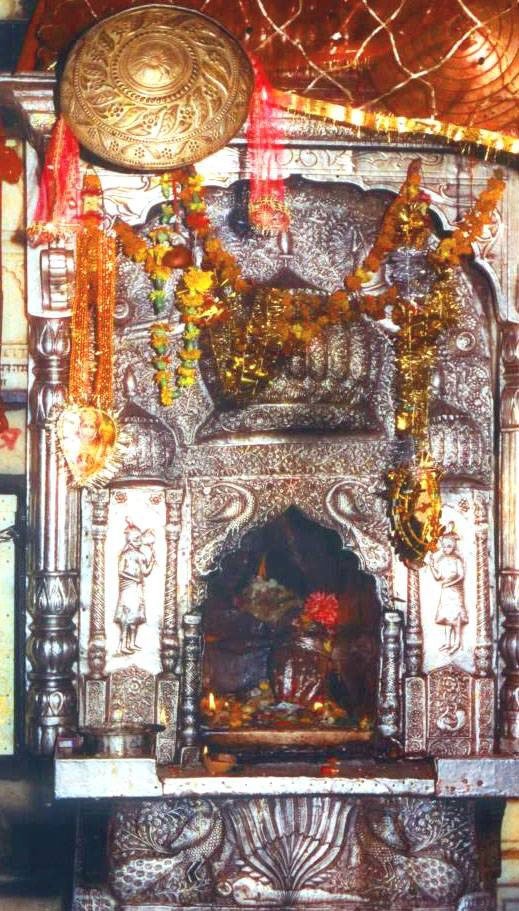
Sati’s tongue is believed to have fallen at the very place where Jwala devi Temple is now situated. The Tongue of sati is represented by Holy Flames or Jwala that is perpetually burning. Jwala devi temple as a center of faith is unparallel and unique. There is no deity or idol that is worshiped. It has the series of natural flames or Jyotis since times immemorial believed to be the symbol of Goddess. Jawala Ji is a great heritage centre for not only the people of Jawala Mukhi, Kangra or Himachal Pradesh but of the whole world. During March to April and September to October every year colourful fairs are held during the Navaratra celebration.
One of the oldest known pilgrimage destinations of Northern India, Jwala Ji Temple is around 32km South-West of Kangra and esteemed by the devoted Hindus of the country. There are several other temples dedicated to Goddess Jwala Ji, among which the one in Kangra district is believed to be the most auspicious. The temple is located in Jwalamukhi Town of Kangra. The main attraction of Jwala Ji Temple is the eternal flames representing the image of deity, Jwala Ji. The four cornered sanctum-sanctorum of the temple is set with a small dome and a square central pit where the sacred stone is found. The main flame of this temple keeps burning constantly. It is one of the 51 Shakti Peethas found in different corners of the South-East Asia. It is believed that the tongue of Goddess Sati fell on this ground. Offering coconut is a popular practice in Jwala ji Temple.
As per the legend associated with the temple, there was a cowherd who always used to find his cow without milk. One day he followed his cow till the grazing field and found that a young girl drank the cow’s milk and disappeared with the blink of an eye. Seeing this, the cowherd went to the king and described about the incident. The king tried to trace out the place with the help of the cowherd but he failed. Few years later the same cowherd informed the King about a flame burning in the mountains. This time the king could spot the flame without much fail and being blessed with the view of this mysterious flame. It is the king who built this temple of Jwala Ji.
The best-known Jwala Ji shrine is located in the town of Jawalamukhi, in the lower Himalayan area of the Kangra district, in the state of Himachal Pradesh, India. The shrine is about 56 kilometres (35 mi) kilometers from the larger town of Dharamshala.[10] The temple style is typical of Jwala Ji shrines: four-cornered, with a small dome on the top and a square central pit of hollowed stone inside where the main flame burns continuously A fair is held in the environs of the temple annually in July or August, during Navratras.
The temple had an associated library of ancient Hindu texts, many of which were translated from Sanskrit into Persian at the orders of Firuz Shah Tughlaq when the Delhi Sultanate overran the Kangra area.
According to legend, when Sati’s body was divided into 51 parts, her tongue fell in the area of Jawalamukhi and it continues to be represented by the flames (or jyotis). Along with her tongue, the flames of Sati’s yogic power also fell to the place. Some legends state that Sati’s clothes also fell here; that when they fell they were on fire and the fire has never gone out. Near this area, eternal flames continue to burn in a natural cave. Some say there are seven or nine flames for the seven divine sisters or the nine Durgas.
Besides Vaishno Devi, Jwalaji (flame) or Jwala Mukhi (flame mouth) is probably the most ancient temple mentioned by the Mahabharata and other scriptures.
Maa JwalaMukhi is the family Goddess or Kuldevi of Lakhanpals, Thakurs, Gujrals,Vasdevs, and Bhatias.
Dhyanu Bhagat or Bhakti Mein Shakti (1978), an Indian drama film, portrays the local legend of saint Dhyanu and his conflict with a Mughal emperor who is said to have visited this temple
How to Reach –
By Air : The nearest airport at Gaggal in HP is 50 km from Jwalaji. •Chandigarh Airport is about 200 Kms
By Road -If you are coming from Shimla, you can easily hire a taxi or board a bus, to cover the distance of 185 kilometers to reach Jwala Devi. If you are coming from Chandigarh, the distance that you will cover to reach Jwala Devi temple is 196 kilometers.
By Train:The nearest broad-gauged railway station is in Pathankot Junction railway station; it is 114 kilometers away from Jwala Devi. The railway station is directly connected with Delhi. You can easily get a taxi from the station to reach Jwala Devi.
15. Maa Jaydurga (Baidyanath,Deoghar, Jharkhand)
Jayadurga Shakti Peeth is located in Deoghar, Jharkhand. This Shakti Peeth has its significance as a Hindu pilgrimage. The mythology behind this Shakti Peeth is that the heart of Mata Sati has fallen here, and for this reason, it is also known as HridayPeeth. Shakti Peeth Jay Durga Temple at Baidyanath is the place where Sati’s Heart had fallen. Here Sati is worshipped as Jay Durga and Lord Bhairav as Baidyanath. Since the heart of Sati fell here, the place is also called as Hardapeetha or Hridaya Peeth. Lord Bhairav as Baidyanath is worshipped as one of the important twelve Jyotirlingas.
Within the campus, Jay Durga Shakti Peeth is present exactly opposite to the main temple of Baidyanath. Both the temples are connected by red colored silk ribbon in their tops known as Gathbandhan representing the holy knot tied to couples during Saptpadi in marriage. There is a belief that the couple who binds these two tops with the ribbon will have a happy family life by the blessings of Lord Shiva and Parvati.
Within the temple the idols of Durga and Parvati are present on a rock stage. People usually climb it up and offer flowers and milk to the goddesses. Many Tantriks worshiped Jay Durga and got her blessings. Here Jaganmata is worshiped in two forms. The first one being Tripura sundari / Tripura bhairavi and the second one being Chinnamasta. Tripura Sundari is worshiped with Ganesh as Rishi and Chinnamasta is worshiped with Ravanasura as Rishi.
Jay durga Shakti Peeth is located at Chitabhumi, another name of present day Deoghar. It is said that while lord Shiva was wandering in the universe with the body of Sati, heart of Sati had fallen at this place. That time, lord Shiva performed the cremation here. Hence, this place is called Chita Bhumi.
Baidyanath Shakti Peeth is the not just a Shakti Peeth, but also, an auspicious place where a person gets relieved from all diseases. It is believed that the person who visits this place, he gets freedom from all sorts of disease, and all kinds of sins. Bad or negative thoughts are removed from a person’s mind. The individual attains a higher level of Spiritual consciousness. Hence, it is called Baidyanath.
The Jayadurga temple is a simple but attractive structure made of stone with a height of 72 feet. In the sanctum are enshrined Murtis of Durga Mata and Parvati Mata on a raised stone platform. In this temple, the Goddess is also worshipped as Tripura Sundari and Chinmastika Devi by Tantriks. The temple is located exactly opposite the Jyotirling Temple. There are about 22 temples dedicated to various Devis and Devtas in this complex. Jayadurga Temple is connected to the Jyotirling Temple by a red-colored silk thread at the top of the temples.
Devotees come to this temple with great hopes. They know their prayers will be heard. Newly married couples who tie a thread between the two temples (Jayadurga and Jyotirling) are sure to be blessed with a happy married life.
How to Reach
By Air- You can reach Deoghar from Kolkata Airport or Ranchi Airport by train.
By Train – Deoghar is 6 km away from Jasidih Junction
By Road – Bayidhnath Temple is about 3km from Deoghar bus stand.
16. Maa Jogadya (Kshirgram , Katwa ,Purba Bardhaman, West Bengal)
If we go through Roygunakar Bharat Chandra’s “Ananda Mangal” we came to know that Kshirgram is counted among the 51 sati piths . According to mythology ,the right great toe of Goddess Sati had been dropped here in the time of Dakshya Joggya . The goddess is named as Jogadya . The specialty of this particular Sati pith is that the name of Kshirgram is mentioned in all of the Tantras ,i.e 1) Kujjika tantra ,2) Brihanil Tantra, 3) Gandharbha Tantra, 4)Tantrasaar, 5)Tantrachuramani, 6)Annada Mangal,7) Mahapith Nirapanam,8)Shiva Charitha. By the way Kamrup ,Nepal, Prayag, & Kshirgram (Kshirika) these four shakti piths are mentioned in each of the above Tantras.
Besides all of these, Kshirgram is famous for another reason also. According to Ramayana, Mahi Ravan had kidnapped both of Lord Shri Ram & Lakshman and kept them in Patal. Actually Mahi Ravan was a devotee of Goddess Bhadrakali . Lord Hanuman Went to Patal and escaped from there along with Lord Ram and Lakshman by killing Mahi Ravan, during that time Lord Hanuman also took the idol of Devi Bhadrakali and set up the idol in Kshirgram. Later, Devi Bhadrakali had been renamed as Jogadya.
Old Temple:- A large brick temple was erected in the in the middle of the village ( C-11th Century). It is surrounded with a large wall. People use to call it “ Maa-er Baari”,this temple includes ‘Nat Mandir’, ‘Bhog Ghar’,’Bhander Ghar’ etc. But no idol of Devi Jogadya or not even a picture of Devi had been set up here. “ Kalapahar” Trayed to destroy the Temple. In the time of “Kritichand”it was restored(1760)
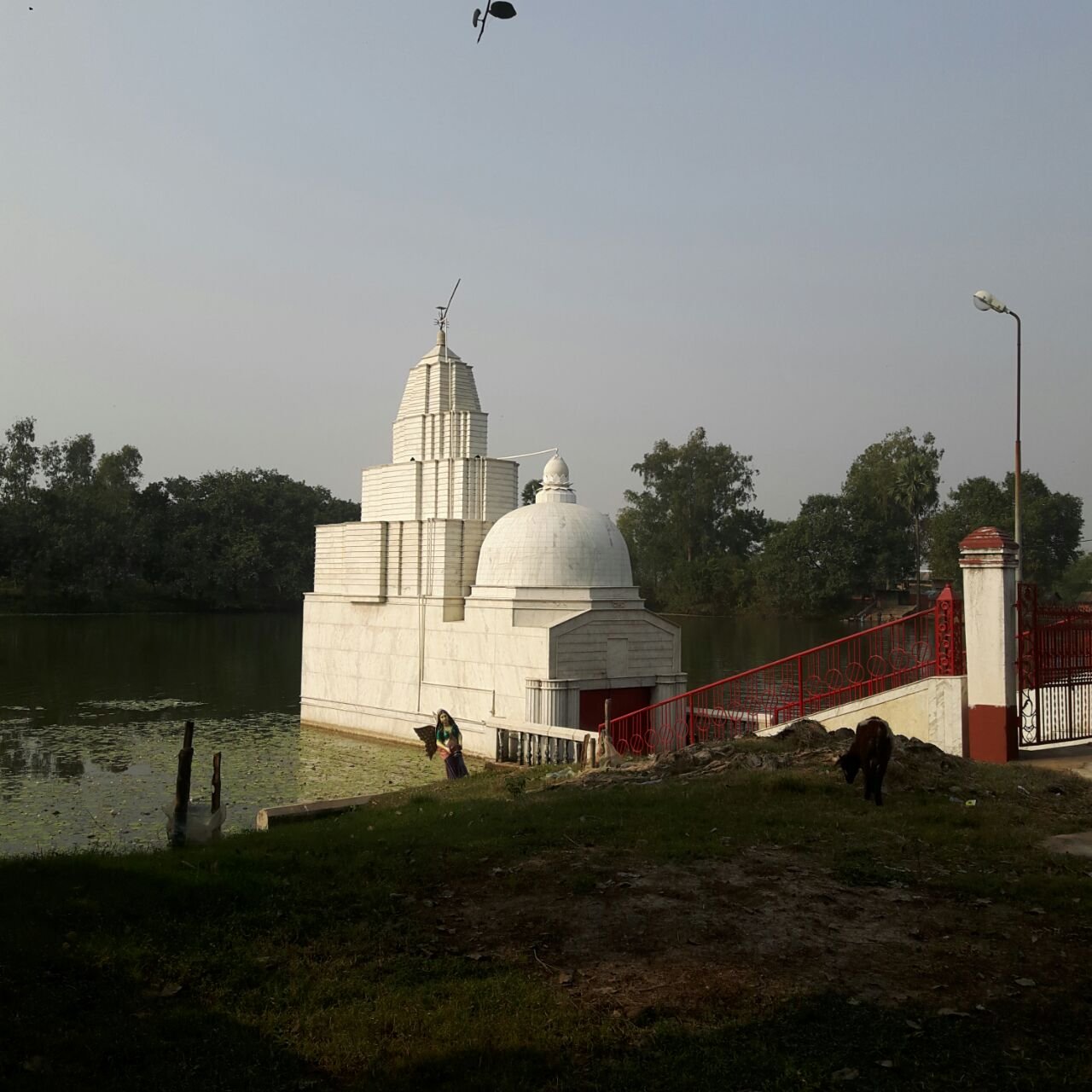
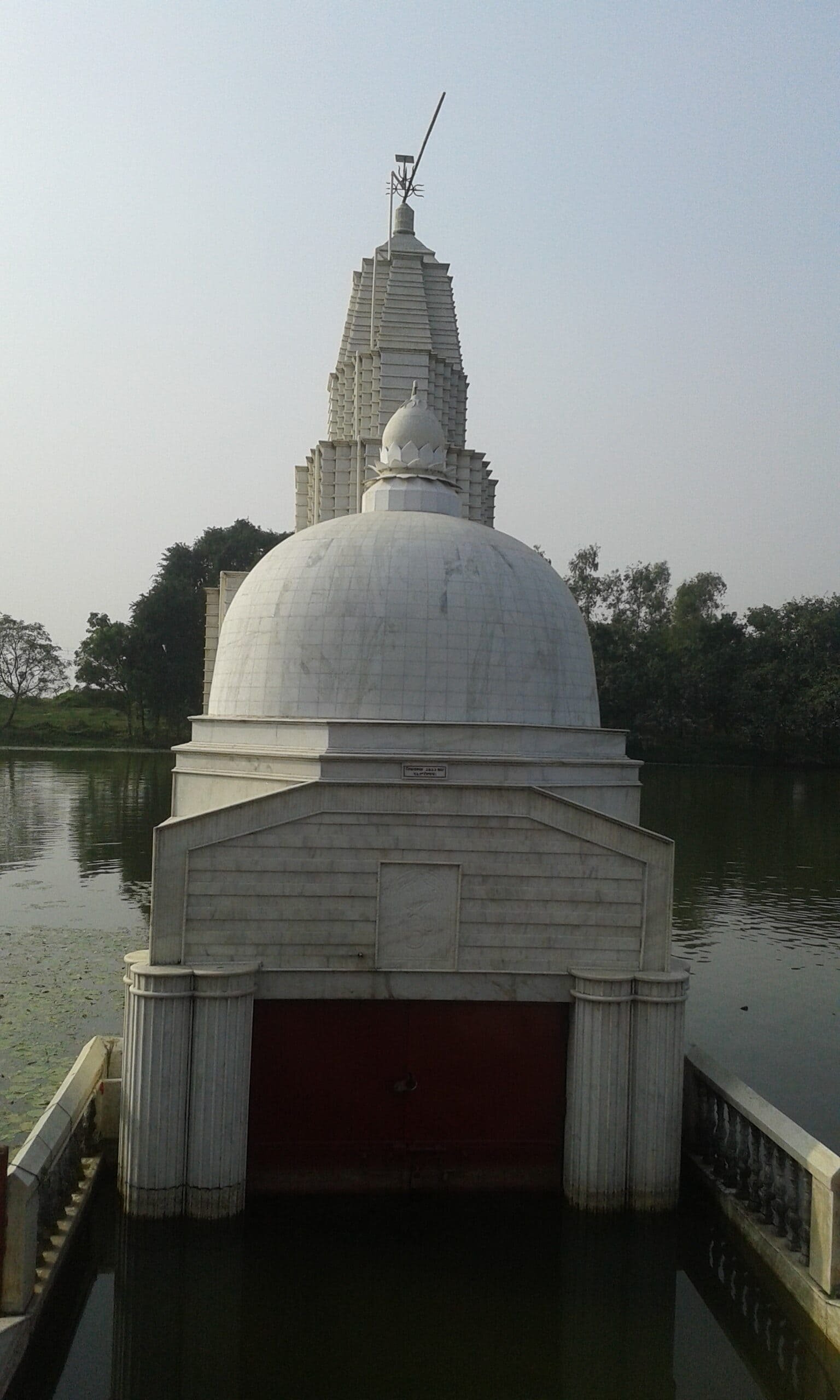
New Temple:- In the Year 2005, a new temple made of white marble had been erected in the middle of a pond named “Kshirdighi”. The idol of Devi Jogadya is kept underwater in this tample. During the re-excavation of Kshirdighi another ancient idol of Devi Jogadya was found. In 31st December 2011 new temple made of Red Stones had been inaugurated and idol mentioned above was set up there. In this temple one can find Bhog Ghar ,Bhandar Ghar, Nat Mandir,and a guest house for fooding and lodgings of the tourist, and it is surrounded with a boundary wall.
Both the idols are made of “Kashti Stones” and looks like the idol of Goddess Durga. The newer idol was made by Nabin bhaskar around 180 years ago. The older idol is around 600 yrs old.
Kshireswar :- The Bhairav (Shiva) of this sati pith is named as Khireswar . This Temple is also ancient one and its height is about 30 feet and it’s a three steps temple. ‘ Kalapahar’ had tried to destroy this idol.
Kshirgram is an ancient village under Mongalkote Police Station in the district of Bardhaman. The village is well connected by road. Its distance is around 40 Kms from Bardhaman and 20 kms from Katwa. The nearest Railway Railway station is Kaichar which is around 4 kms from here from Kolkata 165 kms.
Kshirdighi: – Kshirdighi covers an area of 13 acre. Plenty of large fishes are here. They come to brink of the pond is Pick Pices of food from the visitors. The dighi is surrounded with a beautiful garden. The place is very Pleasant.
How to Reach: – You can reach Kshirgram by bus from Katwa & Burdwan. If you come by train from Howrah railway station, Kolkata. You have to get down at Kaichar railway station which is 36 km away from Burdwan and 20 km away from Katwa. Kshirgram is just 4 km away from Kaichar. You can travel by rikshaw and bus etc.
17.Maa Kali (Kolkata, West Bengal)
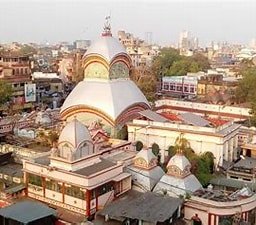
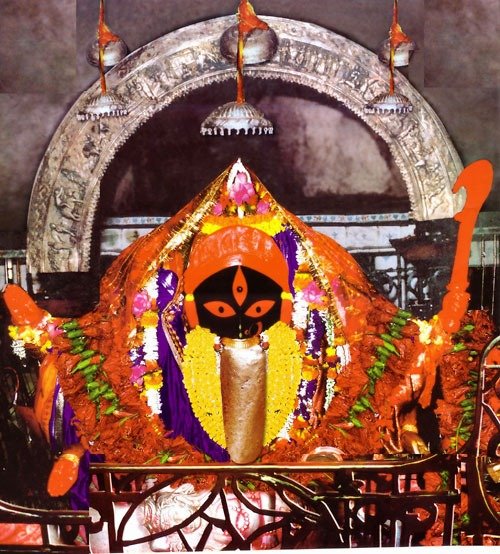
Kalighat was a Ghat sacred to Kali on the old course of the Hooghly river in the city of Calcutta. The name Calcutta is said to have been derived from the word Kalighat. The river over a period of time has moved away from the temple. The temple is now on the banks of a small canal called Adi Ganga which connects to the Hoogly. The Adi Ganga was the original course of the river Hoogly (the Ganges). Hence the name Adi Ganges. Kalighat is regarded as one of the 51 Shakti Peethas of India, where the various parts of Satis body are said to have fallen, in the course of Shivas Rudra Tandava. Kalighat represents the site where the toes of the right foot of Dakshayani or Sati fell. Legend has it that a devotee discovered a luminant ray of light coming from the girathi river bed, and upon investigating its source came upon a piece of stone carved in the form of a human toe. He also found a Sambhu Lingam of Nakuleshwar Bhairav nearby, and started worshipping Kaali in the midst of a thick jungle.
Kalighat was a Ghat sacred to Kali on the old course of the Hooghly river in the city of Calcutta. The name Calcutta is said to have been derived from the word Kalighat. The river over a period of time has moved away from the temple. The temple is now on the banks of a small canal called Adi Ganga which connects to the Hoogly. The Adi Ganga was the original course of the river Hoogly (the Ganges), Hence the name Adi Ganges. Kalighat is regarded as one of the 51 Shakti Peethas of India. NatmondirA large rectangular covered platform called Natmondir has been erected adjacent to the main temple, from where the face of the image can be seen. This was originally built by Zamindar Kasinath Roy. It has been subsequently renovated often.
Radha Krishna Temple
This temple is known as Shamo-ray temple and is situated inside the temple at the west side of the main temple. In 1723, a settlement officer of Mushirabad district first erected a separate temple for Radha-Krishna. In 1843 a Zamindar called Udoy Narayan Mondal erected the present temple in the same spot. The Dolmancho was founded in 1858 by Madan Koley of Saha Nagar. There is a separate kitchen for preparation of vegetarian Bhog for Radha-Krishna.
SosthiTala
This is a rectangular altar about three feet high bearing a small cactus plant. Beneath the tree, on an altar three stones are placed side by side - left to right representing the Goddesses "Sosthi", "Sitola", and "Mongol Chandi". This sacred spot is known as Sosthi Tala or Monosha Tala. This altar was constructed by Gobinda Das Mondal. The place of the altar is the Samadhi of Brahmananda Giri. Generally, females are offer their 'Puja' (worship) here. No daily worship or offering of Bhog (food offering) is done here. The Goddesses here are considered as parts of Maa Kali.
Kundupukur
This is the sacred tank situated in the south-east of the temple outside the boundary walls. Present area of the tank is approximately 10 cottahs. In the past it was bigger and called 'Kaku-Kunda'. In sixteenth century 'Sati-Ango' was discovered from this tank. This tank is well known for its power to bestow the boon of a child. The water from this tank is regarded as sacred as that of the Ganges.
Unfortunately the attention of the Devotees towards this tank has dwindled in recent times.
HarikathTala
This is the spot adjacent to the Natmondir, at the southward corner, there is a place for Bali (Sacrifice). There are two sacrificial altars for animal sacrifices side by side. These are known as Hari- Kath.
This can be spotted next to Natmondir and is used for Sacrifice of animals and so known as Hari - Kath. The bigger one inside the complex is meant for bigger and heavier animals like buffalo sacrifices while the smaller part is reserved for smaller ones like goats and sheep. The animals are sacrificed with a single stroke of the knife and there is very little cruelty to animals when compared to the professional abattoirs.
How to Reach
18. Maa Kankeleshwari (Devgarbha),Burdwan, West Bengal
Vedgarbha Shaktipeeth Shri Kankaleshwari Kali Temple is located in City of Burdwan state of West Bengal.The Kankaleshwari Kali temple is a “Nabaratna Temple” – so called, because it has 9 (nine) peaks, though 6 (six) peaks are visible from the front. The Navaratna style of temple architecture (meaning “nine gems”) incorporates two main levels, each with four spired corner pavilions, and a central pavilion above, for nine spires
The mythology of Daksha yoga and Sati’s self immolation is the story of origin behind Shakti Peethas. Shakti Peethas are holy abode of Devi formed due to the falling of body parts of the corpse of Sati Devi, when Shiva carried it and wandered through. There are 51 Shakti Peeth linking to the 51 alphabets in Sanskrit. Each temple has shrines for Shakti and Kalabhairava. The Shakti of the temple is addressed as “Devgarbha” and the Bhairava as “Ruru”. It is believed that Sati Devi’s bones have fallen here
Another Kankaleshwari Shaktipeeth which is near Bolpur, Shantiniketan. There is a holy pond/kund where the waist part of the goddess has fallen.
How to reach –
Kankaleshwari Kali Devi Temple is located in Kanchan Nagar, around 8 kms from Burdwan district. the Temple is about 102 kms, from Kolkata. The Temple is connected by bus route also. Nearest airport is Kolkata.
19.Maa Kankhaleshwari (Bolpur ,Labhpur, Birbhum, West Bengal)
Kankalitala is a Temple town in Bolpur subdivision of Birbhum district. One of the fifty-one Shakti Pithas of the country is the Kankhalitala Temple which is located about 8 kms northeast of Shantiniketan town in Bolpur. Kankhalitala Temple is located in Kankhalitala town on the banks of River Kopai on the Bolpur-Labpur Road.
According to Hindu Mythology, Lord Shiva's consort – Goddess Parvati had died in the arms of Lord Shiva who in a fit of rage danced all over the Indian subcontinent during which time Lord Vishnu, in order to stop Lord Shiva had destroyed Goddess Parvatis body by dismembering it into 51 pieces – of which, her waist (kankhal – from which the name of Temple is derived) is said to have fallen in the area which is at present the Kankalitala town. Goddess Parvati is the residing deity of the Kankalitala Temple. Such is the prominence of this Temple that it forms a part of the most important Hindu-pilgrimage circuit of India. Tourists visiting the Shantiniketan Visva Bharati also visit this Temple which is just around 9 kms away to pay homage to Goddess Parvati.
How to Reach
The nearest rail station is Bolpur railway station. Bolpur is connected to Kolkata and Howrah Junction by daily trains.
Kankalitala Temple is situated about 9 kms from Bolpur. It is located on Bolpur- Labhpur road, on the banks of river Kopai in Birbhum district.
20. Maa Kiriteswari (Lalbag, Murshidabad, West Bengal)
The original Mandir was destroyed in 1405. The present temple was made in the 19th century by Darpanarayan. The town is sanctified by the river Bhagirathi and Maa Kiriteswari, the Holy Goddess. It is a famous Hindu temple in West Bengal.
The main temple of the town is that of Maa Kiriteshwari’s temple. The unique feature of the temple is the absence of any image or deity. The red coloured stone which is supposed to be the symbolic representation of the Goddess is covered by a red veil the year through. The veil is changed and she is given a holy bath only on Ashtami of each Durga Puja. The head dress of the Hindu Goddess, Kiriteswari, has been worshipped through the ages.
The head dress is preserved at Rani Bhabani's Guptamath at present, situated opposite to the temple. In the new temple, there is no image. There is a high alter on which a small alter is seen. The face of Maa is indexed here. Yogendranarayan Roy, by Darpanarayan the late king of Lalgola had renovated and had taken care of the temple constructed. To ruins, the original temple had turned. On the right side, beneath given the shot of the ruined one.
Bhagwan Roy received the land where the temple was situated from Akbar, the great. The old temple, built by Bhagwan Roy was southern entranced and the new one, built by Darpanarayan Roy , a successor of Bhagwan Roy, was eastern entranced. The temple remains opened from 6 am to 3 pm and again from 5 pm to 10pm daily. All information was stated by the temple’s head priest- Sri Dilip Bhattacharya, who is the 3rd generation running in the priest family to serve the Holy mother. Festivals are held at Durga Puja, Kali Puja and on Amavasya (new moon). The special ritual is held on the Ratanti Amavasya (Magh- no moon night) with whole night yagna and other special rituals. And daily, Maa is offered with ‘anna-bhog’ (rice) on the noon. Besides this, various types of seasonal fruit is offered to the goddess. On every Tuesday of the month of Poush (mid-Dec to Mid Jan), a beautiful rural fair is held since the time of Darpanarayan.
Here the ‘Sakti’ (goddess) is ‘Vimala’ and ‘Bhairav’ (Lord Shiva) is ‘Sanwart’.
How to Reach
The kireetkona village is just five kilometers from Dahapara rail station, where the Kiriteswari Mandir is situated. It is the oldest temple in the Murshidabad district. It is one of 51 Sakti Peetha (Sati Peetha) and it is where Sati's 'kirit' or crown fell at Kireetkona village, 3 km from Lalbag Court Road station under district Murshidabad, She is also named as "Mukuteshwari" ( as her mukut or crown fell).
21. Maa Magalchandi (Guskara, Purba Bardhaman, West Bengal )
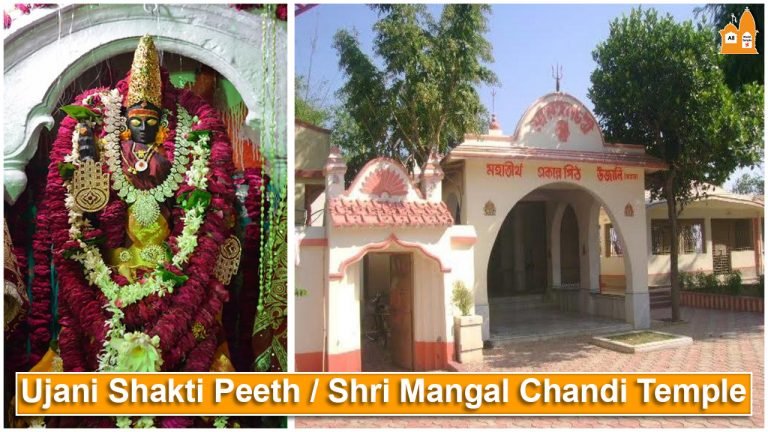
Mangal Chandika Shakti Peeth is located in Ujani village of Guskara in the Bardhaman district of West Bengal state. Mangal Chandika Shakti Peeth is considered among the 51 Shakti Peethas, famous in Hinduism. Guskara railway station is about 16 kilometers from the temple. The chief legend of Ambika relates to the creation of the Shakti Peethas. Sati, the daughter of Prajapati Daksha, was married to the god Shiva versus his wishes. Daksha arranged a great yajna but did not invite Sati and also Shiva. Uninvited, Sati reached the yajna-site, where Daksha ignored Sati as well as Shiva.
Sati was not able to withstand this insult. So, Devi Sati gave her life by jumping into the fire of Havan organized by her father King Daksh. When Lord Shiva was running around the planet carrying her body that Lord Vishnu divided the body into 51 parts utilizing his Sudarshan chakra. Out of those 51 parts, from which the ‘Right wrist’ of Sati fell to this place. The idol of maa Sati is called ‘Shri Mangal Chandi’ and the lord Shiva is worshipped as ‘Kapilambar’Inside the Garbha Griha, two idols of the deities are consecrated. One is of Devi Mangal Chandi and the other is of Lord Shiva.
How to Reach
Nearest railway Guskara station is about 16 kilometers from the temple. Guskara is well connected with Burdwan City (WB) and buses are available in these routes.
22. Maa Mahamaya (Bilaspur, Chhattisgarh)
Mahamaya Temple is a temple dedicated to Goddess Durga, Mahalaksmi located at Ratanpur of Bilaspur district in Chhattisgarh, India and is one of the 52 Shakti Peethas, shrines of Shakti, the divine feminine, spread across India. Ratanpur is a small city, full of temples and ponds, situated around 25 km from district Bilaspur of Chhattisgarh.Goddess Mahamaya is also known as Kosaleswari, presiding deity of old Daksin Kosal region (modern Chhattisgarh state).
Built in the 12–13th century, the temple is dedicated to the Goddess Mahamaya. It was built during the reign of Kalachuris of Ratnapura. It is said to be located at the spot where king Ratnadeva had a darshan of goddess Kali.
Originally the temple was for three goddesses viz Maha Kali, Maha Lakshmi and Maha Saraswati. Later, Maha Kali left the old temple. Still later, a new (current) temple was built by king Bahar Sai which was for goddess Maha Lakshmi and goddess Maha Saraswati. This temple was built in vikram samvat 1552 (1492 AD). There are ponds near the temple. There are also temples of Shiva and Hanuman within the campus. Traditionally Mahamaya is the Kuldevi of Ratanpur state. The temple has been renovated by the architecture department. Mahamaya temple is situated at Ratanpur, 25 km from district headquarters Bilaspur, Chhattisgarh.
The Mahamaya temple is built in Nagara style of architecture facing north beside a huge water tank. One can see the scores of ancillary temples, domes, palaces and forts now, which once housed the temple and the royal house of Ratanpur Kingdom.
Within the complex, there is also temple of Kantideval, which is oldest of the cluster and is said to have been built by a build ascetic named Santosh Giri in 1039, later expanded by Kalchuri King Prithivideva II in the 15th century. It is having four gates and beautiful carvings. It has also been restored by Archaeological Survey of India. The sanctum and the mandapa are fortified with a fascinated courtyard, which was built in Maratha period in the late 18th century.
A few kilometers away there are ruins of ancient 11th century old Kadeideol Shiva temple located on a hill top of ruined fort, built by Kalchuri rulers, who were followers of Shiva & Shakti. This temple is also being planned for restoration by the archaeological department.
People throng the temple during Navaratri festival, when Jyotikalash is lit to appease the mother goddess. The guardian of the temple is considered to be Kalbhairva, whose temple is located on the approach road to the temple on the highway. It is a popular belief that pilgrims who visit Mahamaya temple also need to visit the temple of Kalabhairava to complete their pilgrimage.
How to Reach – The nearest Railway Station is Bilaspur, 30 km from the temple. The nearest airport is Raipur Airport, 162 km from the temple.
23. Maa Mahamaya (Raipur, Chhattisgarh)
One of the historical temple in Raipur near a river. The main deity is known as Mahamaya, a goddess with combination of the powers of Vishnu and Shiva. The main campus of temple has the smaller statues of Mahakali, Bhadrakali, Surya Dev, Lord Vishnu, Lord Hanuman, Bhairav and Lord Shiva. She is also known as Durga and Mahishasura Mardini or Jagdambe Around the main temple, there are many other temples. The most important of these are Mahamrityunjaya Panchmukhee Shiv Mandir,
the Mahamaya temple in Raipur is just next to heaven. Nestled on the banks of Khaaroon River in an ancient fort, the Mahamaya Temple attracts lots of tourists every year from all over the world. The temple is devoted to Goddess Mahamaya who is considered to have the superlative powers of both – Lord Vishnu and Lord Shiva. According to Hindu rituals, Goddess Mahamaya is also known by other three names – Durga, Jagdambe and Mahishasura Mardini. Therefore, those who are devotees of Goddess Mahamaya must make a sure visit to this temple to take blessing of this Hindu Goddess.
How to Reach –
By Air – or a quick and sophisticated travel to Raipur, the best option is to travel through air. There is an airport in Raipur from where one can get flights regularly. This airport offers numerous and daily flights for connecting Raipur to the major cities of India like Delhi, Indore, Bhopal and Kolkata and also to Hyderabad, Nagpur and Ahmadabad.
By Road – Road connectivity to Raipur is also easy and comfortable as the city is linked to the major cities of India. As the city is crossed by National highway 6 and 43 because of which it connects the city to Vijaya Nagaram.
By Train – Rail connectivity from Raipur to different cities of India is also appreciable and appealing. Therefore, Raipur is easily accessible through the other main cities like Chennai, Ahmadabad, New Delhi, Mumbai, Kolkata, Bhopal, Pune, Bhubaneshwar and many more. Raipur has its own railway station too.
24. Maa Nalateswari (Nalhati, North 24 Parganas, West Bengal)
The goddess of this place is known as Maa Nalateswari who is also praised as Maa or “Bhagobidhata-Nalateswari” or Devi Parvati or Kalika. The orientation of this name came from pre historic story that narrates how the throat of Sati or “Nala” which one of the 51 parts of sati fell here as known by tradition on the other hand some people do believe that “Lalat” or forehead that fell here. So the name “Nalateswari” comes from “Nala” or throat of Maa sati. Within this natural beauty, the eastern side of the plateau provided secret formation of Nalateswari Temple.
Thousands of pilgrimage visits this place as a lot of peace and serenity resides in the minds of the worshippers. Nalhati which is the average elevations, situated in the tropics, comprising a climate of hot dry summers while cool wet winters, happens to be the birth place of Rishi Bankim Chatterjee, is a beautiful conglomeration of nature, history and religion. Here, within deep forest, under the mysterious old Banyan tree where the “Nala” of maa Sati had dropped on this earth.
How to Reach
It is situated near Nalhati Railway Station on the Howrah-Sahebganj loop line, and is connected by the Panagarh-Moregram Road. Nalateswari Temple is located on a small & beautiful hill.
25. Maa Ratnavali (Maa Anandamayee ) (Khanakul , Hooghly ,West Bengal)
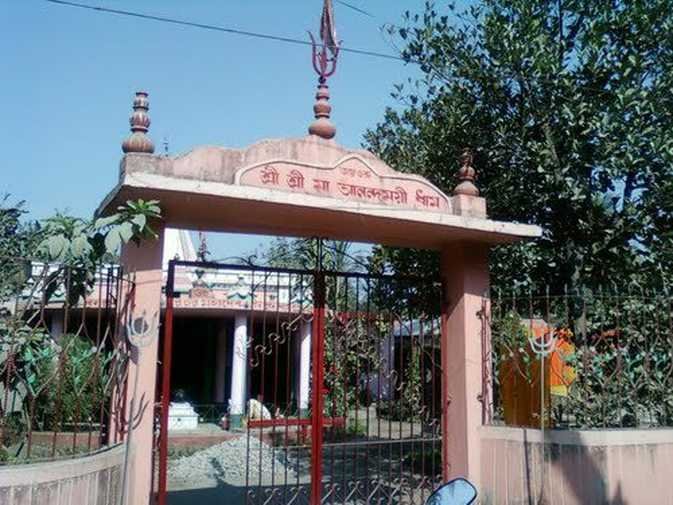
Locally known as Anandamayee Temple, Ratnavali, on the banks of Ratnakar River at Khanakul-Krishnanagar, district Hooghly, West Bengal, India. The dakshina skandha (right shoulder) of the Goddess fell here. Shakti is known as Kumari and Bhairava as Shiva Khanakul is about 90 kms from Kolkata. Locally, the Temple is known as Anandamayee Temple.
An awe-inspiring power of the Universe - “Ratnavali shakti peetha” is one of the historic places in India, where the divine power is worshipped as a Devi Shakti -“Kumari” by Hindu devotees and daily offered with sweets, fruits and anna-bhog.
According to the Hindu legends, it is whispered that Devi Sati’s “Right Shoulder” fell here. The main idols of this legendary divine place are Devi as “Kumari” and Lord Shiva as “Bhairav” (remover of terror), worshipped here. The holy place is dedicated to Maa Durga and Lord Shiva. The Ratnavali Shakthi Peeth is located in the Hoogly district in West Bengal. Buses are quite frequent to this temple and is not so difficult to reach. The temple remains open for a long time. Since we went there not during the peak season time it was not crowded and was very quite and calm.
How to Reach
How to Reach: village near Khanakul (Hooghly district) is about 90 Kms from Kolkata
NANDIKESHWARI TEMPLE
26. Maa Nandikeshwari (Sainthia, Birbhum, West Bengal)
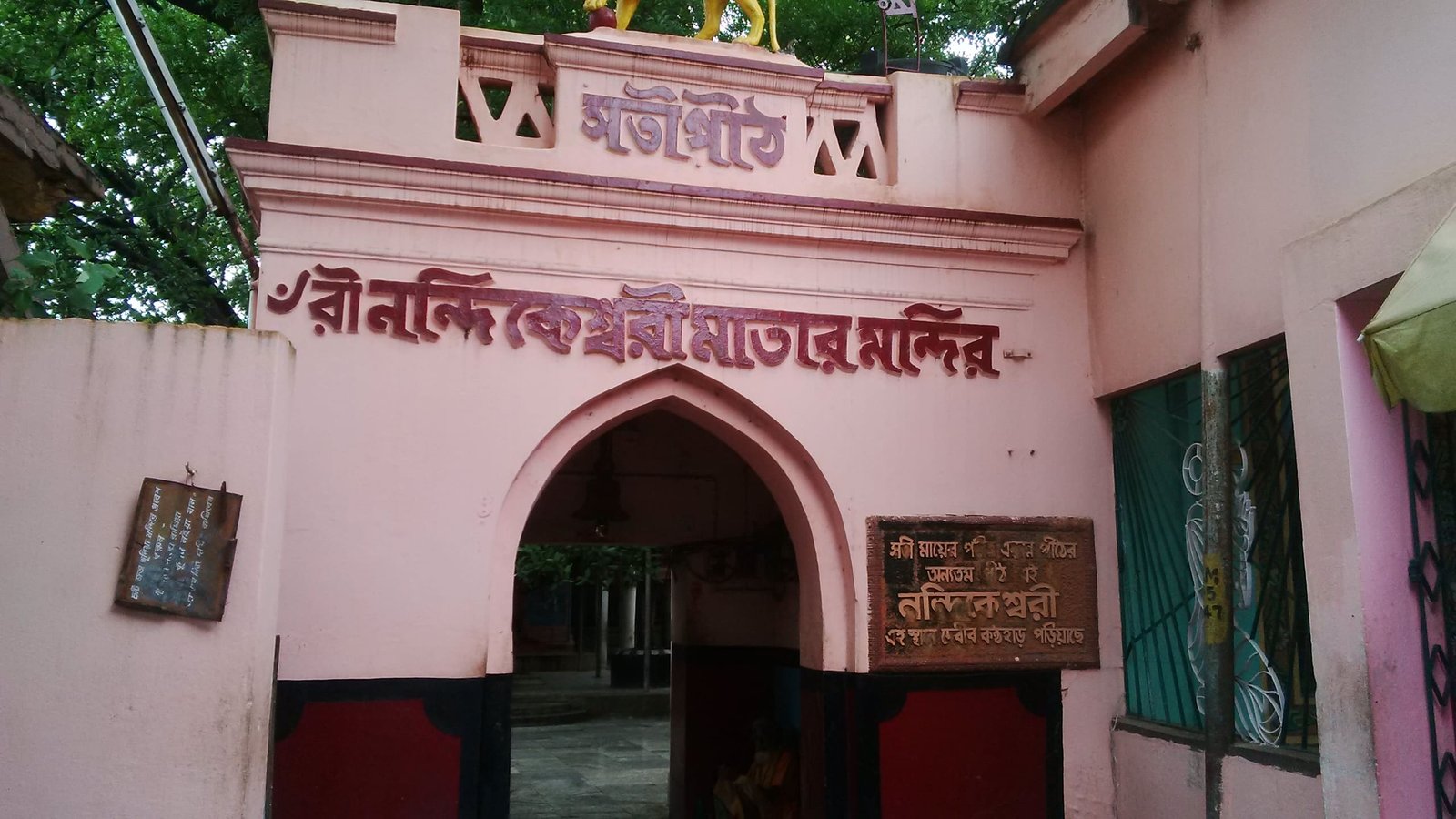
Sainthia is famous for the well-known Temple of Goddess Nandikeshwari. One of the 51 Shakti Peethas, the Temple attracts a vast array of Visitors and devotees from all over the region. The Temple rests on an elevated platform and contains many additional smaller shrines to many gods and goddesses of the Hindu pantheon. Statuettes of the Mahavidyaas are carved on the walls overlooking the main Temple. Puja is offered daily to the Goddess. The name of Goddess is derived from 'Nandi', the mascot and follower of Lord Shiva, and 'Ishwari' (Goddess), meaning 'one who is worshiped by Nandi, the divine bull'. Wife to Lord Shiva, the Goddess is one of the many aspects of Goddess Sati or Parvati. Usually, a circular journey for pilgrimage is undertaken by Visitors and devotees from Kolkata and other major cities in the Birbhum District, starting from Shantiniketan, through Tara Pith and Nandikeshwari and finally to Fullara Mahapith of Labhpur. Daily 'Prasad' is offered to the devotees in the Temple. Annual festival is held during the autumn season.
Sainthia is a town and a municipality in Suri Sadar subdivision of Birbhum district. The town is famous for Nandikeshwari Temple, one of the Shakti Peethas in India. Construction of the Sainthia railway station was done as part of building the entire line. This large project brought people from different corners of this country to assemble and settle here. With the effort of the inhabitants of this urban locality, Sainthia has been turned into a commercial hub of the district. Now it is growing rapidly through all the development and service avenues to be a model municipality by taking good care of its inhabitants and the nature surrounding it.
How to Reach
Nandikeshwari Temple (Shaktipeeth) is only about 1.5 Kms from Sainthia railway station. The place is well connected with Howrah Station and Sealdah Station.
27. Maa Samleshwari (Sambalpur, Odisha)
On the bank of river Mahanadi, goddess Samaleswari is worshipped from ancient times as Jagatjanani, Adishakti, Mahalaxmi and Mahasaraswati. The region in which the temple is situated has a rich cultural heritage. Sambalpur is popularly known as “Hirakhanda” from ancient times. Samaleswari Temple is a Hindu temple in Sambalpur, Western Odisha, India, dedicated to the goddess known as ‘Samaleswari’, also known among the natives as samalei maa, meaning Mother Samaleswari. Shree Shree Samaleswari, the presiding deity of Sambalpur, is a strong religious force in western part of Odisha and Chhattisgarh state of India. On the bank of the river Mahanadi, the mother goddess Samaleswari is worshipped from ancient times as Jagatjanani, Adishakti, Mahalaxmi and Mahasaraswati, and is the mother of the universe. After Lord Jagannath, she is the only Goddess in Odisha who is the presiding deity of such a large region including the complete Western Odisha, parts of Jharkhand and Chhattisgarh. The region in which the temple is situated has a rich cultural heritage. Sambalpur region is popularly known as Hirakhanda from ancient times. Ptolemy has described the place as Sambalaka, according to Tavernir, the French explorer, and Edward Gibbon, the English historian, diamonds were exported to Rome from Sambalpur.
The temple is of Sandhara order (these types of the temples have a square sanctum enclosed by a gallery of pillars meant for pradakshina). Thus, the Sandhara temples have a Pradakshinapatha is built of a kind of stone as durable as granite, cemented with lime mortar, the whole building is plastered, but in the course of time the surface has become mouldy. The temple consists of two separate structures. The square sanctum enshrining the deity is four step below the 10-foot-wide (3.0 m) covered circumambulation, which is supported by 12 stone pillars. Eleven parswa devis (side Goddesses), are embedded on the outer wall of the sanctum, so that the devotees can worship those deities during parikrama through the vaulted circumambulation. The idol of Shree Shree Samalei Devi consists of a large block of granite rock with an inverted, trunk-like projection at the bottom. This also symbolises a yoni, and is an interesting kings-yoni worship. A shallow cut on her “Baraha” like face symbolises her mouth. Traditional Sambalpuri nose ornament of pure gold hangs down from her imaginary nose. Beaten gold leaves fixed on two disproportionate golden eye-like depressions on the face act as substitute for her eyes in an attempt to define the face of the mother deity on a mass of self shaped rock, the devi’s idol inspires sublime sentiments of awe, fear, reverence, devotion, love and affection towards all-pervasive motherhood.
She is worshipped with great care and devotion by the natives in her temple, famously known as the Samaleswari temple. Among the varieties of festivals observed before the goddess throughout the year, three festivals are observed prominently. The first two are Navaratri pujas during the months of March and April and during the months of September and October (Chaitra Navaratri and Ashwin Navaratri respectively). The goddess is dressed differently on each day representing each of the Navadurgas, this is called Beeja. Among these two navaratra pujas (nine days continuous worship of the goddess), the second one is observed with great splendour and devotion. On the 1st day of the Navaratri, the goddess is dressed in white attire, called Dhabalamukhi. The third festival which is said to be the chief festival of the whole western Odisha region is Nuakhai. In this festival, the farmers offer the first produce from their lands to the goddess before using it for their personal use.
How to Reach –
By Air: The Nearest airports are Swami Vivekananda International Airport, Raipur (265 K.M) and Biju Pattnaik International Airport, Bhubaneswar (300 K.M). A new airport is being constructed at the industrial township of Jharsuguda (50 K.M) & Nearest Airstrip is at Jamadarpali (10 K.M)
By Train: Nearest Railway Station is Sambalpur – 2 KM By Road
By Road: Distance from Private Bus Stand is 7 KM. One can get Auto/Taxi easily.
28. Maa Tarapith (Rampurhat, Birbhum,West Bengal)
Tarapith is famous for the temple of Tara Ma and Sadhan Pith of Sadhak Bamakhyapa. Tarapith, a holy religious place, is situated in a village Tarapur under Rampurhat Police Station of Rampurhat Sub-Division in the district of Birbhum. It so called because the eyeball (Tara) of Sati fell here. Others say that Tarapith is not a pith but the place owes its sanctity to the fact that the Sage Basistha here worshipped the Goddess Sati in the form of Tara. The Goddess Tara is a form of Kali with two hands, garlanded with snakes and adorned in sacred threads. But the Temple is dedicated to the destructive aspect of Shiva, which takes the form of Kali. She requires sacrifice daily to satisfy her blood lust so every morning goats are sacrifices on the altar of the Temple.
The deity of Tara is enshrined inside the temple. It is a special temple for more reasons than one. The nearby cremation ground makes this a quite rare temple, especially considering its surroundings. The worship here includes blood offerings. The strong rituals, the hymns sung here also contribute to make this temple a very special one. The temple base is made up of red brick. There are two Tara images in the sanctum. The stone image of Tara is camouflaged by a metal image which the devotees see.
Ma Tara Temple is the main attraction of the temple town of Tarapith, which is located towards the town centre. Ma Tara Temple, in 1225, is a prominent tantric temple related to the Shakt sect of Hinduism. The main temple in the town is a small temple built of marble and terracotta, it has a curved roof called the 'dochala'. All the giant doors falling in the way to the main shrine are carved and made up of engraved metal with extremely intricate designs of various religious symbols carved on them
TARAPITH MAHA SASAN Tarapith Maha Sasan is an auspicious place, lies very near to the Tarapith Temple. It is pretty well known for the Tantric rituals performed here. Goddess (Goddess Tara) prevails here in the form of a twinkling of light, like a "Star" (meaning of Tara in Hindi, Sanskrit, Bengali and other languages), a fearsome Tantric aspect of Adhya-Shakti. Here the Third Eye of "Sati" had fallen and it is recognized as one of the 52 Peeths (where pieces of dead body of "Sati" had fallen) of "Sati", a place reflecting lots of supernatural and extraordinary powers. If we look back through the pages of history, we can find that Maharishi Vashistha (Guru of Ramachandra), performed rituals or rites over here in order to attain siddha ("perfection" in viewing the deity and obtain her blessing) from Goddess Tara and to get her blessing. In the later stage, the worship of Goddess Tara began with Tantric rituals following the order of Panchamakar Vidhi or Sadhana . Worshipping with five elements, namely, 1. Madya (Wine) 2. Goddessns (Meat) 3. Matsya (Fish) 4. Hasta Mudra (Parched Grain) 5. Maithuna (Sexual intercourse) is called a Panchamakar Sadhana. Worship of some Gods in Hinduism, basically those who have Taamsi or Tamo (destructive) qualities require this method of worship, to get rid of desire from within human beings. It is also said that it is pretty easy to attain accomplishment by worshiping here. Rituals of Tantrism practiced by famous 'Matri Sadhak' Shri Shri Bama Khepa aliasly renowned as Bam Dev.
BAMAKHEPA TEMPLE Sri Sri Bamdev Smriti, a pink color temple dedicated to Saint Bamakhepa. Often called the mad saint, Bamakhepa was a famous tantrik known for his divine frenzy. There is a tomb and samadhi right outside the temple where people offer prayers and offerings in the name of the saint.
Mallarpur Shiv Temple
This temple is located about 10 kilometres from Tarapith and is considered to be one of the oldest temples in the Birbhum. There are around 21 temples and a tiny pond surrounding this temple which makes it aesthetically beautiful. This temple was built by the Malla rulers some 800 years ago. This temple is totally dedicated to Lord Shiva and it is said that in ancient times the temple was surrounded with dense forest. Especially during the festival of Shivratri, devotees of Lord Shiva visit this temple to seek holy blessings. A magnificent fair is also hosted in the adjoining Nimtala area on this day.
How to Reach: It is located in Mallarpur village 2 km away from Mallarpur Rail Station. BIRCHANDRAPUR TEMPLE Birchandrapur Temple - Birchandrapur - Birchandrapur, 10 k.m. away from the Tarapith, is famous for the birth place of Nityananda Swami, co founder of Baisnav religion with Shri Chityanyadev. Birchandrapur, named after Birbhadra Goswami - the son of Nityananda, is a part of the village Ekachakra which according to mythology has been inhabited by the Pandavas. 'Akali mandir' is situated at Akalipur, near Bhadrapur, 25 k.m. from Rampurhat and famous for its unique hexagonal structure and had a history of more than 300 years (it is associated with Maharaja Nandakumar). According to the lore the ancestral house of Maharaja Nandakumar is still there at Akalipur. At present there is a Vaishnab religious center (ISCON TEMPLE) with some old temples in Birchandrapur.
How to Reach
By Air: The nearest airport Netaji Subhas Chandra Bose airport is at Kolkata. One can avail taxi or bus services from airport to reach Tarapith.
By Train: The nearest railway station is Rampurhat. Taxi services from railway station to Tarapith are available. Rampurhat is well linked with Howrah and Sealdah.
By Road: The state owned and private buses connect Tarapith with Esplanade / Dharamtala bus stand of Kolkata and with the neighboring cities of the state.
29. Maa Taratarini (Brahmapur, Odisha)
The Taratarini Temple on the Kumari hills at the bank of the River Rushikulya near Brahmapur city in Ganjam District, Odisha, India is worshiped as the Breast Shrine (Sthana Peetha) and manifestations of Adi Shakti. The Tara Tarini Shakti Peetha is one of the oldest pilgrimage centers of the Mother Goddess and is one of four major ancient Tantra Peetha and Shakti Peethas in India.
The historical texts recognize four major Shakti Peethas: Tara Tarini (Stana Khanda), near Brahmapur; Bimala (Pada Khanda) inside the Jagannath Temple, Puri; Kamakhya (Yoni Khanda), near Guwahati; and Dakshina Kalika (Mukha Khanda) in Kolkata. There are 52 other sacred Shakti Peethas, which originated from the limbs of Mata Sati’s corpse in the Satya Yuga.
Four Adi Shakti Peethas
Religious texts including the Shiva Purana, the Kalika Purana (the Asthashakti), and the Devi Bhagavata and Tantric texts like Herambha Tantra, Sthananirupana Tantra and many more Tantras recognize the four major Shakti Peethas.
As per famous Tantric texts; Uddrankhya in the then Western India (now in Pakistan), Jalandhar in Punjab North India, Kamarupa in Assam, Eastern Indian and Tara Tarini on Purnagiri hills with Sthana Kunda (then Kalinga Empire & Now South Odisha) in Southern India are 4 major Tantra Peethas of ancient India. A sloka is dedicated for these shrines in the Herambha Tantra, which was written 2000 years ago.
As per famous Puranas; Like the Kalika Purana says. (Vimala, Pada Khanda) inside the Jagannath Temple, Puri, Odisha, (Tara Tarini) Sthana Khanda (Breasts), near Brahmapur, Odisha, (Kamakhya, Yoni khanda) near Guwahati, Assam and (Dakshina Kalika Kalighat, Mukha khanda) in Kolkata, West Bengal originated from the limbs of the Corpse of Mata Sati. In a hymn, the Kalika Purana (Asthashakti) clearly says:
“Vimala Pada khandancha,
Stana khandancha Tarini (Tara Tarini),
Kamakhya Yoni khandancha,
Mukha khandancha Kalika (Kali)
Anga pratyanga sangena
Vishnu Chakra Kshate nacha
Peetha Body Part Place Vimala
Pada khanda Puri, Odisha
Tara Tarin Stana khanda Berhampur, Odisha
Kamakhya Yoni khanda Guwahati, Assam
Dakshina Kalika Mukha khanda Kolkata, West Bengal
The great ancient texts including the Shiva Purana and the Kalika Purana (the Asthashakti) recognize the four major Shakti Peethas.
Further explaining the importance of these four Peethas the Brihat Samhita gives the geographical location of these Peethas. For example:
“Rushikulya Tate Devi, Tarakashya Mahagiri, Tashya Srunge Stitha Tara, Vasishta Rajitapara”
Thus, there is no dispute regarding these four Adi Shakti Peethas and their locations. (Four Adi Shakti Pithas are also part of 51 Shakti pithas but they are four major parts of Devi Sati’s body. So, they are important, powerful and believed as adi shakti pithas)
Adi Shakti goddesses Tara Tarini have been regarded as the presiding deity (Ista-Devi) in many parts of India and in most of the households in Odisha. This holy shrine is in the eastern coast, about 30 km from the commercial nerve centre of Odisha, Brahmapur. The historically famous Jaugada rock edict of Emperor Ashoka and the pious river Rushikulya, which has been described in Rig Veda as ‘Gangayah Jyestha Bhagini’(the elder sister of the Ganga), are also present near this shrine.
Since time immemorial, Adyashakti is being worshiped here as Devi Tara Tarini on the blue capped holy mountain of Tarini Parvat/Kumari hills/Ratnagiri/Purnagiri. At the hilltop, a beautiful stone temple is the abode of Maa. Two stones anthropomorphized by the addition of gold and silver ornaments and shaped to be seen as human faces are the main shrine of this temple which represent the goddesses Tara and Tarini. In between them are two fully celebrated and beautiful brass heads as their Chalanti Pratima or their Living Image.
According to the ancient Puranas the origin of Maa Tara Tarini is directly attributed to Daksha Prajapati’s Jagna in Satya Yuga. The famous Shakta Peethas of Bimala, Tara-Tarini, Dakshina Kalika and Kamakshi originated from the limbs of the divine corpse of Devi Sati. Ancient texts like the Shiva Purana, the Kalika Purana, the Devi Bhagabat attest this fact.
It is known from the Mahabharata that before the commencement of the Mahabharata war Lord Sri Krishna had advised Arjuna to offer prayer for victory at Shridevi Kupa or Bhadrakali. Bhadrakali originated from the limbs of Sati like the other four major Adi Shakti Peethas, which existed during the time of the Mahabharata or around 6000 years ago. This is the oldest data/information we get till date, regarding the existence of the shrines originated from the limbs of the divine corpse of Devi Sati.
According to available historical sources the fall of Kalingan Empire and its capital Sampa (Samapa) in the Kalinga war around 2300 years ago by Mauryan Emperor Ashoka, strengthened the grip of Buddhists in this part of India. The then Sampa was hardly 7 km from Tara Tarini Hill Shrine. So, scholars believe that Tara Tarini was worshiped as the principal deity (Ista-Devi) of the mighty Kalinga Empire. After Ashoka conquered Kalinga scholars found it a famous centre of Buddhism. The region of Ganjam near the bank of river Rushikulya was an active Buddhist site as shown from the Special Rock Edicts of Ashoka found at Jaugada at a distance of 4 km from Tara-Tarini Hill Shrine. The name Tara (Buddhism), an important deity of Mahayana Buddhist Pantheon, is suggestive of Buddhist influence. An image of Buddha in meditation, present inside the sanctum sanctorum of the temple lends credence to the claim of this site as an ancient centre of the Buddhist Shakta cult.
According to the texts of Mahayana Buddhists, in the initial days, the Buddhists didn’t believe in the worship of Goddesses or in Pratimapuja (Idol Worship). But, the ecclesiastical texts of Mahayana’s reveal that from 1st century AD after the fall of Kalinga, for the first time the Mahayana Buddhists accepted the worship of Mother Goddess ‘Tara’. So there is seldom any doubt that the Buddhists have learned the ‘Tara’ Puja concept from this shrine. The Bouddha Tantrik texts, texts of Vajrajani sect and Hindu Tantrik texts also attest these facts. Scholars believe that in the primary days the Buddhists worshiped Taratarini, the principal seat of Tantrik sect in Hinduism at that time, as Bouddha Tara, and later on included ‘Tara’ as the Tantrik deity or spouse of bodhisattva Avalokiteshvara in their belief system. Gradually this ‘Tara’ worship spread to different parts of the world.
Besides the worship of Tara by the Buddhist Tantrikas, the maritime history of Kalinga suggests the worship of Tara by the Sadhavas, merchants and seamen before launching their sea voyage from the great sea ports like Dantapura (Gopalpur), Pallur near Chilika Lake, Kalingapatna and river Rushikulya. All these major sea ports of the ancient world were very near the Tara Tarini hill shrine.
It is known from the available sources that till 17th century this place was out of the sight of the common man. But, according to a folk story, once Maa Tara Tarini appeared as two sisters in the house of Shri Basu Praharaj. He was a learned Brahmin of Kharida Vira Jagannathpur village in Ganjam District and one of the great devotees of the Mother Goddess but child less. After staying for some years one day the sisters disappeared suddenly from the house of Basu Praharaj. According to the account of the villagers the sisters traveled up to the Tarini Parvat/Ratnagiri and disappeared there.
Basu Praharaj searched these girls but did not find their tracings. His heart broke down with grief and pain. On that night he saw a dream where the Tara and Tarini informed Basu Praharaj that they were not his daughters; they are the Adi Shakti, Tara and Tarini. The goddesses ordered Basu to come out of the grief and said that the time has arrived and with full devotion renovate the temple on the hilltop of Tarini Parvat and establish the deities according to the Vedic tradition.
After that divine direction Basu discovered the tracings of ancient most presence of Adi Shakti Tara Tarini on the sacred hilltop and immediately took steps to reconstruct the temple and the shrine. Since that time for its magnetism and sanctity this Sthana Peetha (Breast Shrine) of Mata Sati, became a centre of faith and reverence for countless people, in search of peace, tranquility, guidance and spiritual energy and its fame spread like wild fire to become one of the popular religious destinations for millions of devotees.
How to Reach –The temple is at 19°29′N 84°53′E. The location of this shrine along the river Rushikulya (also called the Rushikalyani Saraswati and known as the elder sister of the Ganges in the Vedas) enhanced its religious and cultural significance. The nearest airports are Bhubaneswar (174 km) and Vishakhapatnam (240 km) from the shrine. The nearest railway station is Brahmapur railway station, 32 km from the temple. Taxi services are available from Brahmapur, Bhubaneswar, Puri to Tara Tarini, and regular bus service is available from Brahmapur to the Tara Tarini Junction.
30. Maa Bargabhima (Tamluk, Kharagpur, East Midnapore, West Bengal )
Around 1150 years back, the Maharaja of the Mayur dynasty took the Endeavour to build this temple of Bargabhima temple. Located by the River Roopnarayana at Tamluk village, this shrine at Purba (East) Medinipur is also known as Bhimakali Mandir. Though, the locals often talk about the making of the shrine centuries back. Per Purana, this place was sanctified when the left ankle of Devi Sati fell here. The name of this temple has been mentioned several times in old Bengali literature.
A cultural mix of Hindu, Buddhist and Oriya is predominant at the Bargabhima Temple since many years. Tamluk, previously known as Tamralipta is one of the most significant Vaishnav Shrine. It is believed that the place has been sanctified with the presence of the lotus feet of Lord Krishna. Per sayings in the Kashidas Mahabharata and Jaimini Mahabharata, Sri Krishna Himself came to Tamluk and released the Horse for the Ashwameda Yagna. Alongside the presence of the Shakti Peeth of Vibhas has also made the place pious for the Shaktas and the Shaivas as well.
The temple has a wide arena forming a large courtyard. Inside the sanctum, the idol of Kali ma is consecrated beside the huge Shiva Linga made of black touchstone and is surrounded by a circular partition made of white marble. Goddess Kali is the main deity worshipped here and this manifestation of the Holy Mother resembles that of Mahisasurmardini, diminishing the demons. The deity has four hands holding a Trishul and a human skull. In her lower hands, she is holding the heads of the demons after slaying them. The architecture of the shakti-peeth resembles Kalinga temple tombs as well as quintessential Bangla aatchhala styled Natmandir. Pilgrims will find solace after spending some time in the lap of tranquil nature here. The old temple was destroyed during the Islamic invasion. The present temple is the edifice built on the remains of the ancient one.
Tamluk or Tamralipta is one of the most sacred and revered shrines for Vaishnavas. It is said that the place has been hallowed with the presence of the lotus feet of Lord Krishna when Shri Krishna himself came to Tamluk and released the horse for the AshwamedaYagna. Due to the presence of the Shakti Peeth of Vibhas, it has also made the place sacred for the Shaktas as well as the Shaiva
How to Reach
It is around 87.2 km from Kolkata, 85 km from Kharagpur. It is well connected by NH-6 and south eastern railway tracks.
By Air: NetajiSubhash Chandra Bose Airport is the nearest airport.
By Train: The nearest rail head is Tamluk.
By Road: The temple is located near Tamluk bus stand. The place has a well-connected network of roads.
31. Maa Vimla (Puri, Odisha)
The Vimala Temple or Bimala Temple is a Hindu temple dedicated to goddess Vimala (Bimala), located within the Jagannath Temple complex in Puri in the Indian state of Odisha. It is generally regarded as a Shakti Pitha, among the holiest temples dedicated to the Hindu Goddess.
The temple is located in the south-west corner of the inner enclosure of the Jagannath temple complex and on the western corner of the tower of Jagannath, next to the sacred pond Rohini kunda. The temple faces east and is built of sandstone and laterite. It is built in the Deula style with four components; vimana (structure containing the sanctum), jagamohana (assembly hall), nata-mandapa (festival hall) and bhoga-mandapa (hall of offerings). The temple was renovated around 2005 and is maintained by the Archaeological Survey of India, Bhubaneswar Circle.
Though a small shrine in the temple complex, the Vimala temple is important to the Goddess-oriented Shakta and Tantric worshippers, who revere it even more than the main Jagannath shrine. Vimala is considered to be the sister of Jagannath and a guardian of the temple complex. Devotees pay respect to Vimala before worshipping Jagannath in the main temple. Food offered to Jagannath does not get sanctified as Mahaprasad until it is also offered to Vimala. The Goddess-oriented festival of Durga Puja in the Hindu month of Ashvin (October) is celebrated for sixteen days at Vimala, culminating with Vijayadashami
The central icon of Vimala is of sixth century CE. The present structure, based on its architecture, seems to have been built in the ninth century under the Eastern Ganga dynasty, possibly over ruins of an earlier temple. Its architecture is similar to the shrine of Narasimha near the Mukti-mandapa (a temple hall) in the Jagannath temple complex, dated to the ninth century. The Madala Panji states that the temple was constructed by Yayati Keshari, a ruler of Somavashi Dynasty of South Kosala. Kings Yayati I (c. 922–955) and Yayati II (c. 1025–1040) are known by the title Yayati Keshari. The sculptures, especially the parshvadevatas (attendant deities), as well as the background slab of the central icon, reflect the Somavashi style and may be part of the original temple, on whose ruins the new temple was constructed. Vimala is believed to have preceded even the central Jagannath shrine.
Hindu philosopher and saint Adi Shankara (c. 8th century) is believed to have established Govardhana matha in Puri, with Vimala as its presiding goddess. According to Starza (author of The Jagannatha Temple at Puri), the Jagannath Temple was once a centre of worship for the Trimurti of Brahma, Vishnu and Shiva, along with their consorts and the three central forms of the Hindu Goddess, Sarasvati, Lakshmi and Parvati (in the form of Vimala). The Shri Vidya sect devoted to Goddess worship was strong here until the 17th century. Slowly, Shri Vidya and Shiva-centric Shaiva traditions were eroded but remnants continue, with the Vishnu-centric Vaishnavism becoming the sole tradition. The Tantric Panchamakara, which includes fish, meat, liquor, parched grain and ritual intercourse, were replaced with vegetarian offerings and dance of Devdasis. Fish was caught locally and offered to the goddess. King Narasimhadeva, who ruled between 1623 and 1647, ended the meat and fish offerings of the goddess, although the tradition was later partly revitalized. Today, the goddess is offered meat and fish on special days.
The temple is located in the south-west corner of the inner enclosure of the Jagannath temple complex and on the right hand western corner of the tower of Jagannath, next to the sacred pond Rohini kunda. The temple faces east and is built of sandstone and laterite. It is built in the Deula style that has four components namely, vimana (structure containing the sanctum), jagamohana (assembly hall), nata-mandapa (festival hall) and bhoga-mandapa (hall of offerings). The temple is maintained and was renovated around 2005 by the Archaeological Survey of India, Bhubaneswar Circle.
The Vimala Temple is considered one of the Shakti Pithas, the most sacred temples of the Hindu Goddess, identified with Parvati or Durga. It is considered to be a prime example of the importance of the Shakti cult in Odisha. It is customary to worship the god Shiva (Parvati’s consort) at each Shakti Pitha in the form of Bhairava, the male counterpart or guardian of the presiding goddess of the Shakti Pitha.
In Goddess-oriented worship, Vimala (Bimala) is regarded as the presiding goddess of the Purushottama (Puri) Shakti Pitha Jagannath, The panchbhrama, is worshipped as the Pitha’s Bhairava. This is a departure from the usual tradition of Bhairava as a form of Shiva. So, in this temple complex, Vishnu–one of the Hindu trinity–is equated with Shiva, another of the trinity; this is interpreted to convey the oneness of God. In this regard, Vimala – generally associated with Shiva’s consort – is also considered as Lakshmi, the consort of Vishnu. Conversely, Tantrics consider Jagannath as Shiva-Bhairava, rather than a form of Vishnu.
The main sanctum of the Jagannath Temple has three deities: Jagannath, Balabhadra (elder brother of Krishna, sometimes identified with Shiva) and Subhadra (the younger sister of Krishna and Balabhadra). In Jagannath-centric traditions, while Lakshmi is the orthodox consort of Jagannath in the temple complex, Vimala is the Tantric (heterodox) consort and guardian goddess of the temple complex
Vimala is identified with the goddesses Katyayini, Durga, Bhairavi, Bhuvaneshvari and Ekanamsha in various texts and rituals. She is considered the shakti of Vishnu as well as Shiva in the climactic Durga Puja festivities in the temple. She appears as Mahishasuramardini (Durga as slayer of the demon Mahishasura) or Vijayalakshmi (the warrior form of Lakshmi) in New Delhi Konark stele, 13th century stone stele originally from Konark Sun Temple and now housed in National Museum, New Delhi.
The list of Shakti Pithas differ in various religious texts. Many mention Vimala or Jagannath temple complex as a Shakti Pitha, and calls the location by various names. In the Kalika Purana, four Pithas (centres of Tantrism) are mentioned, corresponding to the four cardinal directions. The Oddiyana or Uddiyana (now clearly identified as Odisha) in the west hosts the temple of Katyayini (identified with Vimala) and her consort Jagannath. The Hevajara Tantra, which has a similar list, also mentions Katyayini as the Bhairavi and Jagannath as the Bhairava in the Pitha of Udra (Odra, identified with Odisha).
The Pithanirnaya or Mahapithanirupana section from the Tantrachudamani mentions Viraja-kshetra in Utkala (present-day Odisha) as a Shakti Pitha, with Vimala as the presiding goddess (Devi), Jagannath as Bhairava and her navel as the body part that fell here. One version of this text, however, demotes the site from a Pitha to an upa-Pitha (subordinate Pitha). Here, the Uchchhishta (that is, left-over or partially eaten food) of Sati is said to be the “fallen part” ( anga-pratyanga) and the temple location is called Nilachal or “Blue mountain”, which is the traditional name of the site of the Jagannath temple complex. Nilachala or Nila Parvata is mentioned as an upa-pitha also in the Shiva-charita with Vimala and Jagannath as the Devi and Bhairava respectively.
The Tantric work Kubjika Tantra names Vimala among 42 Siddha Pithas, where Siddhis – a set of supernatural powers – can be gained. The Devi Bhagavata Purana, Prana Toshini Tantra and Brihan Nila Tantra name the Vimala temple as a Pitha in their list of 108 temples. The Matsya Purana mentions Purushottama Kshetra with goddess Vimala as a Shakti Pitha. The Vamana Purana notes it as a sacred pilgrimage site. The Mahapitha Nirupanam also mentions Vimala and Jagannath as deities of the Pitha. In the Namasttotra Sata, a Puranic list of 100 mother goddesses, Vimala of Purushottama is named. The Devi Purana also mentions it as a Pitha where feet of Sati fell.
The people of Odisha take pride in the Vimala temple. They consider it the most important temple to the Goddess and a must-visit. Devotees visit the temple religiously every day and recite hymns from the Devi Mahatmya, attributed to the sage Markandeya, Debyaparadhakshyamapana stotram by Adi Shankara and Vimalastakam composed by Purusottam Rakshit. It is prescribed that devotees pay their respects to the goddess Vimala before worshipping Jagannath in the main temple. The waters of Rohini kunda, the tirtha (sacred pool) of Vimala, are also considered holy. Tantrics often visit the temple, which they consider more important than the central Jagannath shrine.
The Goddess-oriented festival of Durga Puja in the Hindu month of Ashvin (October) is celebrated for sixteen days, culminating with Vijayadashami. On Vijayadashami, Vimala is worshipped by the titular Gajapati king of Puri as the goddess Durga, who is believed to have slain the demon Mahishasura on this day. The earliest record of this is the New Delhi Konark stele, which narrate that King Narasimhadeva I (reign: 1238–1264) worshipped Durga-Madhava (Vimala-Jagannath) on the tenth day of Durga Puja, that is, Vijayadashami.[20] As the goddess is believed to assume a destructive aspect during the Durga Puja, women are debarred in the temple as they are considered too “weak-hearted” to witness this terrible form of the goddess.
During Durga Puja, Vimala is offered non-vegetarian food and animal sacrifice, traditionally offered to the Hindu Mother Goddess. The goddess is considered to assume a destructive form during the festival and the meat is considered necessary to placate her. In strict secrecy during the pre-dawn hours, animal sacrifice of a he-goat is offered in the temple, while fish from the sacred Markanda temple tank are cooked and offered to Vimala, as per Tantric rituals. The rituals have to be completed before the doors of the main sanctum of the vegetarian Jagannath are opened at dawn and the first morning aarti is offered to the god. Vaishnava devotees of Jagannath are debarred from the temple. Only a few who witness the ceremony are given the Bimala parusa (Vimala’s cuisine) as prasad. The animal sacrifice and the non-vegetarian offerings to Vimala produced protests.
How to Reach
By Air – Biju Patnaik airport at Bhubaneswar is the nearest airport, which is nearly 56 km from the heart of the Puri city. The airport is connected to Delhi and Mumbai. …
By Train – Puri is a major railway junction. …
By Road – Puri is connected with the neighbouring cities through well-constructed roads.
32. Maa Vindhyawasani (Vindhyachal, Mirzapur, Uttar Pradesh)
Vindhyavasini, Yogamaya, Mahamaya or Ekanamsha is the energy of God, and is a benevolent aspect of Durga. She is identified as a form of Adi Parashakti. She was the sister of Krishna and Balarama, born in the Yaduvanshi Gopa (caste) family in Nanda’s house. Her temple is located at Vindhyachal, 8 km away from Mirzapur on the banks of river Ganges, in Uttar Pradesh. Another shrine is located in Bandla, Himachal Pradesh also called Bandla Mata Temple.
Maa Vindhyavasini Vindhyachal Mai is the presiding deity of Vindhyachal Dham, Mirzapur. Maa Vindhyavasini is a manifestation of Maa Durga and is Family Goddess (Kul Devi), Protecting Goddess (Rakshak Devi) as well as Regional Goddess (Kshetra Devi) of Eastern Uttar Pradesh as well as Bihar.
The Vindhyavasini Devi is also known popularly by name of Kajala devi. Goddess Kali is adorned in the form of Vindhyavasini Devi. The huge number of crowds visit the temple, especially during Navaratri in Hindu months of Chaitra and Ashwin. In month of Jyeshtha, the Kajali competition, a folk genre is held here.
In the ancient time, Vindhyachal area was inhabited by Lions, Elephants and other animals. In the middle ages, notorious and murderous Pindari thugs, Hindus as well as Muslims, used to worship Goddess ‘Vindhyavasini’ of Vindhyachal
The goddess gets her name from Vindhya Range and the name Vindhyavasini, literally means, she who resides in Vindhya.
At the time of the birth of Krishna as 8th Child of Devaki and Vasudeva, Maha-Yogini Mahamaya had taken birth at same time at Nanda-Yashoda and as per the instruction from Vishnu, Vasudeva had replaced Krishna with this girl child of Yashoda. When Kamsa tried to kill this girl child she escaped from the hand of Kansa and turned into Durga form and informed him that Oh!! You fool!! The one who will kill you is already born and safe and vanished from the prison of Mathura.
The child, Yoga-māyā-devī, the younger sister of Lord Viṣṇu, slipped upward from Kaṁsa’s hands and appeared in the sky as Devī, the goddess Durgā, with eight arms, completely equipped with weapons
O Kaṁsa, you fool, what will be the use of killing me? The Supreme Personality of Godhead, who has been your enemy from the very beginning and who will certainly kill you, has already taken His birth somewhere else. Therefore, do not unnecessarily kill other children
Thereafter, she choose the Vindhyachala mountains to reside, where her temple is located at present. Some believes she reborn as Subhadra to help Krishna for establishing dharma.
Authors Constance Jones and James D. Ryan says, Vindhyavasini is mentioned in Devi Mahatmya, an important text that presents various incarnations or forms of the Great Goddess (Mahadevi). She is also mentioned in an early 19th-century local text called Vindhya Mahatmya. In both, she is Understood to be the Ultimate reality in its totality. She is also assimilated to Parvati, conceived of as ultimate divinity”.
The temple is one of the most revered Shakti Peethas of India. The Vindhyavasini Devi is also known popularly by name of Kajala devi. Goddess Kali is adorned in the form of Vindhyavasini Devi.
The huge number of crowds visit the temple, especially during Navaratri in Hindu months of Chaitra and Ashwin. In month of Jyeshtha, the Kajali competition, a folk genre are held here.
There is a temple of Saraswati named Ashtbhuja Temple, 3 km away on a hillock and a temple of goddess Kali in cave called Kali khoh temple. The pilgrims prefer to visit these three temples, which is a part of rite called Trilokan Parikrama.
The goddess is known as “Bijasani devi ” in middle of India and the Bijasani Mata temple is present on Maharashtra – Madhya Pradesh boundary.
There is also a temple dedicated to goddess in Pokhara, Nepal.
In Maharashtra on the borders of Pune & Raigad districts on the scenic Tamhini Ghat Road bordering the Mulshi Lake is a Temple of Vindhyavasini Vinzai Devi in the Village Tamhini. Vinzai Devi is the Family Goddess of people from the CKP Community carrying the surname Deshmukh, Pra dhan, Vilekar (those who belong to the Village Vile in Raigad Dist.) The annual Utsav of Vinzai Mata is on Chaitra Pournima / Hanuman Jayanti day.