

Travel - Dvadasa Jyotirliṅga
Dvadasa Jyotirliṅga
A Jyotirlinga or Jyotirlingam, is a devotional representation of the Hindu god Shiva. The word is a Sanskrit compound of jyotis 'radiance' and linga. Śiva Mahāpurāṇa (also Shiva Purana) mentions 64 original Jyotirlinga shrines in India , 12 of which are most sacred and they are called the Maha Jyotirlingam (The Great Jyotirlingas). According to Śiva Mahāpurāṇa, once Brahma (the god of creation) and Vishnu (the form of God during preservation) had an argument over supremacy of creation. To settle the debate, Shiva pierced the three worlds appearing as a huge infinite pillar of light, the Jyotirlinga which later cooled into the holy mountain Annamalai (on which the Temple of Arunachaleshwara is located).There is one more jyotirlinga in Maharashtra located in Audhanagnath.
Vishnu and Brahma split their ways to downwards and upwards respectively to find the end of the light in either direction. Brahma lied that he found out the end, while Vishnu conceded his defeat. This lie of Brahma angered Shiva making him curse Brahma that even though he is the creator of the universe he would not be worshipped. The jyotirlinga is the Supreme Shiva, partless reality, out of which Shiva appeared in another form, Lingodbhava. The jyotirlinga shrines are temples where Shiva appeared as a fiery column of light.64 original jyotirlingas Originally there were believed to be 64 jyotirlingas while twelve of them are considered to be very auspicious and holy. Each of the twelve jyotirlinga sites take the name of the presiding deity, each considered a different manifestation of Shiva. At all these sites, the primary image is lingam representing the beginningless and endless Stambha pillar, symbolising the infinite nature of Shiva.
Shiva Purana's sanskrit shloka about 12 Maha Jyotirlingas The following sanskrit sloka describes about the 12 Jyotirlingas Of Lord Shiva and all full of Information.
"Saurashtre Somanathamcha Srisaile Mallikarjunam|
Ujjayinya Mahakalam Omkaramamaleswaram ||
Paralyam Vaidyanathancha Dakinyam Bheema Shankaram |
Setu Bandhethu Ramesam, Nagesam Darukavane||
Varanasyantu Vishwesam Tryambakam Gautameethate|
Himalayetu Kedaaram, Ghrishnesamcha shivaalaye||
Etani jyotirlingani, Saayam Praatah Patennarah|
Sapta Janma Kritam papam, Smaranena Vinashyati||"
- 1. Somnath Temple – It is located at Prabhas Patan (Somnath – Veraval) in Saurashtra region of Gujarat state in western India.
- 2. Mallikārjuna Jyotirlinga Temple- Mallikārjuna, also called Śrīśaila, is located on a mountain in Kurnool District in Rayalaseema.
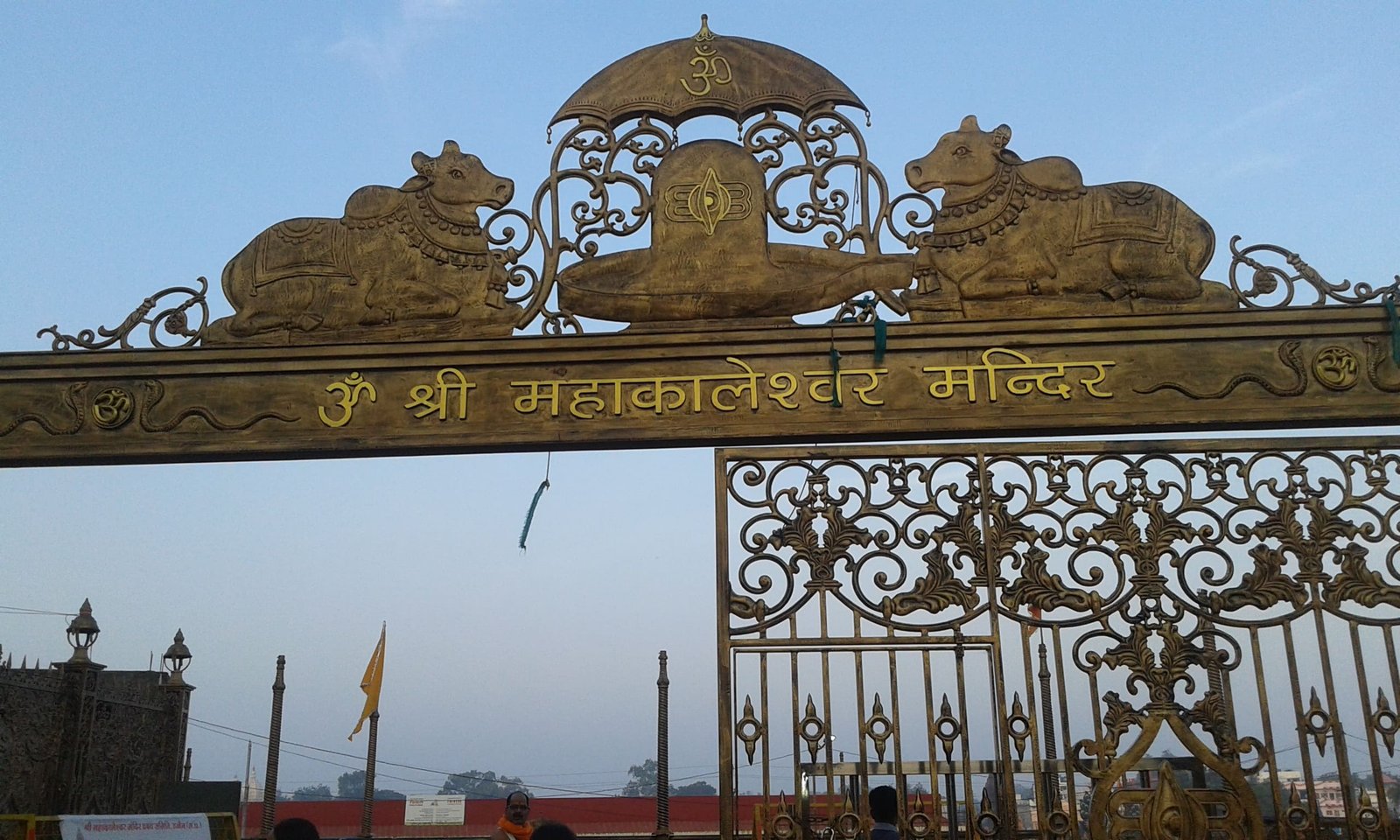
- 3. Mahakaleshwar Jyotirlinga Temple – Mahakal, Ujjain (or Avanti) in Madhya Pradesh is home to the Mahakaleshwar Jyotirlinga temple.
- 4. Omkareshwar Jyotirlinga Temple – Omkareshwar is in Khandwa ,Madhya Pradesh on an island in the Narmada River and home to a Jyotirlinga shrine and The Mamaleshwar temple.
- 5. Kedarnath Jyotirlinga Temple -Kedarnath in Uttarakhand is revered as the northernmost and the closest Jyotirlinga to Lord Shiva’s eternal abode of Mount Kailash.
- 6.Bhimashankar Jyotirlinga Temple – Bhimashankar is in Pune,Maharastra. -Khed taluka is also referred to as the Daakini country, hence this temple is also called Daakini temple,
- 7. Vishwanath Jyotirlinga Temple -The Kashi Vishwanath (Vishweshwar) Temple in Varanasi, Uttar Pradesh is home to the Vishwanath Jyotirlinga shrine, which is perhaps the most sacred of Hindu shrines
- 8. Trimbakeshwar Jyotirlinga Temple -The Trimbakeshwar Temple, near Nashik in Maharashtra, is a Jyotirlinga shrine associated with the origin of the Godavari River.
- 9. Nageshwar Jyotirlinga Temple -Nagesh is situated in Daruka-Vana and most probably the present day Dwarka region. Other claims to the Nagesh Jyotirlinga status come from – Aundha Naganath (Hingoli District of Maharashtra) and Jageshwar (Almora District of Uttarakhand).
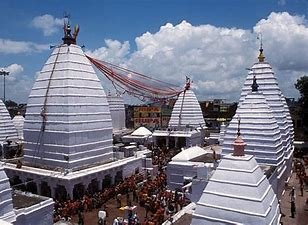
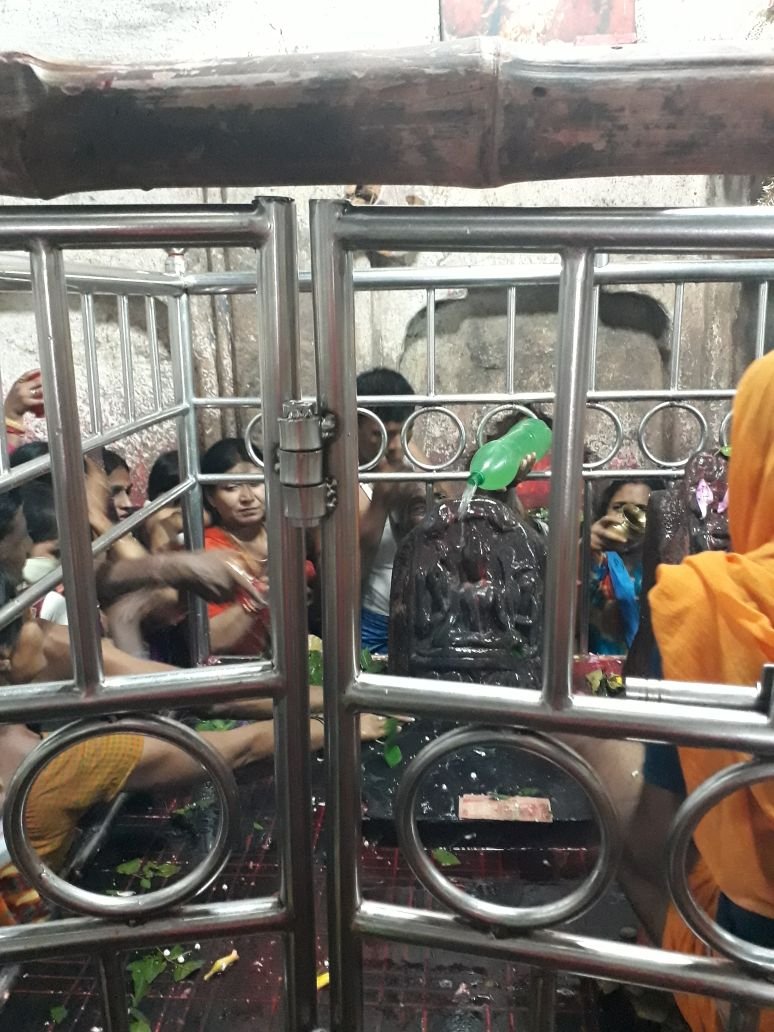
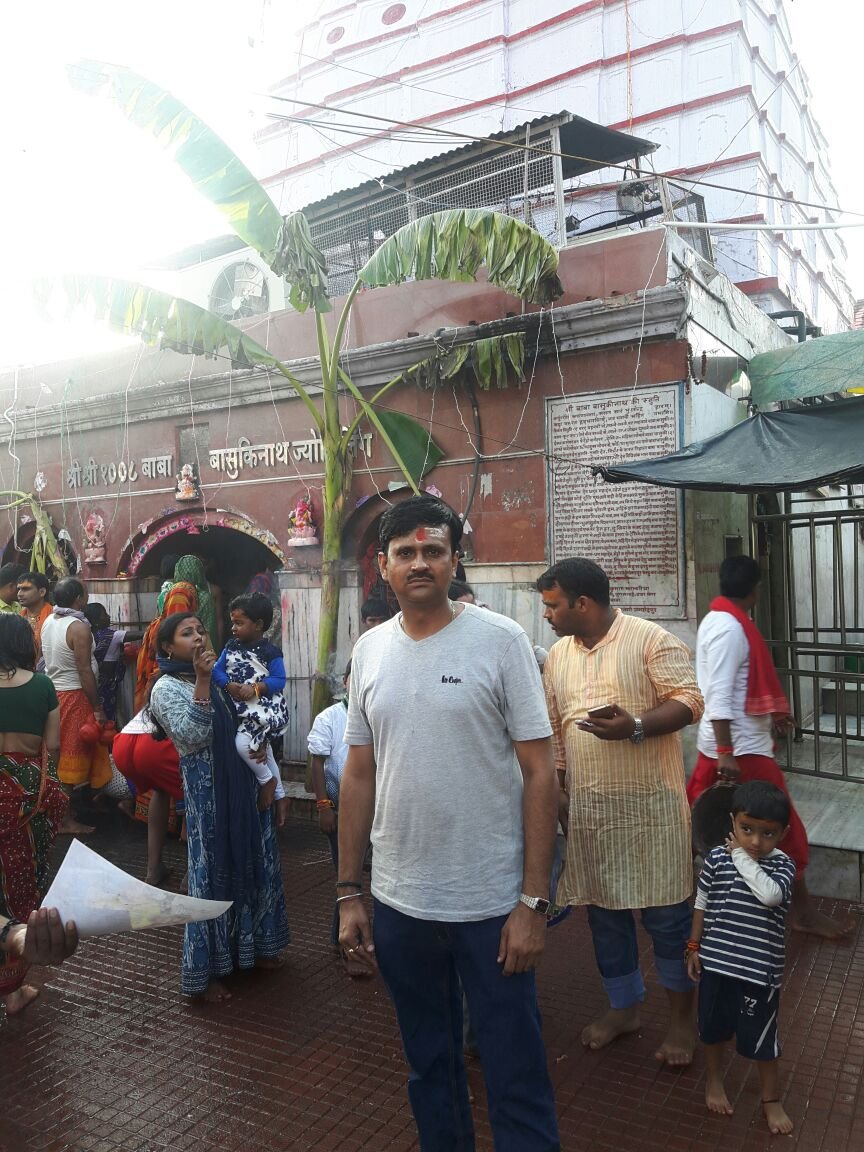
- 10. Baidyanath Jyotirlinga Temple -Also known as Baba Baidyanath dham and Baidyanath dham is one of the twelve Jyotirlingas, the most sacred abodes of Shiva. It is located in Deoghar in the Jharkhand state of India.
- 11. Rameshwaram Jyotirlinga Temple -Rameswaram in Tamil Nadu is home to the vast Ramalingeswarar Jyotirlinga temple and is revered as the southernmost of the twelve Jyotirlinga shrines of India.
- 12. Grishneshwar Jyotirlinga Temple According to Shiv Puran, Grishneshwar is one of the Shiva Jyotirlinga which is situated Ellora,Aurangabad ,less than a kilometer from Ellora Caves in Maharashtra.
1. Baba Baidyanath (Deoghar, Jharkhand)
Baidyanath Jyotirlinga temple, also commonly referred to as the Baidyanath Dham, is one of the twelve Jyotirlinga in India and is considered to be the most sacred abodes of Lord Shiva, the most sacred abodes of Shiva. It is located in Deoghar in the Santhal Parganas division of the state of Jharkhand, India. It is a temple complex consisting of the main temple of Baba Baidyanath, where the Jyotirlinga is installed, and 21 other temples. a doctor, he is referred to as Vaidhya ("doctor"). The temple derives its name from this aspect of Shiva.
Kanwar Yatra (Devanagari: कांवड़ यात्रा) is an annual pilgrimage of devotees of Shiva, known as Kānvarias (कांवड़िया) or "Bhole" (भोले) to Hindu pilgrimage places of Sultanganj in Bihar to fetch holy waters of Ganges River. Millions of participants gather sacred water from the Ganga and carry it across hundreds of miles to dispense as offerings in Baidyanath Temple in Jharkhand.It is believed that, Shiva first manifested himself as a Jyotirlinga on the night of the Aridra Nakshatra, thus the special reverence for the Jyotirlinga. The same shrine of Vaidyanath is considered one of 51 Shakti Peethas, where 'heart' of Sati (goddess) fell, after being broken apart by the Sudarshana Chakra of Lord Vishnu, from the body of Dakshayani (Sati), carried by the lovelorn, distraught Shiva, at the location on which the respective temple is built. Since the heart of Sati fell here, the place is also called as Hardapeetha. Here Sati is worshipped as Jayaa Durga (Victorious Durga) and Lord Bhairava as Vaidyanath or Baidyanath. Dakshayani was reborn as Parvati, daughter of Himaavat, king of the mountains, and his wife, the Devi Mena.
Places to Visit in Baba Baidyanath- BabaVasukinath,
- Baiju Temple
- Maa Shitala Temple
- Naulakha Mandir
- Trikuta Parvat
How to Reach
By Air- You can reach Deoghar from Kolkata Airport or Ranchi Airport by train.
By Train -Deoghar is 6 km away from Jasidih Junction
By Road -Bayidhnath Temple is about 3km from Deoghar bus stand.
2. Baba Mahakaleshwar (Ujjain, Madhya Pradesh)
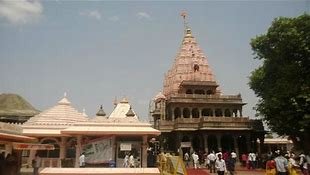
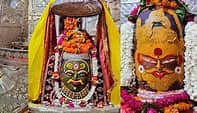
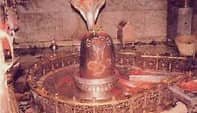
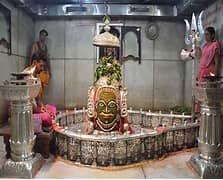
Mahakaleshwar Jyotirlinga is a Hindu temple dedicated to Shiva and is one of the twelve Jyotirlingams, shrines which are said to be the most sacred abodes of Shiva. It is located in the ancient city of Ujjain in the state of Madhya Pradesh, India. The temple is situated on the side of the holy river Shipra. The presiding deity, Shiva in the lingam form is believed to be Swayambhu, deriving currents of power (Shakti) from within itself as against the other images and lingams that are ritually established and invested with mantra-shakti.
As per the Shiva Purana, Brahma and Vishnu once had an argument over who was supreme in the creation. To test them, Shiva pierced the three worlds as an endless pillar of light, the jyotirlinga. Vishnu and Brahma decide to travel along the pillar downwards and upwards respectively, to find the end of the light. Brahma lied that he had found the end, while Vishnu conceded his defeat. Shiva appeared as a second pillar of light and cursed Brahma that he would have no place in ceremonies while Vishnu would be worshipped till the end of eternity. The jyotirlinga is the supreme partless reality, out of which Shiva partly appears. The jyotirlinga shrines, thus are places where Shiva appeared as a fiery column of light. There are 64 forms of Shiva, not to be confused with Jyotirlingas. Each of the twelve jyotirlinga sites take the name of the presiding deity – each considered different manifestation of Shiva. At all these sites, the primary image is lingam representing the beginningless and endless Stambha pillar, symbolizing the infinite nature of Shiva. The idol of Mahakaleshwar is known to be dakshinamukhi, which means that it is facing the south. This is a unique feature, upheld by the tantric shivnetra tradition to be found only in Mahakaleshwar among the 12 Jyotirlingas. The idol of Omkareshwar Mahadev is consecrated in the sanctum above the Mahakal shrine. The images of Ganesh, Parvati and Karttikeya are installed in the west, north, and east of the sanctum sanctorum. To the south is the image of Nandi, the vehicle of Shiva. The idol of Nagchandreshwar on the third storey is open for darshan only on the day of Nag Panchami. The temple has five levels, one of which is underground. The temple itself is located in a spacious courtyard surrounded by massive walls near a lake. The shikhar or the spire is adorned with sculptural finery. Brass lamps light the way to the underground sanctum. It is believed that prasada (holy offering) offered here to the deity can be re-offered unlike all other shrines.
The presiding deity of time, Shiva, in all his splendor, reigns eternally in the city of Ujjain. The temple of Mahakaleshwar, its shikhar soaring into the sky, an imposing façade against the skyline, evokes primordial awe and reverence with its majesty. The Mahakal dominates the life of the city and its people, even in the midst of the busy routine of modern preoccupations, and provides an unbreakable link with ancient Hindu traditions.
On the day of Maha Shivaratri, a huge fair is held near the temple, and worship goes on through the night.
Devotees are not allowed to bring bags, mobile phones and cameras during the visit. Lockers and Cloak Rooms are there for devotees where they can keep their belongings.
Also an awesome spectacle, with huge participation of devotees, is the procession of God Mahakaal in his Palanquin, called Shahi Savaari, to the river Kshipra, on last Monday of the holy period of Sawaan during the months of Shraavana or Bhadrapada.
The shrine is revered as one of the 18 Maha Shakti Peetham.
Shakti Peethas are shrines that are believed to have enshrined with the presence of Shakti due to the falling of body parts of the corpse of Sati Devi, when Shiva carried it. Each of the 51 Shakti Peethas has shrines for Shakti and Kalabhairava. The Upper Lip of Sati Devi is said to have fallen here and the Shakti is called as Mahakali.
Another factor that makes Mahakaleshwar one of the most revered Jyotirlingas in India is the fact that the Mahakaleshwar idol is Dakshina Mukh i.e. facing south, unlike all the other Jyotirlingas. Considered no less than a Hindu pilgrimage, the Bhasma-Aarti of Mahakaleshwar Temple is hugely popular amongst the devotees.
Mahakaleshwar of Ujjain is admired among India’s twelve Jyotirlingas. Mahakala was considered as the distinctive presiding deity of Ujjain, so Ujjain is the most famous for Mahakaleshwar Darshan. A huge festival fair is helded near the temple on the occasion of Mahashivratri. The Bhasha Aarti of Mahakal is the biggest attraction of Mahakal Temple. Mahakal is the king of Ujjain. One of the best significance of Ujjain Mahakal is that if any other king or state head comes to Ujjain, then He or She would not stay them in night because Mahakal is the king and no other emperor can stay in Mahakal’s territory. Bhasma Aarti will be performed daily from 4:00 am – 6:00 am
How to Reach –
By Air –The nearest airport to Ujjain is Ahilyabai Holkar Airport of Indore. Airplanes fly all major cities of the country. Ujjain is 55 km away from Indore.
ByRail – Ujjain is connected to all major railway stations in India. Trains run from Mumbai, Pune, Chennai, Delhi, Kolkata, Bhopal, Jaipur, Varanasi, Gorakhpur, Ratlam, Ahmedabad, Baroda, Gwalior, Hyderabad, Bangalore, Jammu and many major cities.
By Road – Ujjain is connected by public buses of state transport.
3. Baba Trambakeshwar ( Trambakeshwar, Nashik, Maharashtra)
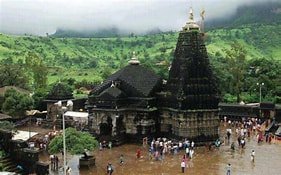
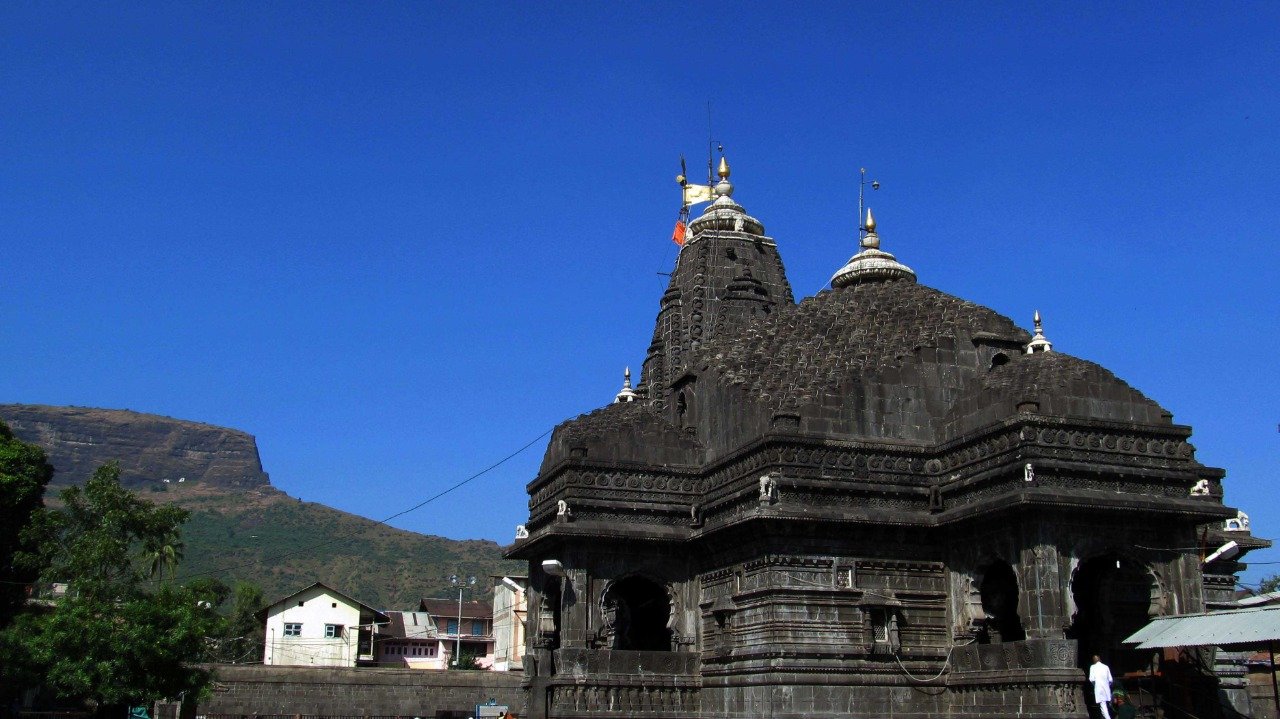
Trambakeshwar (Trimbakeshwar) is a Hindu temple in Trimbak, Maharashtra, India, located 28 kilometres from Nashik. One of the twelve Jyotirlingaas, it is dedicated to Lord Shiva..
It is situated at the mouth of the Godavari River, India’s longest river. The Godavari River flows from the Bramhagiri Mountains to the sea in Rajahmudry, and is regarded sacred in Hinduism. Kushavarta, a kund, is treasured by Hindus as a sacred bathing spot and is thought to be the symbolic origin of the river Godavari..
The temple is located between three hills namely Brahmagiri, Nilagiri and Kalagiri. The temple has three lingas (an iconic form of Shiv) representing Shiv, Vishnu and Brahma. The temple tank is called Amritavarshini, which measured 28 m (92 ft) by 30 m (98 ft). There are three other bodies of water, namely, Bilvatheertha, Viswananthirtha and Mukundathirtha. There are images of various deities, namely, Gangadevi, Jaleswara, Rameswara, Gautameswara, Kedarnatha, Rama, Krishna, Parasurama and Lakshmi Narayana. The temple has also several monasteries and samadhis of saints.
As per the Shiva Purana, once Brahma (the Hindu God of creation) and Vishnu (the Hindu God of preservation) had an argument in terms of supremacy of creation. To test them, Shiva pierced the three worlds as a huge endless pillar of light, the jyotirlinga. Vishnu and Brahma split their ways to downwards and upwards respectively to find the end of the light in either direction. Brahma lied that he found out the end, while Vishnu conceded his defeat. Shiva appeared as the second pillar of light and cursed Brahma that he would have no place in ceremonies while Vishnu would be worshipped till the end of eternity. The jyotirlinga is the supreme partless reality, out of which Shiva partly appears. The Jyotirlinga shrines, thus are places where Shiva appeared as a fiery column of light. Originally there were believed to be 64 jyotirlingas while 12 of them are considered to be very auspicious and holy.
Lord Shiva showed himself as a Jyotirlinga on the night of the Aridra Nakshatra. It is believed that a person can see the Jyotirlingas as columns of fire piercing through the earth as he reaches a higher level of spiritual attainment. Each Jyotirlinga site takes the name of the presiding deity. Basically, the Jyotirlinga signifies the infinite nature of Lord Shiv. At the highest level, Shiva is regarded as formless, limitless, transcendent and unchanging absolute Brahman and the primal Atman (soul, self) of the universe.
Trimbakeshwar is a religious center having one of the twelve Jyotirlingas. The extraordinary feature of the Jyotirlinga located here is its three faces embodying Lord Brahma, Lord Vishnu, and Lord Rudra. Due to the excessive use of water, the linga has started to erode. It is said that this erosion symbolizes the eroding nature of human society. The Lingas are covered by a jeweled crown which is placed over the Gold Mask of Tridev (Brahma Vishnu Mahesh). The crown is said to be from the age of Pandavs and consists of diamonds, emeralds, and many precious stones. The crown is displayed every Monday from 4-5 pm (Shiv).
All other Jyotirlingas have Shiva as the main deity. The entire black stone temple is known for its appealing architecture and sculpture and is at the foothills of a mountain called Brahmagiri. Three sources of the Godavari originate from the Brahmagiri mountain.
Brahmadev worshipped God Trivikram when he came to Satya Loka (on earth) with the same holy water of the Ganges, to get the river Ganges held up by God Shankar on his head, to flow. There was a famine of 24 years and people were affected by the pangs of hunger. However, Varun – the God of Rains, pleased with Sage Gautama arranged rains every day in Gautama’s Ashram (dwelling place) which was in Trimbakeshwar. Gautama used to sow rice in the surrounding fields of his Ashram in the morning, reap the crop in the afternoon and with it fed a large group of Hrishis, who took shelter in his Ashram on account of the famine. The blessings of the group of rishis increased the merit (Punya) of Gautama. Lord Indra’s position became shaky because of his increased merit. So Indra ordered clouds to rain all over Trimbakeshwar, so that the famine will be over and rishis will go back and the increasing merits of Gautama will be weakened. Although the famine was over, Gautama urged the Rishis to stay back and kept on feeding them and gaining merit. Once he saw a cow grazing in the paddy field and he drove her away by throwing Darbha (sharp, pointed grass). The slender cow died by this. It was Jaya – Parvati’s friend, who had taken the form of a cow. This news upset the Rishis and they refused to luncheon at his Ashram. Gautama requested Rishis to show a way out of this sin. He was advised to approach Lord Shiva and request him to release the Ganges and a bath in the Ganges would set him free of his sins. Gautama then practiced penance by going to the peak of Brahmagiri for 1000 years. Lord Shankara was pleased by his worships and gave him the Ganges.
However, Ganges was not prepared to part with Lord Shiv, which irritated him. He made TandavNrutya (dance) on the peak of Brahmagiri and dashed his jata there. Frightened by this action, Ganges appeared on Brahmagiri. Later on, Ganges appeared in the Trimbak Tirtha. Gautama praised her but she off and on appeared on the mountain at various places and disappeared in anger. Gautama could not bathe in her waters. The Ganges then appeared in Gangadwar, Varaha-tirtha, Rama-Laxman tirtha, Ganga Sagar tirtha. Still, Gautama could not bathe in her waters. The Gautama surrounded the river with enchanted grass and put a vow to her. The flow stopped there and the tirtha thus came to be called Kushavarta. It is from this Kushavarta that the river Godavari flows up to the sea. The sin of killing a cow by Gautama was wiped off here.
This place is famous for its many religious rituals (vidhis). Narayan Nagbali, Kalsarpa Shanti, Tripindi Vidhi are done here. Narayan Nagbali puja is performed at Trimbakeshwar only. This puja is performed in three days. This puja is performed on special dates. Some days are not suitable to perform this puja. This puja is performed for many reasons like to cure an illness, going through bad times, killing a Cobra (Nag), childless couples, financial crisis or you want to perform some religious puja to have everything.
Trimbakeshwar town has a large number of Brahmin households and is also a centre for Vedic Gurukuls (kind of boarding school). It also has ashrams and Muths devoted to Ashtanga Yoga, the Hindu art of living.
The existing temple was built out of basalt after it was commissioned by Peshwa Nanasaheb. It so happens that the Peshwa made a bet on whether the stone surrounding the Jyotirlinga, is hollow from the inside or not. The stone was proved to be hollow, and on losing the bet, the Peshwa built a marvelous temple out of it.
The Shiva deity of the temple consisted of the world-famous Nassak Diamond. It was looted by the British in The Third Anglo-Maratha War and lies with one owner or the other ever since. The diamond presently lies with Edward J. Hand, a trucking firm executive from Greenwich, Connecticut, USA
The place is known for its scenic beauty in rainy/monsoon season and is surrounded by lush green hills untouched by pollution. Anjaneri mountain, the birthplace of Lord Hanuman, is 7 km from Trimbakeshwar
Shri Nilambika/Dattatreya/ Matamba Temple
This temple is on top of the Neel mountain. All goddesses (‘Matamba’, ‘Renuka’, ‘Mananmba’) came here to see ‘Parashuram’ when he was performing penance (tapas). After his penance, he requested all goddesses to stay there and the temple was formed for these goddesses.
Akhil Bhartiya Shree Swami Samarth Gurupeeth, Trimbakeshwar Temple of Shri Swami Samarth Maharaj. This temple is 1 km from Shiva Temple. This temple is a marvelous example of Vastu Shastra.
How to Reach
The Trimbakeshwar Shiva Temple is 30 kilometers on road from Nashik, and 157 kilometers from Thane. The best way to reach the temple is by road. The closest railway station is the Nashik Road Railway Station that is 39 kilometers by road.
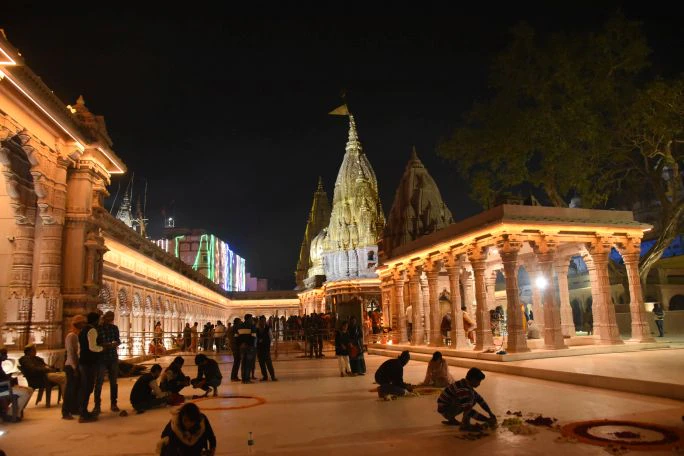
4. Baba Kashi Vishwanath (Varanasi, Uttar Pradesh)
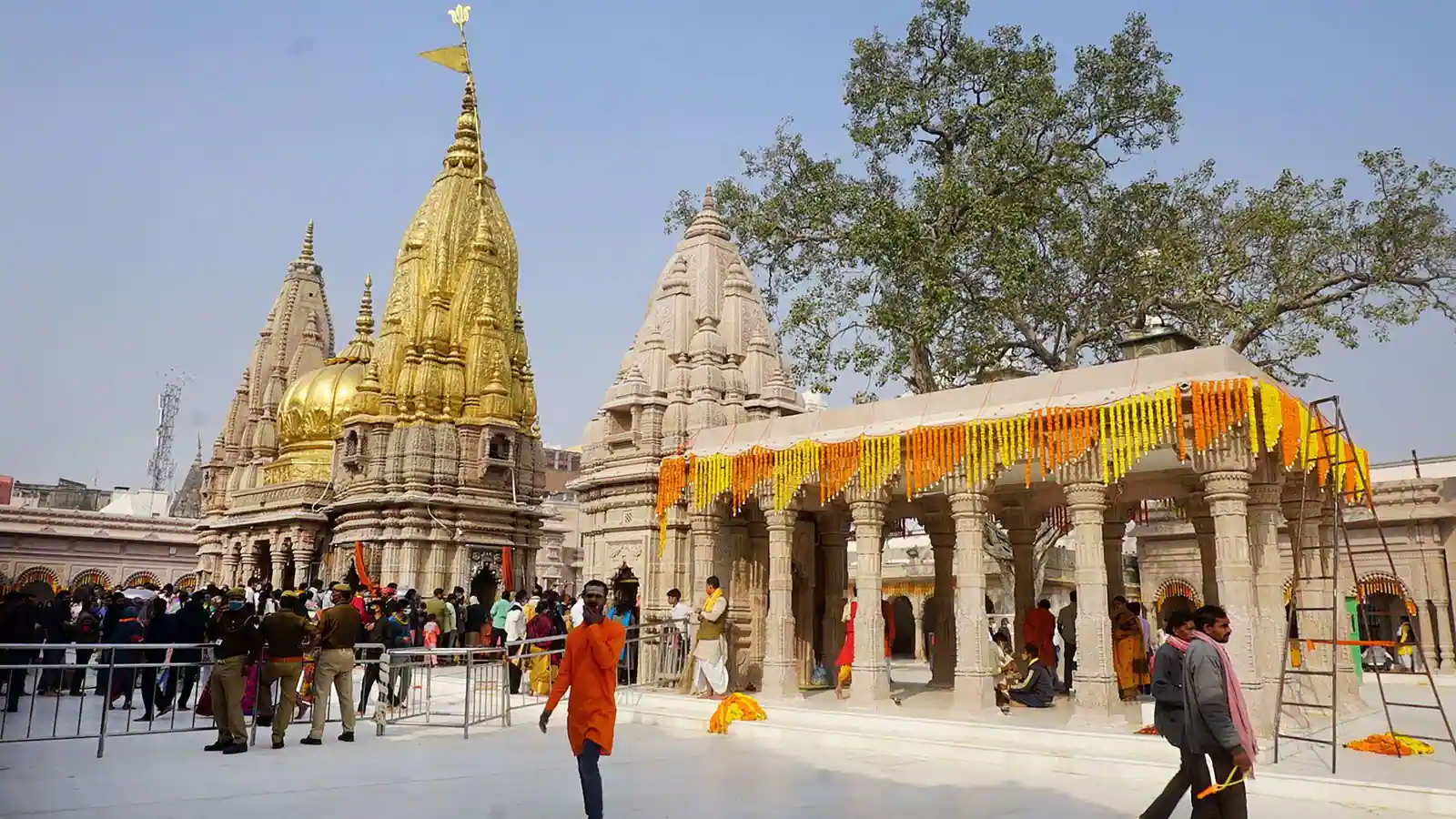
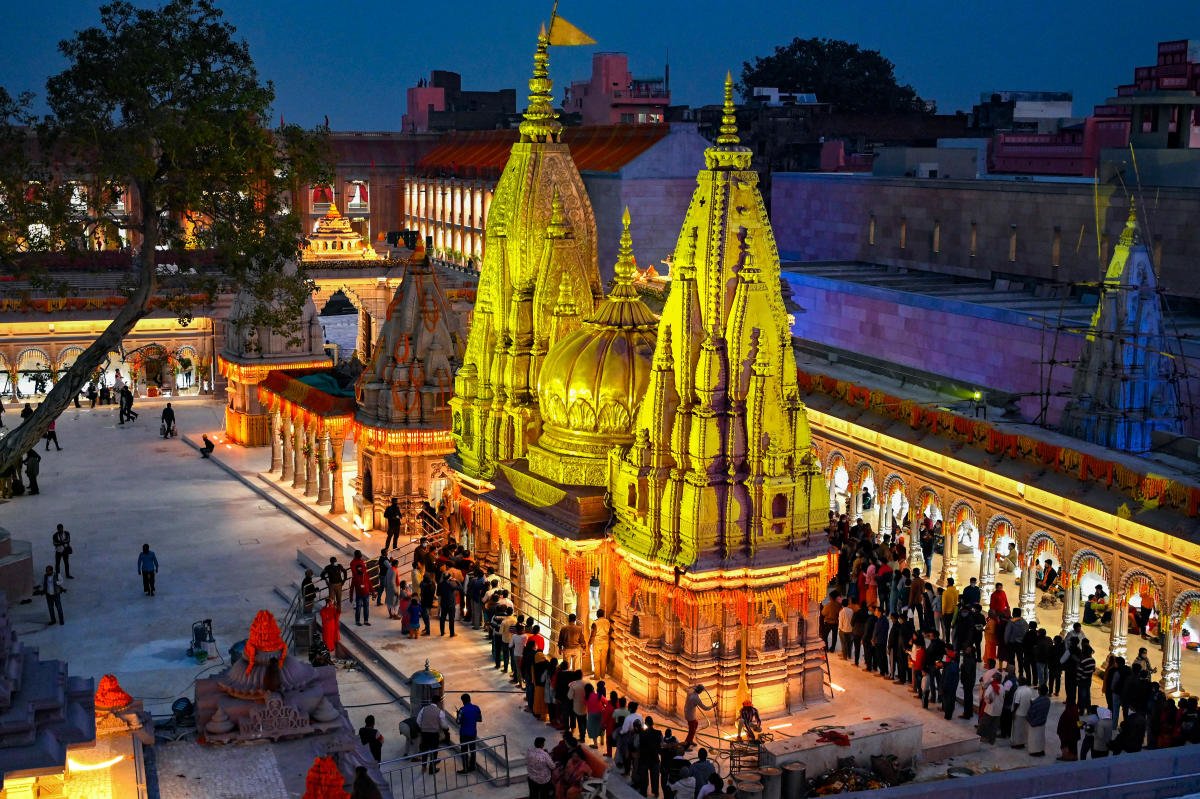
The Kashi Vishwanath Temple is a famous Hindu temple dedicated to Lord Shiva. It is located in Vishwanath Gali of Varanasi, Uttar Pradesh in India. The temple stands on the western bank of the holy river Ganga, and is one of the twelve Jyotirlingas, the holiest of Shiva temples. The main deity is known by the names Shri Vishwanath and Vishweshwara literally meaning Lord of the Universe. Varanasi was called Kashi in ancient times, and hence the temple is popularly called Kashi Vishwanath Temple.
The Kashi Vishwanath Temple is a famous Hindu temple dedicated to Lord Shiva. It is located in Vishwanath Gali of Varanasi, Uttar Pradesh in India. The temple stands on the western bank of the holy river Ganga, and is one of the twelve Jyotirlingas, the holiest of Shiva temples. The main deity is known by the names Shri Vishwanath and Vishweshwara (IAST: Vishveshvara or Vishveshvur) literally meaning Lord of the Universe. Varanasi was called Kashi (“shining”) in ancient times, and hence the temple is popularly called Kashi Vishwanath Temple.
The temple is considered a central part of worship in the Shaiva culture by Hindu scriptures. It had been demolished by many Muslim rulers many times, most recently by Aurangzeb, the sixth Mughal emperor who constructed the Gyanvapi Mosque on its site.] The current structure was built on an adjacent site by the Maratha ruler, Ahilya Bai Holkar of Indore in the year 1780.Since 1983, the temple has been managed by the government of Uttar Pradesh.
The twelve jyothirlinga are Somnath in Gujarat, Mallikarjuna at Srisailam in Andhra Pradesh, Mahakaleswar at Ujjain in Madhya Pradesh, Omkareshwar in Madhya Pradesh, Kedarnath in Uttarakhand, Bhimashankar in Maharashtra, Viswanath at Varanasi in Uttar Pradesh, Triambakeshwar in Maharashtra, Vaidyanath Jyotirlinga, Deogarh in Deoghar, Jharkhand, Nageswar at Dwarka in Gujarat, Rameshwar at Rameswaram in Tamil Nadu and Grishneshwar at Aurangabad in Maharashtra.
The Manikarnika Ghat on the banks of Ganges near to the Kashi Vishwanath Temple is considered as a Shakti Peetha, a revered place of worship for the Shaktism sect. The Daksha Yaga, a Shaivite literature is considered as an important literature which is the story about the origin of Shakti Peethas.
Many leading saints, including Adi Sankaracharya, Ramakrishna Paramhansa, Swami Vivekananda, Bamakhyapa, Goswami Tulsidas, Swami Dayananda Saraswati, Sathya Sai Baba, Yogiji Maharaj, Pramukh Swami Maharaj, Mahant Swami Maharaj and Gurunanak have visited the site. A visit to the temple and a bath in the river Ganges is one of many methods believed to lead one on a path to Moksha (liberation). Thus, Hindus from all over the world try to visit the place at least once in their lifetime. There is also a tradition that one should give up at least one desire after a pilgrimage the temple, and the pilgrimage would also include a visit to the temple at Rameswaram in Tamil Nadu in Southern India, where people take water samples of the Ganges to perform prayer at the temple and bring back sand from near that temple. Because of the immense popularity and holiness of Kashi Vishwanath temple, hundreds of temples across India have been built in the same architectural style. Many legends record that the true devotee achieves freedom from death and saṃsāra by the worship of Shiva, Shiva’s devotees on death being directly taken to his abode on Mount Kailash by his messengers and not to Yama. The superiority of Shiva and his victory over his own nature—Shiva is himself identified with death—is also stated. There is a popular belief that Shiva himself blows the mantra of salvation into the ears of people who die naturally at the Vishwanath temple. It is one of the shrines of the Vaippu Sthalams sung by Tamil Saivite Nayanar Sambandar.
Places to Visit in Baba Vishwanath
- Kaal Bhairav Mandir: Kaal Bhairav Mandir is an ancient temple of Varanasi near the main Post Office, VishesharGanj. Lord Kaal Bhairav is believed to be the “Kotwal of Varanasi”. Without his permission no one can stay in Kashi.
- Mrityunjay Mahadev Mandir: Mrityunjay Mahadev Mandir of Lord Shiva is situated on the route from Daranagar to the Kalbhairav temple. Just beside this temple there is a well of much religious importance. Its water is said to be a mixture of several underground streams and good for eliminating several diseases.
- New Vishwanath Mandir (Birla Mandir): The New Vishwanath Mandir, also called Birla Mandir, mainly funded by Birla family, was built as a replica of the old Kashi Vishwanath Temple. Planned by Madan Mohan Malaviya, the temple is part of the Banaras Hindu University campus, and represents national revival. The temple is open to people of all castes and religions. There are nine temples in the Sri Vishwanath Temple campus, including Vishwanathji (Shiva Lingam), Natarajji, Mata Parvatiji, Ganesji, Mata Saraswatiji, Panchmukhi Mahadev, Hanumanji, and Nandiji. There are idols of Lord Shiva and Lakshmi Narayanji.
- Shri Tilbhandeshwar Mahadev Mandir: Shri Tilbhandeshwar Mahadev Mandir is one of the oldest temples in Varanasi, located near Bengal Tola Inter College and next to the famous weavers colony of Madanpura. It is said that, here, Tilbhandeshwar Shiva Lingam increases by a nominal length every year. Besides Tilbhandeshwar Mahadev, Vibhandeshwar, Maa Parvati, Bhairava, Lord Ayappan and other Hindu deities are visible here. This temple represents a unique combination of Malyali and Banarsi culture. Famous celebrations here include Mahashivratri, Makar Sankranti, Shravan, Navratri, Ayappan Puja etc. Maa Sharda also spent a few days in Varanasi at this temple.
- Nepali Mandir: Constructed in the 19th century A.D by the King of Nepal, Maharajadhiraja Rana Bahadur Shah, the temple is a replica of the Pashupatinath Temple in Kathmandu. Temple is also known as Kanthwala Mandir and Mini Khajuraho.
- Ratneshwar Mahadev temple is the leaning temple near the Manikarnika Ghat (the Burning Ghat). A lower part of the temple remains submerged into the river at times making it impossible to perform worship and rituals.
Durga Kund Mandir: The architecture of Durga Mandir is of a Nagara style, which is typical of North India. The temple has a rectangular tank of water called the Durga Kund (“Kund” meaning a pond or pool.) The temple has multi-tiered spires and is stained red with ochre, representing the red colour of Durga. The Kund was initially connected directly to the river thus the water was automatically replenished. This channel was later closed, locking off the water supply, which is replenished only by rain or drainage from the Temple. Every year on the occasion of Nag Panchami, the act of depicting Lord Vishnu reclining on the coiled-up mystical snake or “Shesha” is recreated in the Kund.
- Sankata Devi Mandir: Sankata Devi Mandir is situated near the Sindhia Ghat, there is an important temple of the “Goddess of Remedy”, Devi Sankatha. Inside its premises there is a huge statue of a lion. There are also nine temples of nine planets near to this temple[citation needed
- Sankat Mochan Mandir: Sankat Mochan Mandir is dedicated to Lord Hanuman. It is very popular with locals. It is the location for many yearly religious as well as cultural festivals. On 7 March 2006 one of the three explosions carried out by Islamic militants hit the temple, while the aarti, in which numerous worshippers and wedding attendees participated, was in progress
- Annapurna Devi Mandir: Annapurna Devi Mandir is located near the Kashi Vishwanath temple, there is a nice temple of Devi Annapurna, believed to be the “Goddess of Food”. She is a form of Parvati. She is also known as Kashipuraadeeshwari (“Queen of Kasi”).
- Lalita Gauri Mandir: Temple dedicated to the goddess Lalita Gauri.
- Vishalakshi Temple: Vishalakshi Temple is dedicated to Vishalakshi (means wide-eyed) or Parvati, the consort of Lord Shiva.
In addition to Shiva and Shakti temples, some of the most important ancient temples in Varanasi are dedicated to Vishnu.
- Adi Keshava temple
- Manikarnika Ghat Vishnu temple
- Bindu Madhav temple
Bharat Mata Mandir: Bharat Mata Mandir (“Mother India Temple”) is located on the Mahatma Gandhi Kashi Vidyapith campus in Varanasi, India. Instead of traditional statues of Gods and Goddesses, this temple has a huge map of undivided India carved in marble. This temple is dedicated to Mother India and claims to be the only one of its kind in the world
- Tulsi Manas Mandir: Tulsi Manas Mandir is dedicated to Lord Rama. It is situated at the place where Tulsidas, the great medieval seer, lived and wrote the epic “Shri Ramcharitmanas”, which narrates the life of Lord Rama, the hero of the Ramayana. Verses from Tulsidas’ epic are inscribed on the walls. It is close to the Durga Temple.
- Vyasa Mandir: Situated in Ramnagar, Vyasa Mandir is dedicated to Veda vyāsa, author of the Mahabharata