

Shantiniketan
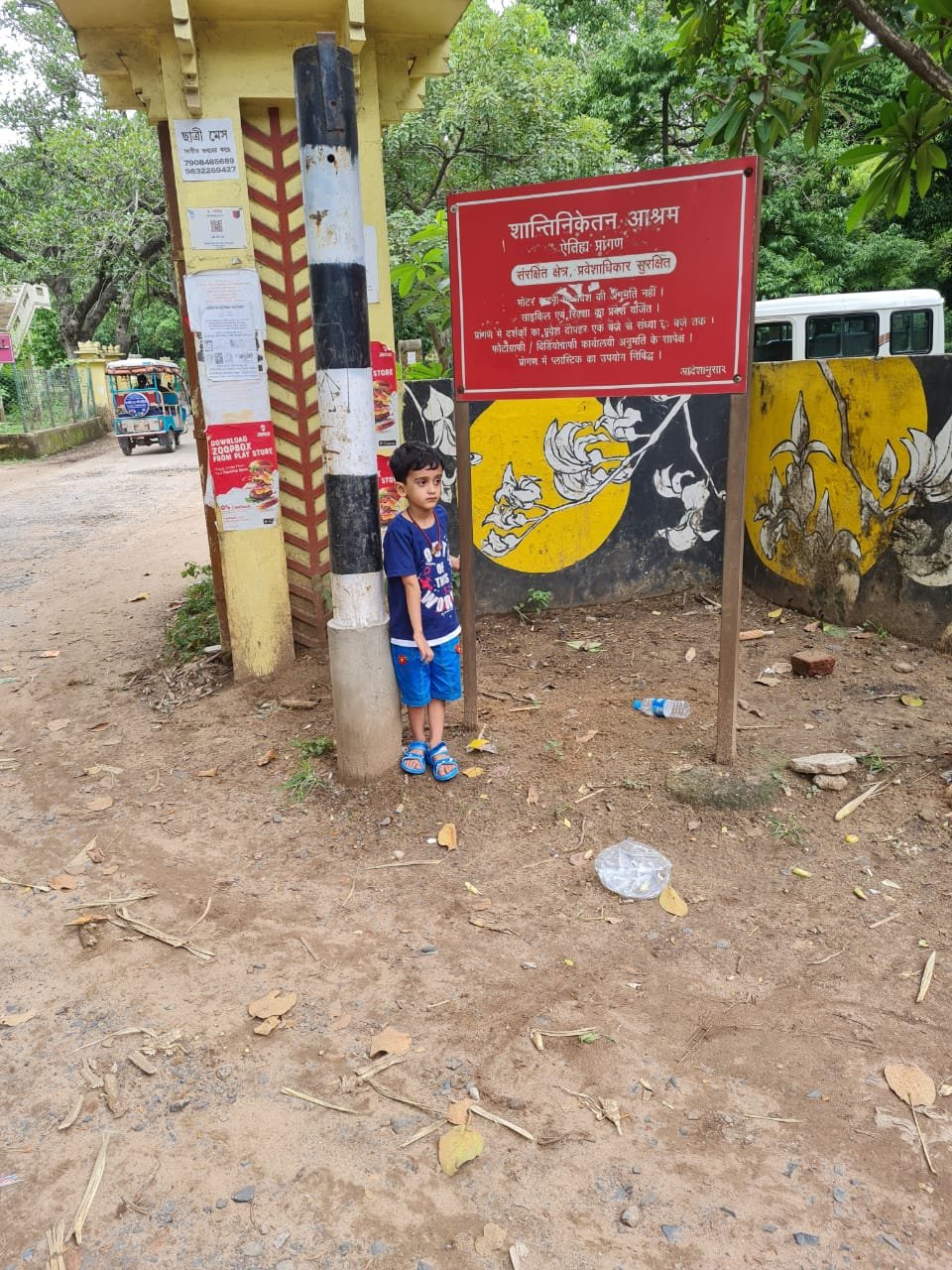
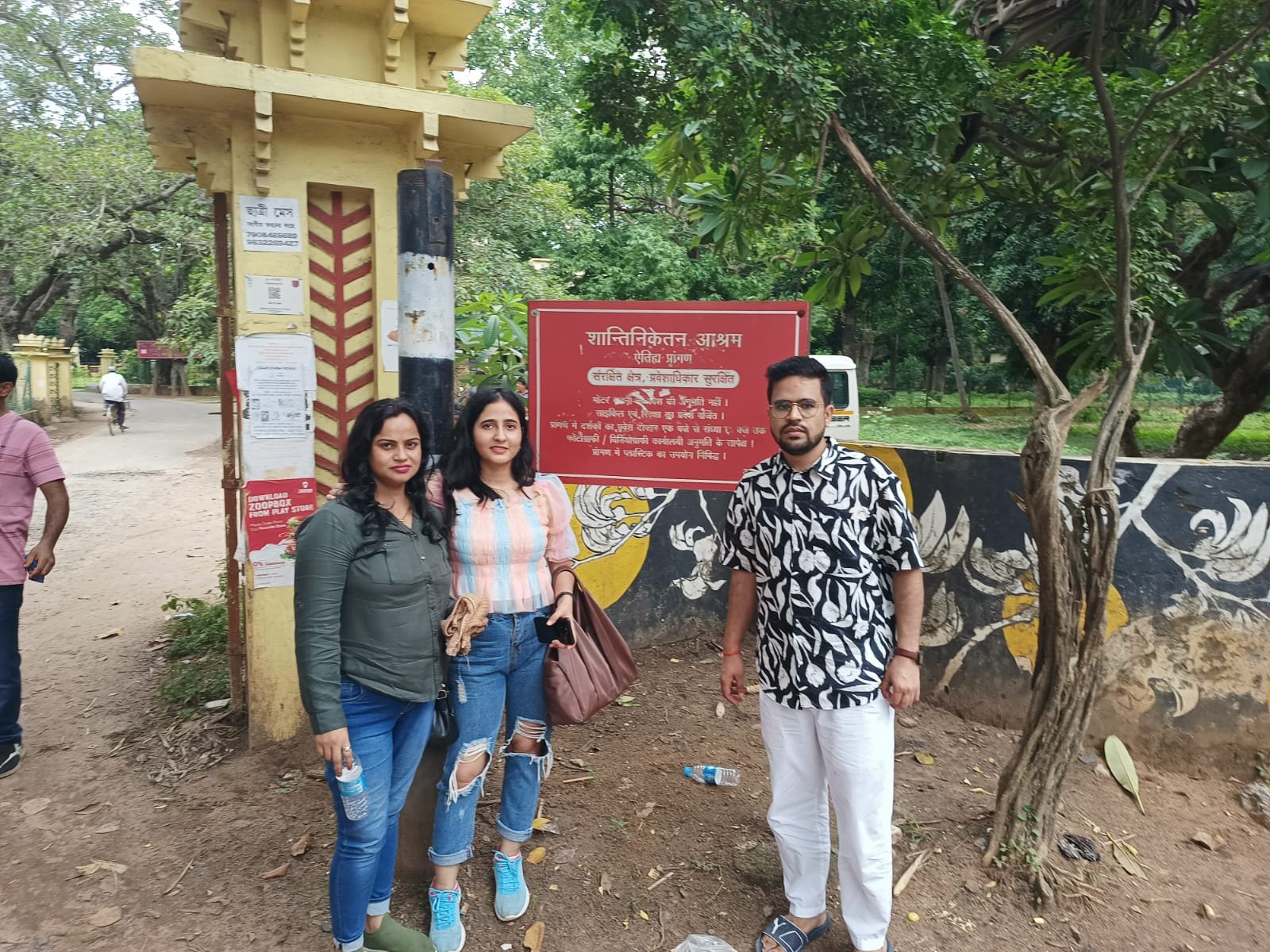
Santiniketan is a neighbourhood of Bolpur town in Bolpur subdivision of Birbhum district in West Bengal, India, approximately 152 km north of Kolkata. It was established by Maharshi Devendranath Tagore, and later expanded by his son Rabindranath Tagore whose vision became what is now a university town with the creation of Visva-Bharati
In 1863, Debendranath Tagore took on permanent lease 20 acres (81,000 m2) of land, with two chhatim (Alstonia scholaris) trees, at a yearly payment of Rs. 5, from Bhuban Mohan Sinha, the talukdar of Raipur, Birbhum. He built a guest house there and named it Shantiniketan (the abode of peace).
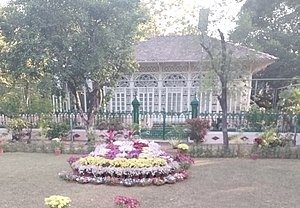
Debendranath constructed a 60-foot × 30-foot hall for Brahmo prayers. The roof was tiled and the floor had white marble, but the rest of the structure was made of glass. From its earliest days, it was a great attraction for people from all around.
Rabindranath Tagore first visited Shantiniketan in 27 January, 1878 when he was 17 years old. In 1888, Debendranath dedicated the entire property for the establishment of a Brahmavidyalaya through a trust deed. In 1901, Rabindranath started a Brahmacharyaashrama and it came to be known as Patha Bhavana from 1925. In 1913, Rabindranath Tagore won the Nobel Prize in Literature.
Founded in 1921 by Rabindranath Tagore, Visva Bharati was declared to be a central university and an institute of national importance, in 1951.
Rabindra Bhavana, founded in 1942, just after the death of the poet, is the focal point of Visva Bharati. It has a museum, archives, library and other units. It houses a major part of Rabindranath’s manuscripts, correspondence, paintings and sketches, 40,000 volumes of books and 12,000 volumes of bound journals, photographs and numerous items associated with the poet’s life. It is generally one of the first points of interest for anybody visiting Santiniketan. It was established by the poet’s son, Rathindranath Tagore, as a memorial museum and research centre for Tagore studies.
In 2013, Visva Bharati opened a museum Guha Ghar, in the Uttarayan complex, in memory of Rathindranath Tagore.
The Ashram Complex is the oldest area of Santiniketan, where Debendranath built the Santiniketan Griha and the beautiful stained glass prayer hall, in the second half of the 19th century. Patha Bhavana came up after Rabindranath started residing in Santiniketan.
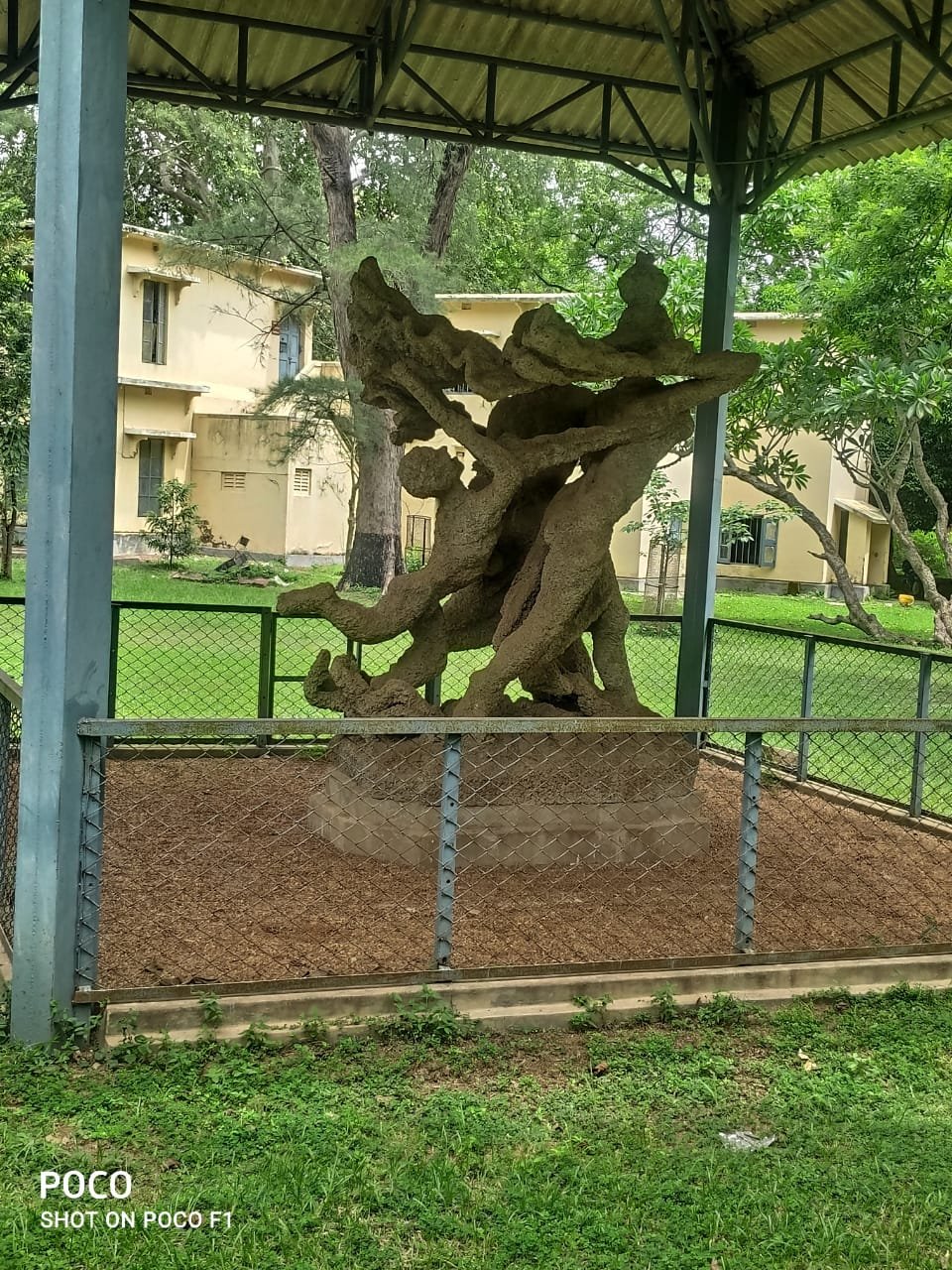
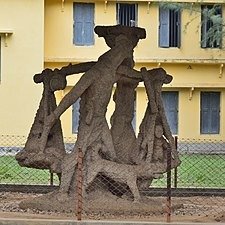
It has beautiful frescoes by Nandalal Bose. Natun Bari was built in 1902 for residential purposes. Kalo Bari is a unique structure of mud and coal tar and profusely decorated. There are numerous other houses: Dehali, Santoshalaya, Singha Sadan, Dwijaviram, Dinantika, Taladwaj, Chaitya, Ghantatala, Panthasala, Ratan Kuthi, Malancha and others – each with an interesting story that makes it historically relevant.
Visva Bharati was established as a centre for culture with the objective of exploring the arts, language, humanities, music etc. Specialised institutes came up in different fields: Cheena Bhavana, Hindi Bhavana, Kala Bhavana, Sangit Bhavana, Bhasa Bhavana, Nippon Bhavana, Bangladesh Bhavana and others. Many of these institutes with myriad structures have been decorated by illustrious artists.
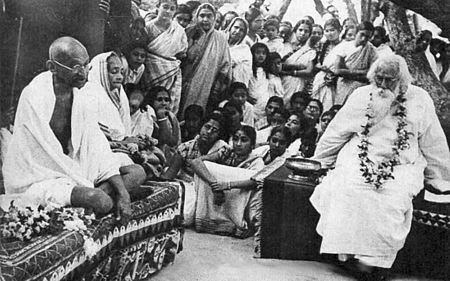
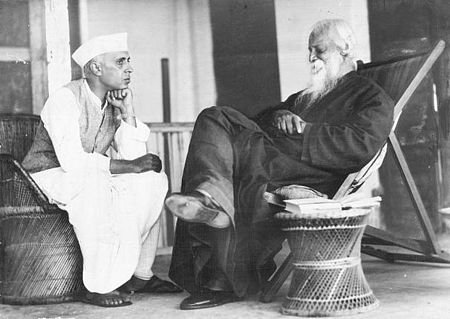
Shantiniketan was founded and developed by members of the Tagore family. It was founded by Debendranath Tagore. Rabindranath Tagore wrote many of his literary classics at Santiniketan. His son, Rathindranath Tagore was one of the first five students at the Brahmacharya asrama at Santiniketan. After the death of his father in 1941, Rathindranath took over the burden of all responsibilities at Santiniketan. When Visva Bharati was made a central university in 1951, Rathindranath was appointed its first vice-chancellor.
Poush Mela – The largest and most notable fair is the Poush Mela held at Santiniketan for three days from 7 Poush. Devendranath Tagore with twenty followers accepted the Brahmo creed from Ram Chandra Vidyabagish on 21 December 1843 (7 Poush 1250 according to the Bengali calendar). This was the basis of Poush Utsav (the Festival of Poush) at Santiniketan.
In Shantiniketan, seasonal changes bring their own colors and beauties with various festivals such as Basanta Utsav and Barsha Mangal to Maghotsav and Rabindra Jayanti.
Holi, the festival of colours, is celebrated in its own style at Santiniketan – it is called Basanta Utsav and welcomes the arrival of spring. The programme starts from the morning with singing and dancing to Tagore’s tunes by the students and ends with spreading coloured powders (called ‘abir’) and expression of festive wishes. After the formal Visva Bharati programme, other programmes follow.
Barsha Mangal is celebrated with cultural programmes in July–August. Ananda Bazar is a fair for handicrafts by the students, held on Mahalaya day. Prior to leaving for the puja vacations students celebrate Sharad Utsav. Nandan Mela marks Nandalal Bose’s birth anniversary (on 1–2 December) and is a special attraction for art lovers. Briksharopan and Halkarshan emphasise man’s closeness to nature and are held on 22-23 Shraavana (August). Maghotsab, celebrating the founding of the Brahmo Samaj, is held on 11 Magh (towards the end of January). Various anniversaries and cultural programmes are organised throughout the year. 25 Baisakh (7-8 May) is the birthday of Rabindranath Tagore but his birth anniversary is celebrated along with and subsequent to the Bengali New Year (mid April onwards).
Place near to visit Shantiniketan –
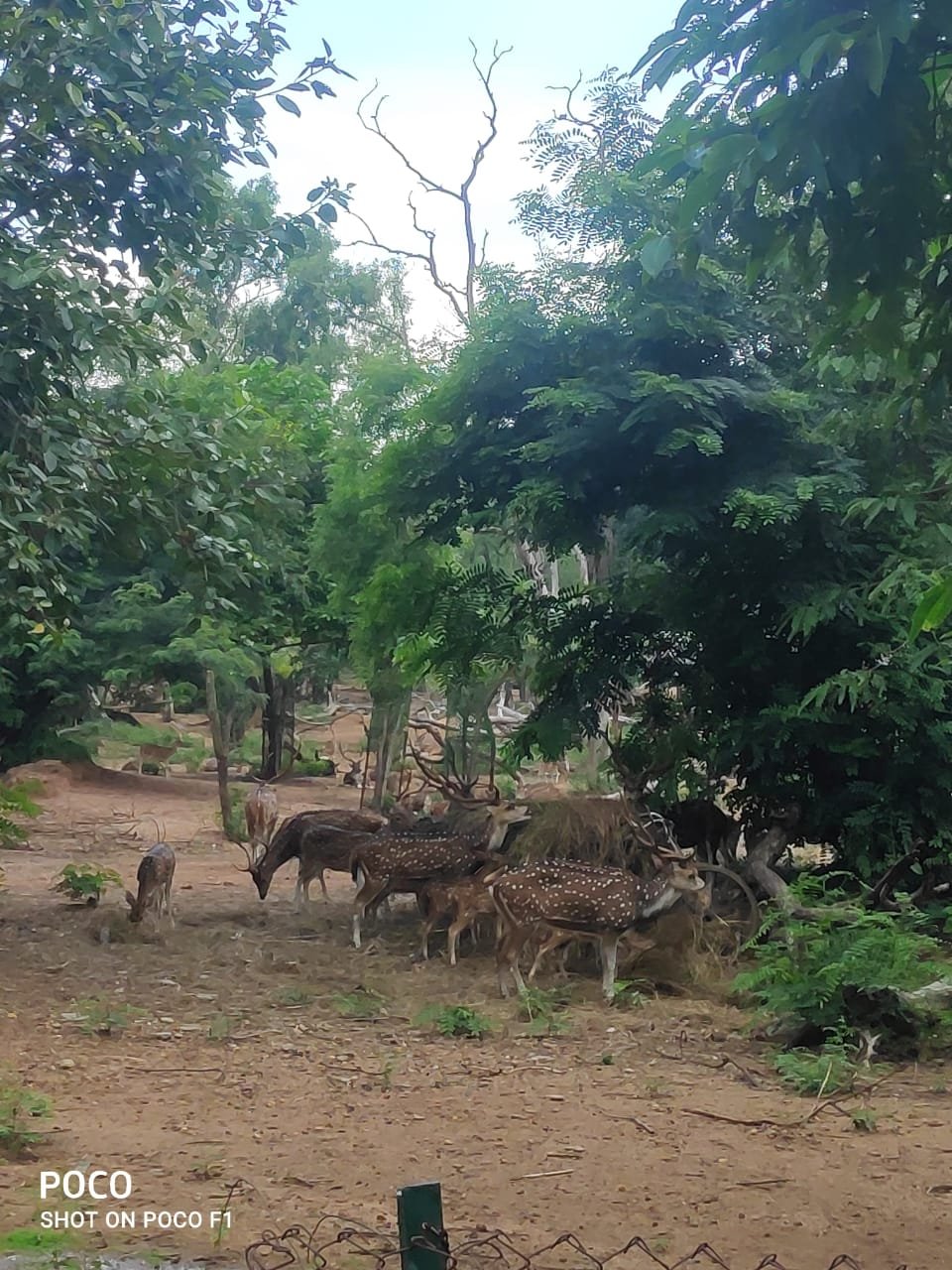
- Ballabhpur Wildlife Sanctuary- Ballabhpur Wildlife Sanctuary is located 3 km from Shantiniketan and is popular as Deer Park. Established in 1977, it was a khoai area affected by soil erosion. It is now a large wooded area with herds of deer and makes a natural bird sanctuary.
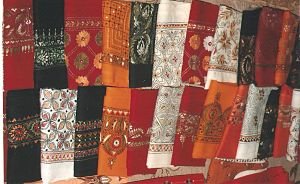
2.Amar Kutir – Amar Kutir (meaning: my cottage), once a place of refuge for independence movement activists has been turned into a cooperative society for the promotion of arts and crafts. It is located on the banks of the Kopai River, about 15 kilometres (9.3 mi) from the central areas of Santiniketan.
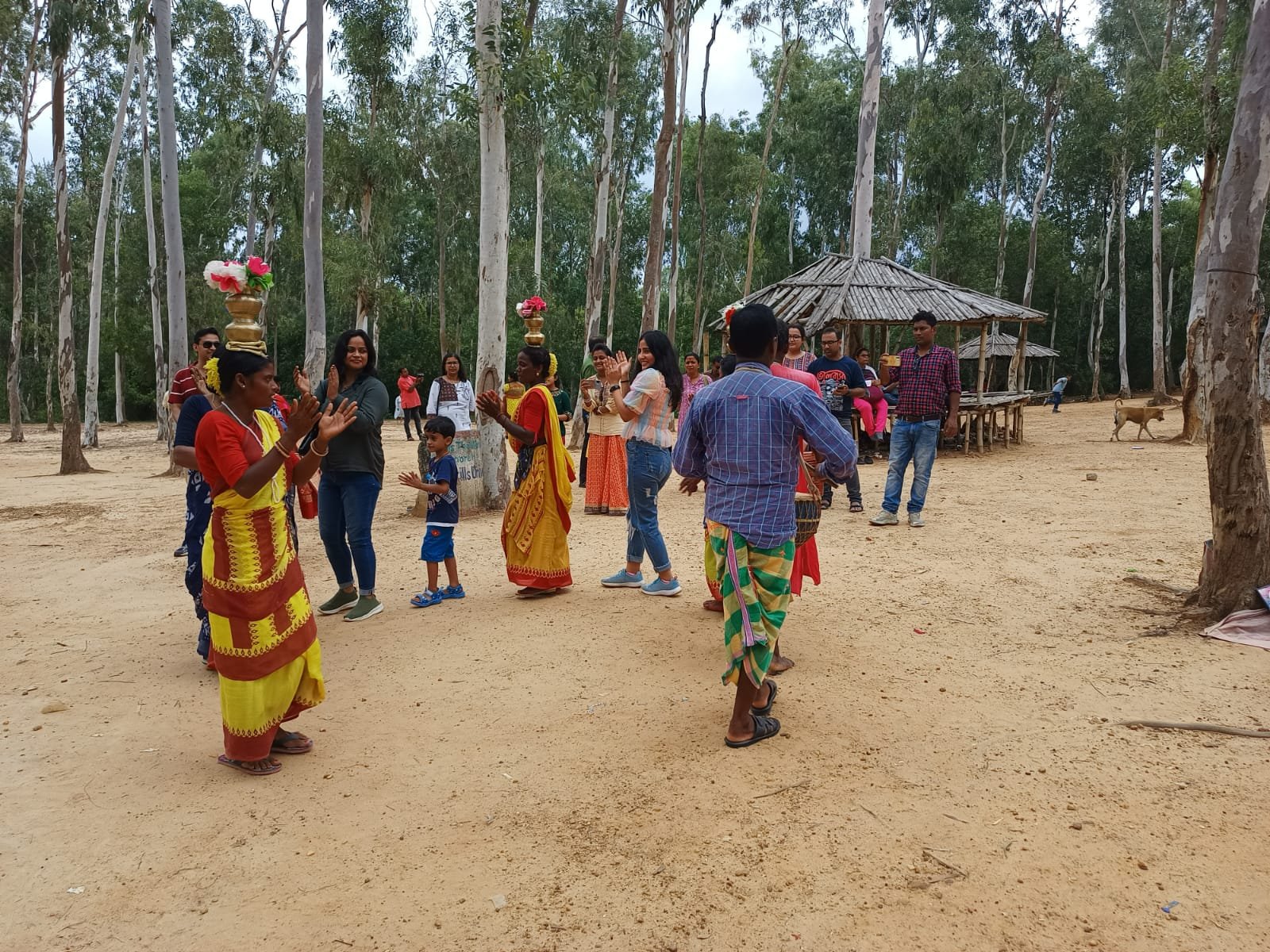
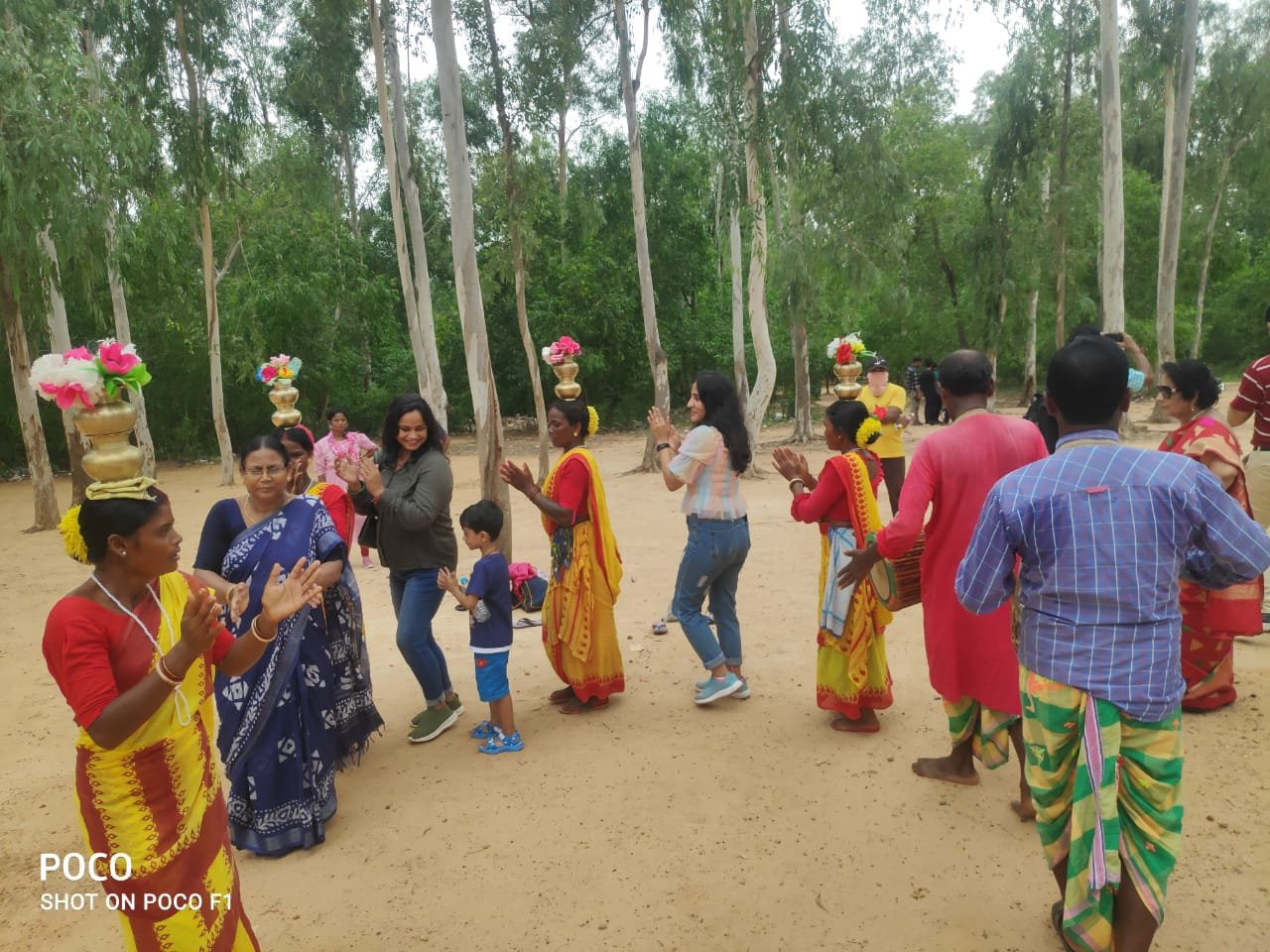
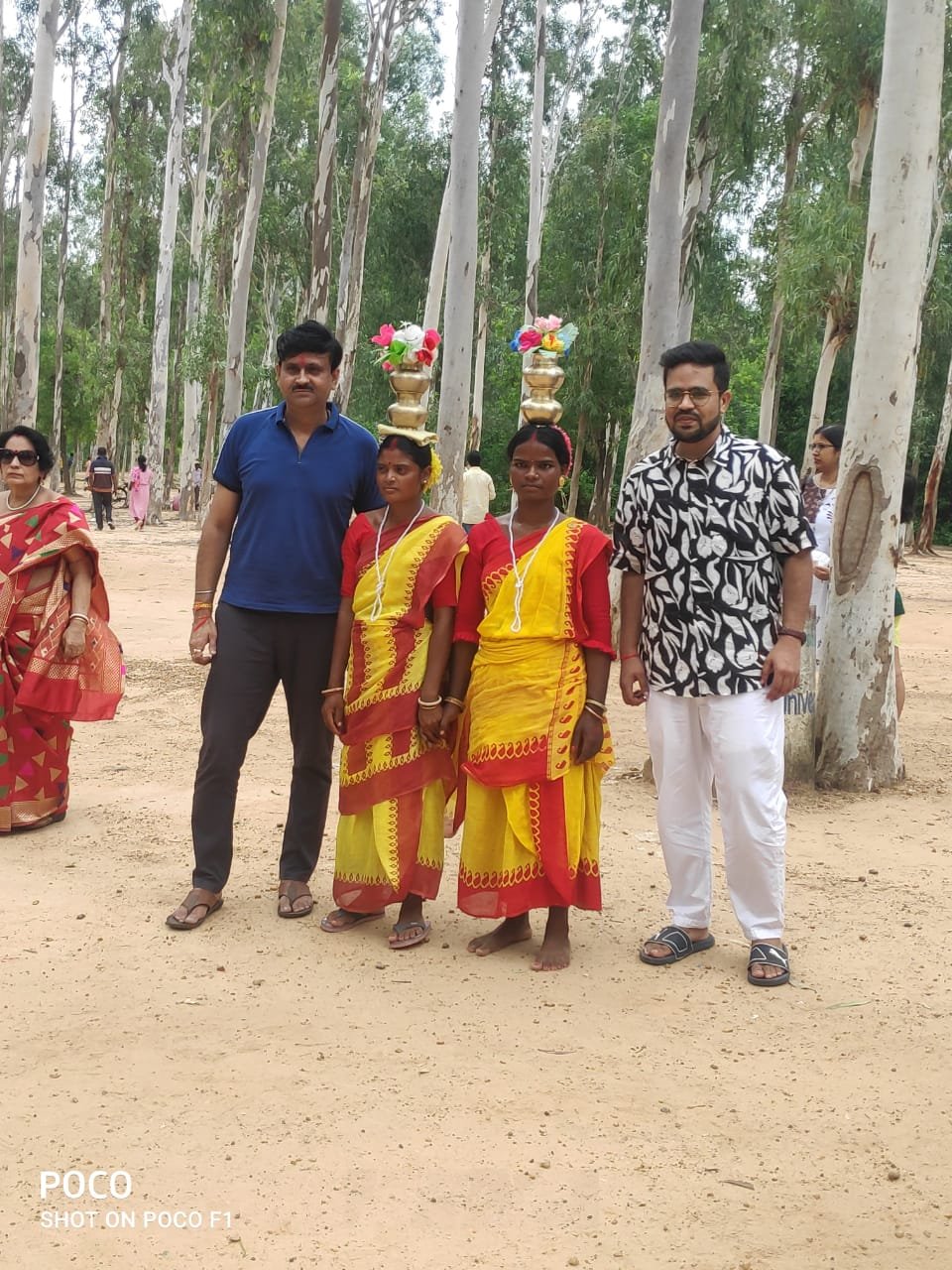
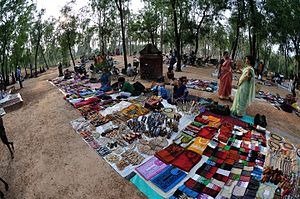
Sonajhuri Haat- Every Saturday and Sunday, one can visit the haat (or market) at Sonajhuri, close to Shantiniketan. This is a village market and one can buy local handicrafts and listen to folk music sung by tribal groups It is an excellent place to experience the local culture of Shantiniketan
How to Reach
The nearest rail station is Bolpur railway station. Bolpur is connected to Kolkata and Howrah Junction by daily trains. Shantiniketan is situated about 1 kms from Bolpur and 152 kms from Kolkata. Shantiniketan is located in Birbhum district.