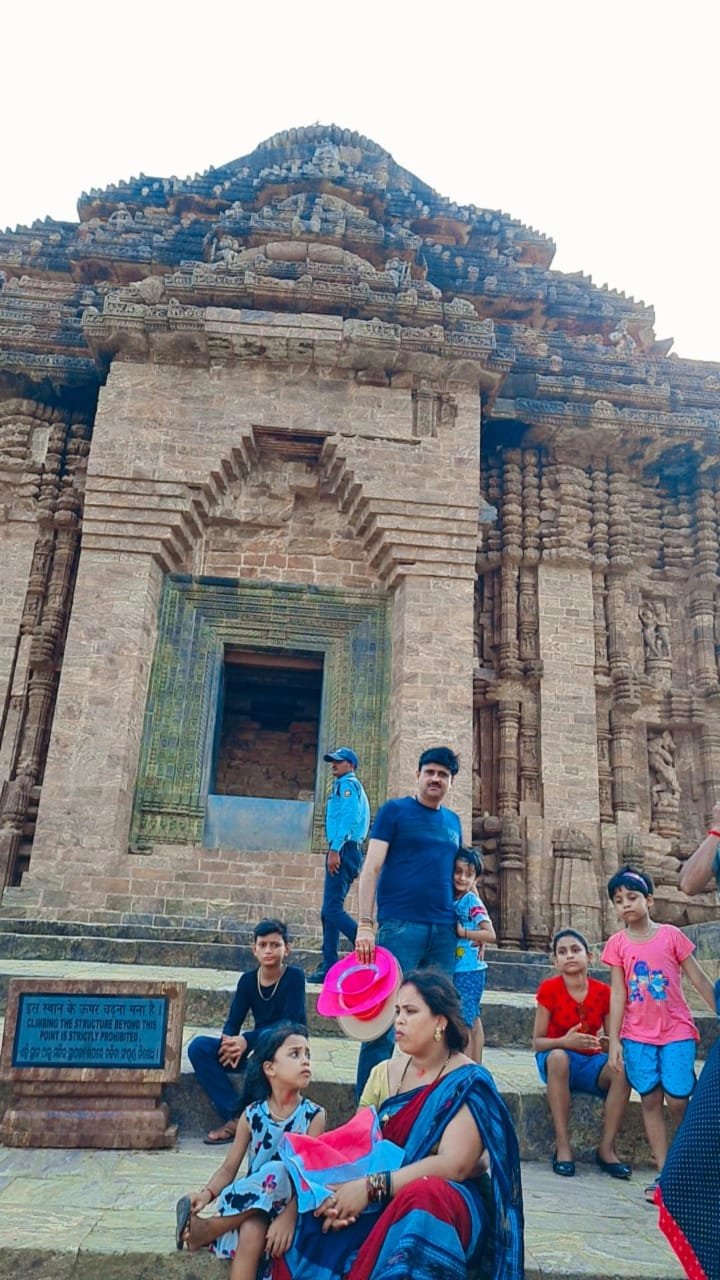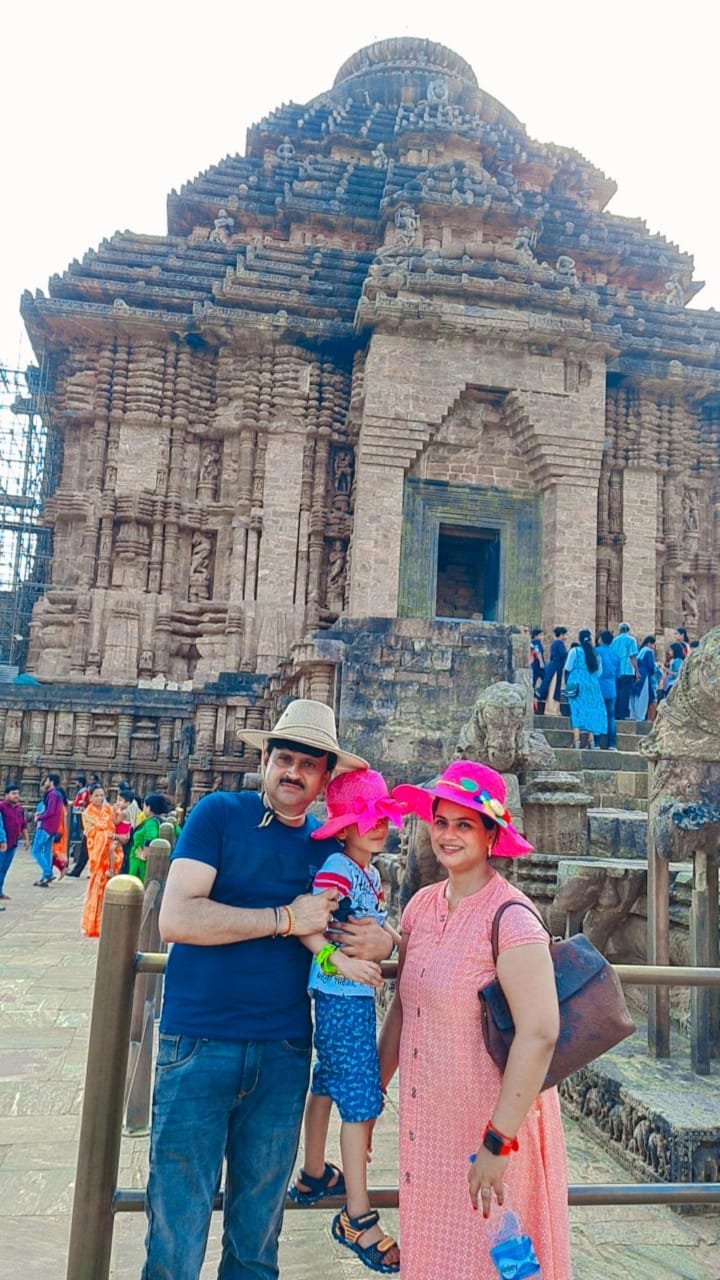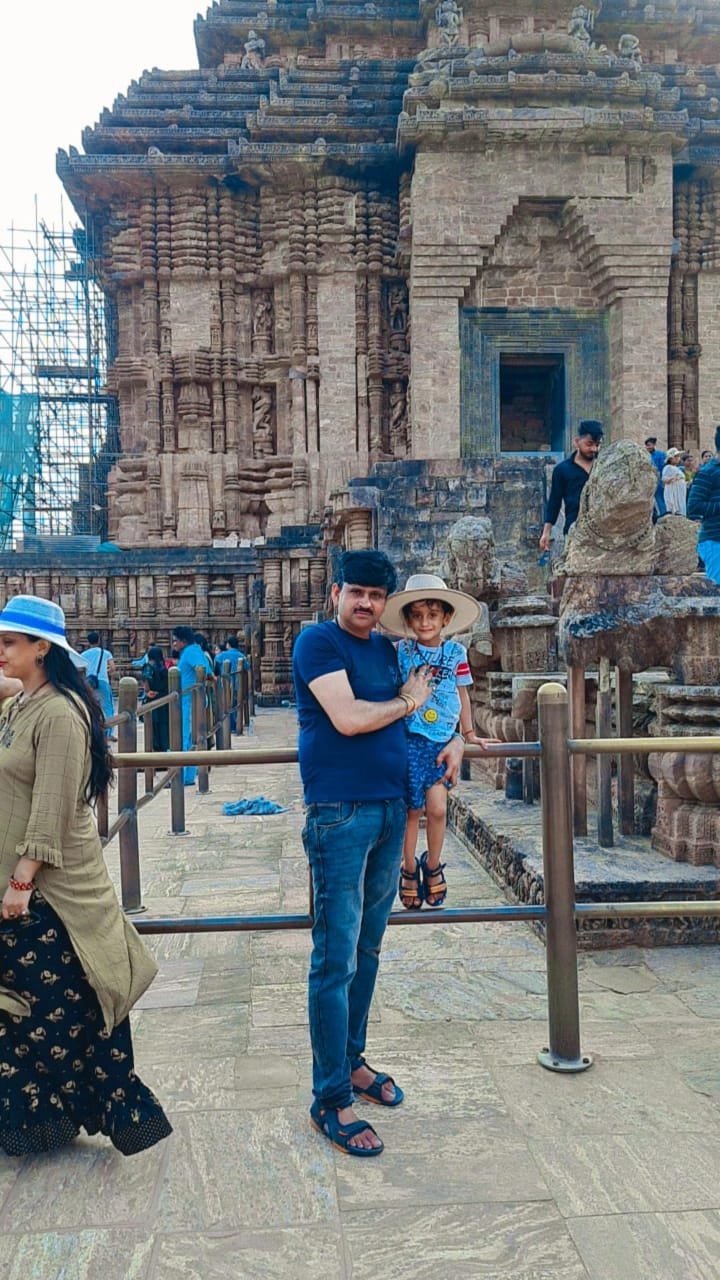


9. Konark Sun Temple ( Odisha )
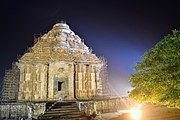
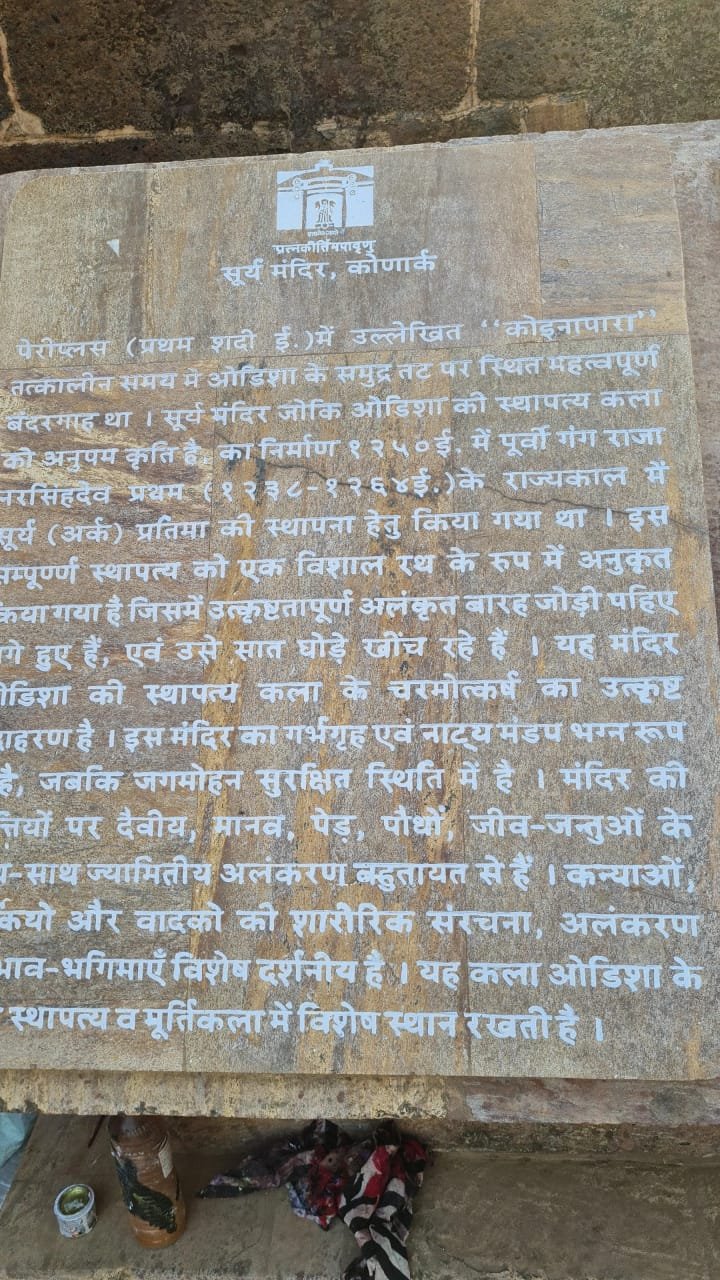
Konark Sun Temple is a 13th-century CE (year 1250) Sun temple at Konark about 35 kilometres (22 mi) northeast from Puri city on the coastline in Puri district, Odisha, India. The temple is attributed to king Narasimhadeva I of the Eastern Ganga dynasty about 1250 CE.
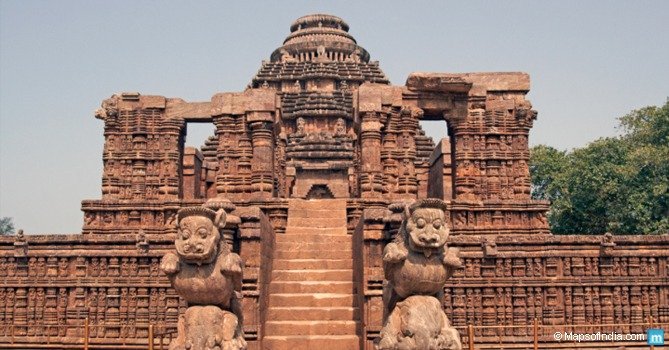
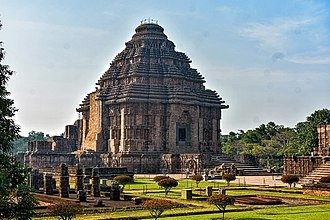
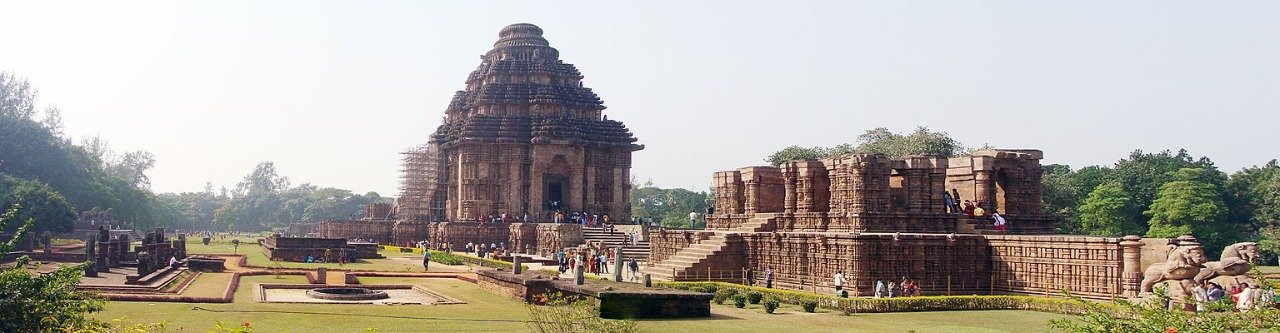
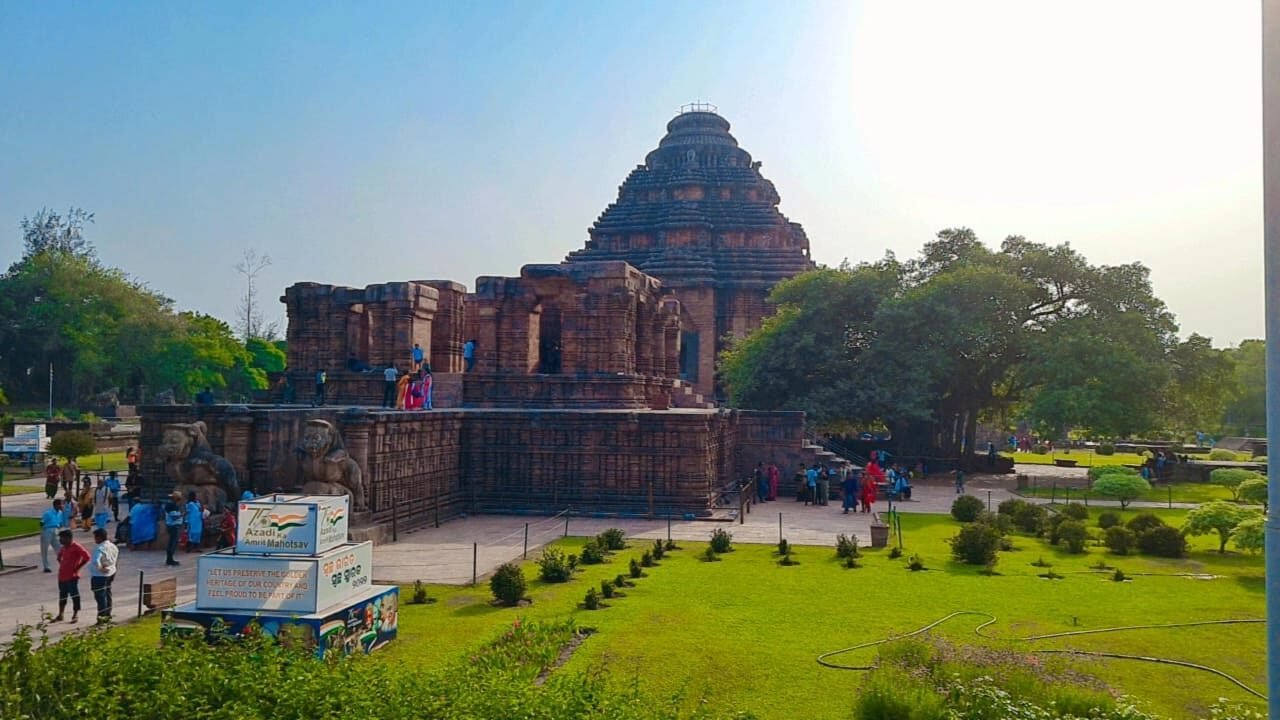
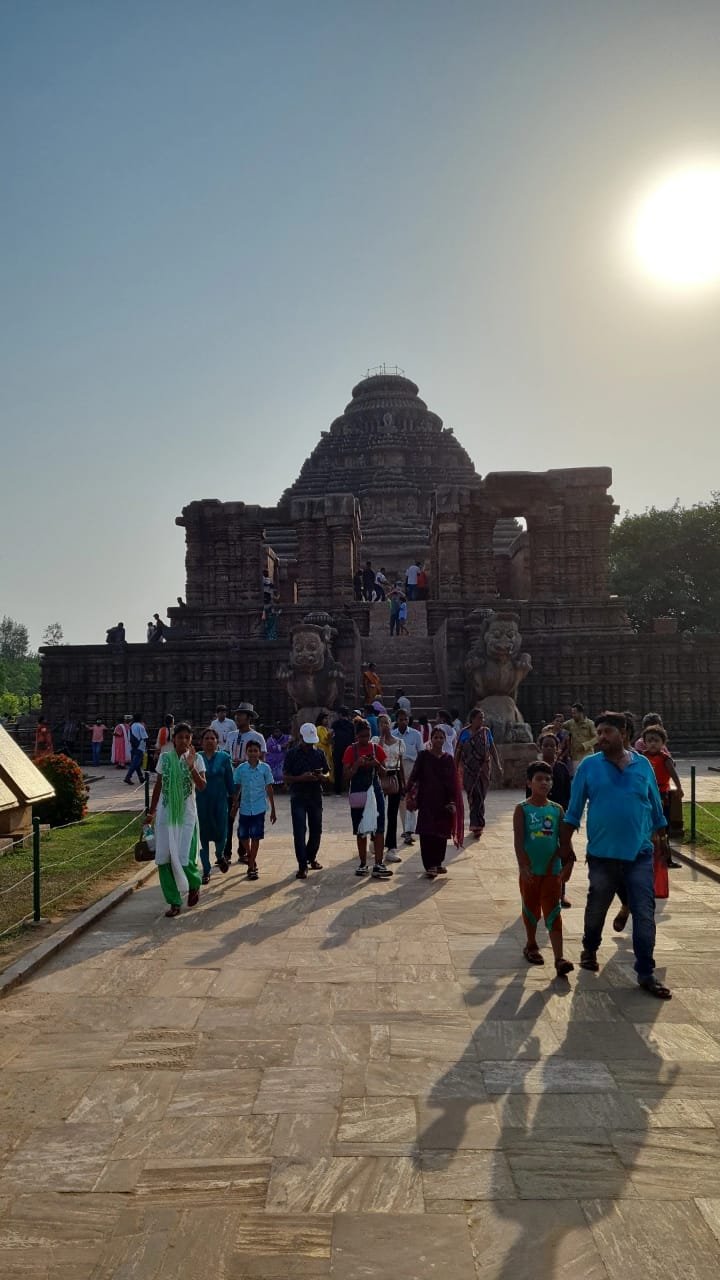
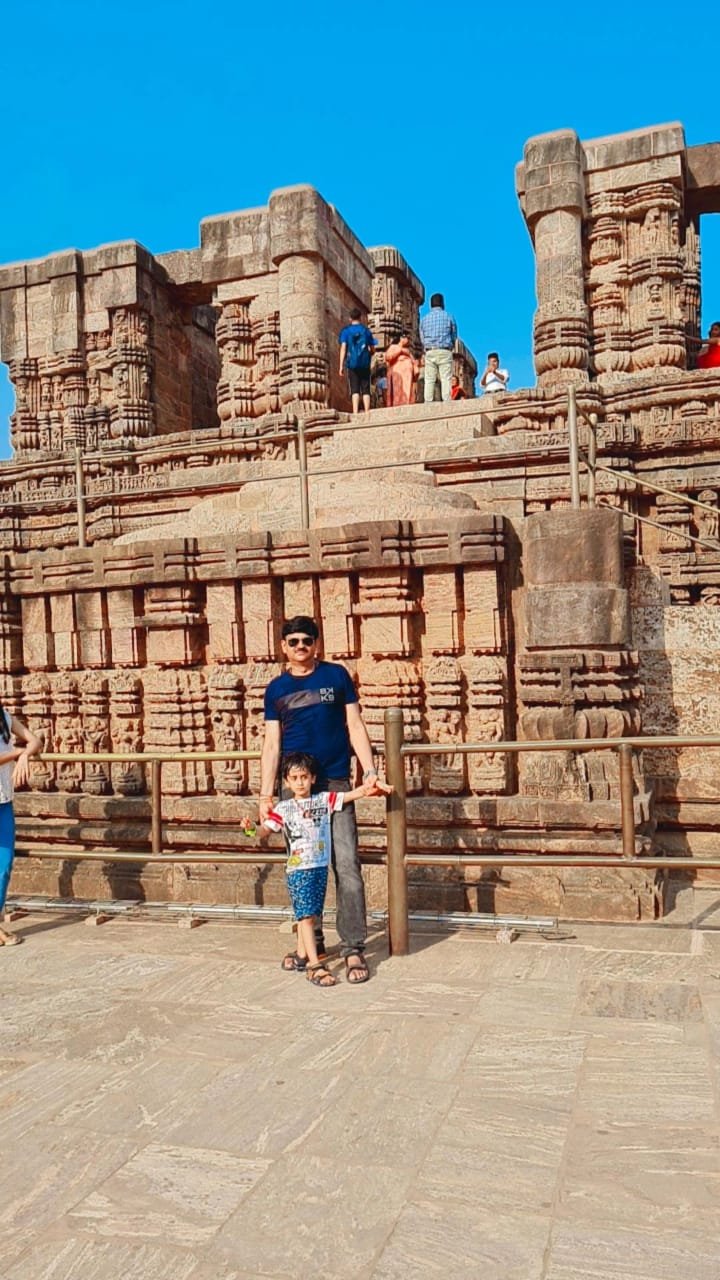
Dedicated to the Hindu Sun God Surya, what remains of the temple complex has the appearance of a 100-foot (30 m) high chariot with immense wheels and horses, all carved from stone. Once over 200 feet (61 m) high, much of the temple is now in ruins, in particular the large shikara tower over the sanctuary; at one time this rose much higher than the mandapa that remains. The structures and elements that have survived are famed for their intricate artwork, iconography, and themes, including erotic kama and mithuna scenes. Also called the Surya Devalaya, it is a classic illustration of the Odisha style of Architecture or Kalinga architecture.
The cause of the destruction of the Konark temple is unclear and still remains a source of controversy. Theories range from natural damage to deliberate destruction of the temple in the course of being sacked several times by Muslim armies between the 15th and 17th centuries. This temple was called the “Black Pagoda” in European sailor accounts as early as 1676 because it looked like a great tiered tower which appeared black. Similarly, the Jagannath Temple in Puri was called the “White Pagoda”. Both temples served as important landmarks for sailors in the Bay of Bengal. The temple that exists today was partially restored by the conservation efforts of British India-era archaeological teams.
Declared a UNESCO world heritage site in 1984, it remains a major pilgrimage site for Hindus, who gather here every year for the Chandrabhaga Mela around the month of February
Konark Sun Temple is depicted on the reverse side of the Indian currency note of 10 rupees to signify its importance to Indian cultural heritage.
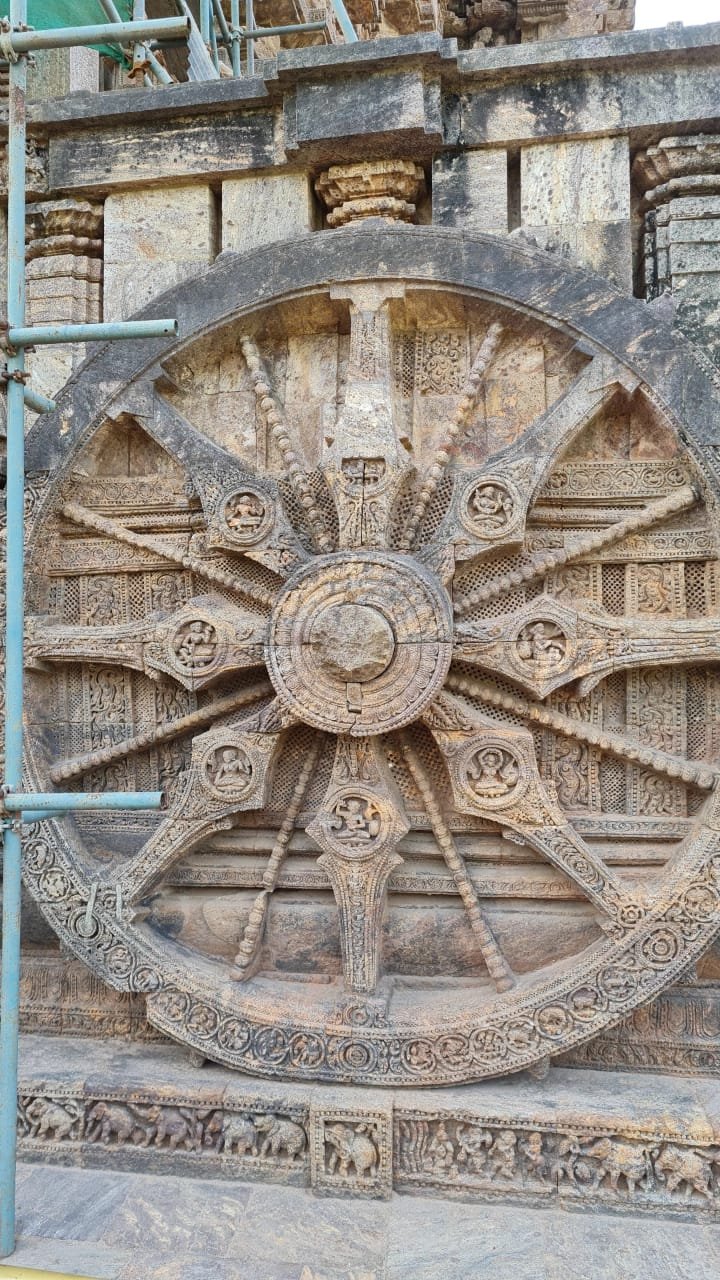
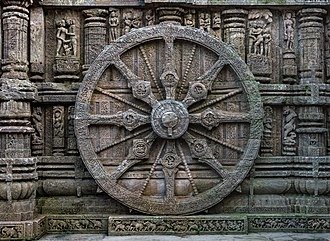
The Konark Sun Temple was built in 1250 CE during the reign of the Eastern Ganga King Narsimhadeva-1 from stone in the form of a giant ornamented chariot dedicated to the Sun god, Surya. In Hindu Vedic iconography Surya is represented as rising in the east and traveling rapidly across the sky in a chariot drawn by seven horses. He is described typically as a resplendent standing person holding a lotus flower in both his hands, riding the chariot marshaled by the charioteer Aruna. The seven horses are named after the seven meters of Sanskrit prosody: Gayatri, Brihati, Ushnih, Jagati, Trishtubha, Anushtubha, and Pankti. Typically seen flanking Surya are two females who represent the dawn goddesses, Usha and Pratyusha. The goddesses are shown to be shooting arrows, a symbol of their initiative in challenging the darkness. The architecture is also symbolic, with the chariot’s twelve pairs of wheels corresponding to the 12 months of the Hindu calendar, each month paired into two cycles (Shukla and Krishna).
The Konark temple presents this iconography on a grand scale. It has 24 elaborately carved stone wheels which are nearly 12 feet (3.7 m) in diameter and are pulled by a set of seven horses. When viewed from inland during the dawn and sunrise, the chariot-shaped temple appears to emerge from the depths of the blue sea carrying the sun.
The temple plan includes all the traditional elements of a Hindu temple set on a square plan. According to Kapila Vatsyayan, the ground plan, as well the layout of sculptures and reliefs, follow the square and circle geometry, forms found in Odisha temple design texts such as the Silpasarini. This mandala structure informs the plans of other Hindu temples in Odisha and elsewhere.
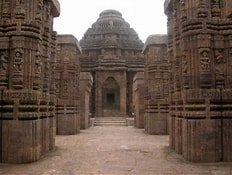
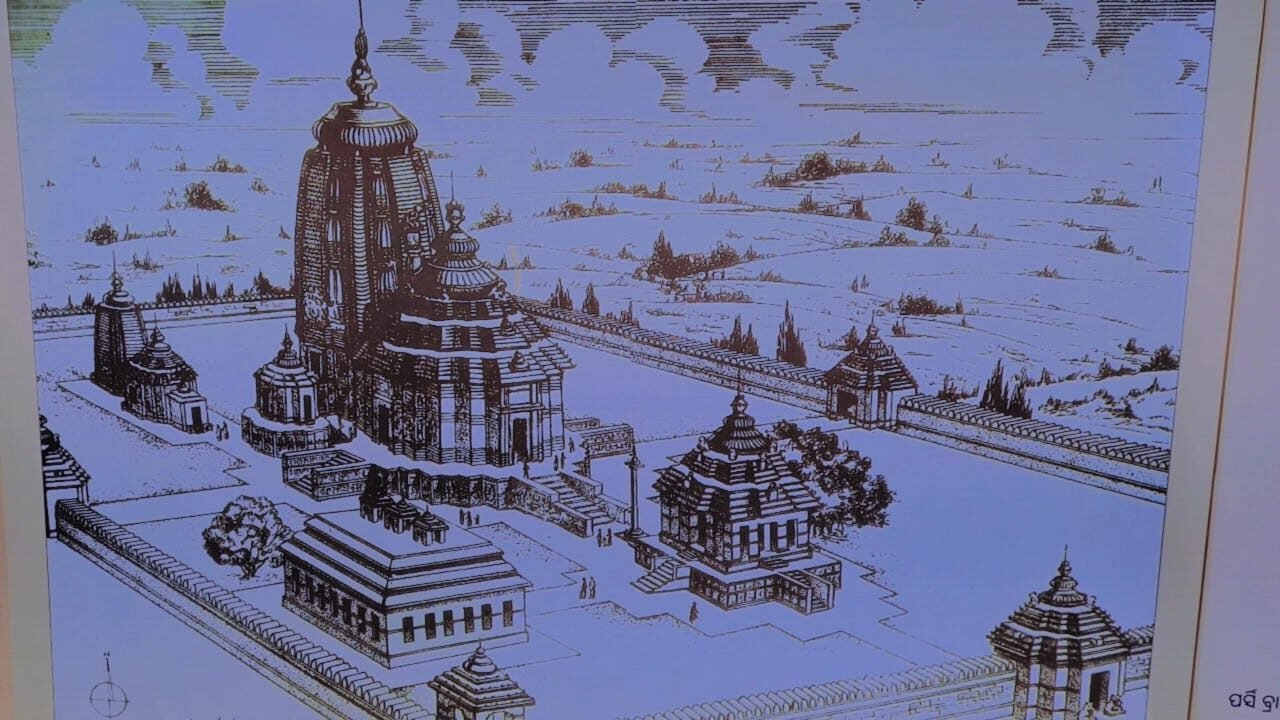
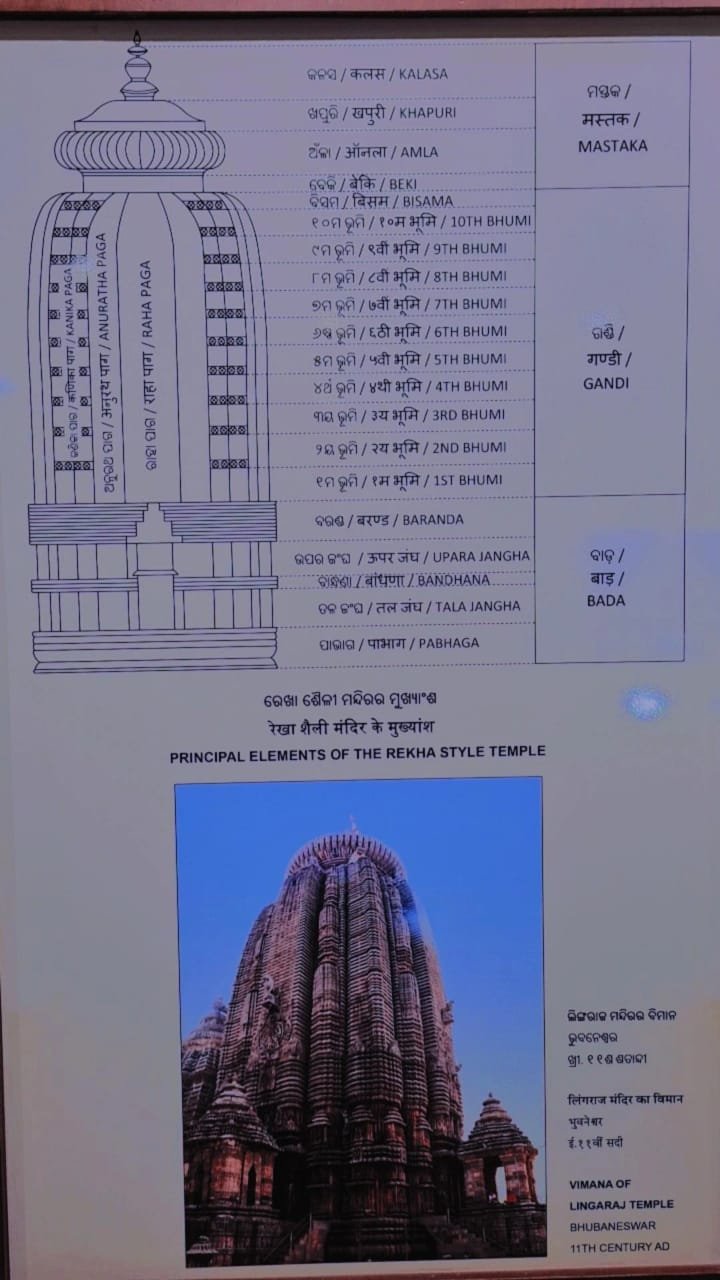
The main temple at Konark, locally called the deul, no longer exists. It was surrounded by subsidiary shrines containing niches depicting Hindu deities, particularly Surya in many of his aspects. The deul was built on a high terrace. The temple was originally a complex consisting of the main sanctuary, called the rekha deul, or bada deul (lit. big sanctum).] In front of it was the bhadra deul (lit. small sanctum), or jagamohana (lit. assembly hall of the people) (called a mandapa in other parts of India. The attached platform was called the pida deul, which consisted of a square mandapa with a pyramidal roof. All of these structures were square at their core, and each was overlain with the pancharatha plan containing a variegated exterior. The central projection, called the raha, is more pronounced than the side projections, called kanika-paga, a style that aims for an interplay of sunlight and shade and adds to the visual appeal of the structure throughout the day. The design manual for this style is found in the Silpa Sastra of ancient Odisha.
Konark, also referred to in Indian texts by the name Kainapara, was a significant trading port by the early centuries of the common era. The current Konark temple dates to the 13th century, though evidence suggests that a sun temple was built in the Konark area by at least the 9th century. Several Puranas mention Surya worship centers in Mundira, which may have been the earlier name for Konark, Kalapriya (Mathura), and Multan (now in Pakistan). The Chinese Buddhist pilgrim and traveler Hiuen-tsang (also referred to as Xuanzang) mentions a port city in Odisha named Charitra. He describes the city as prosperous, with five convents and “storeyed towers that are very high and carved with saintly figures exquisitely done”. Since he visited India in the 7th century, he could not have been referring to the 13th-century temple, but his description suggests either Konark or another Odisha port city already featuring towering structures with sculptures.
According to the Madala Panji, there was at one time another temple in the region built by Pundara Kesari. He may have been Puranjaya, the 7th-century ruler of the Somavasmi Dynasty.
The current temple is attributed to Narasimhadeva I of the Eastern Ganga dynasty, r. 1238–1264 CE– . It is one of the few Hindu temples whose planning and construction records written in Sanskrit in the Odia script have been preserved in the form of palm leaf manuscripts that were discovered in a village in the 1960s and subsequently translated. The temple was sponsored by the king, and its construction was overseen by Siva Samantaraya Mahapatra. It was built near an old Surya temple. The sculpture in the older temple’s sanctum was re-consecrated and incorporated into the newer larger temple. This chronology of temple site’s evolution is supported by many copper plate inscriptions of the era in which the Konark temple is referred to as the “great cottage”.
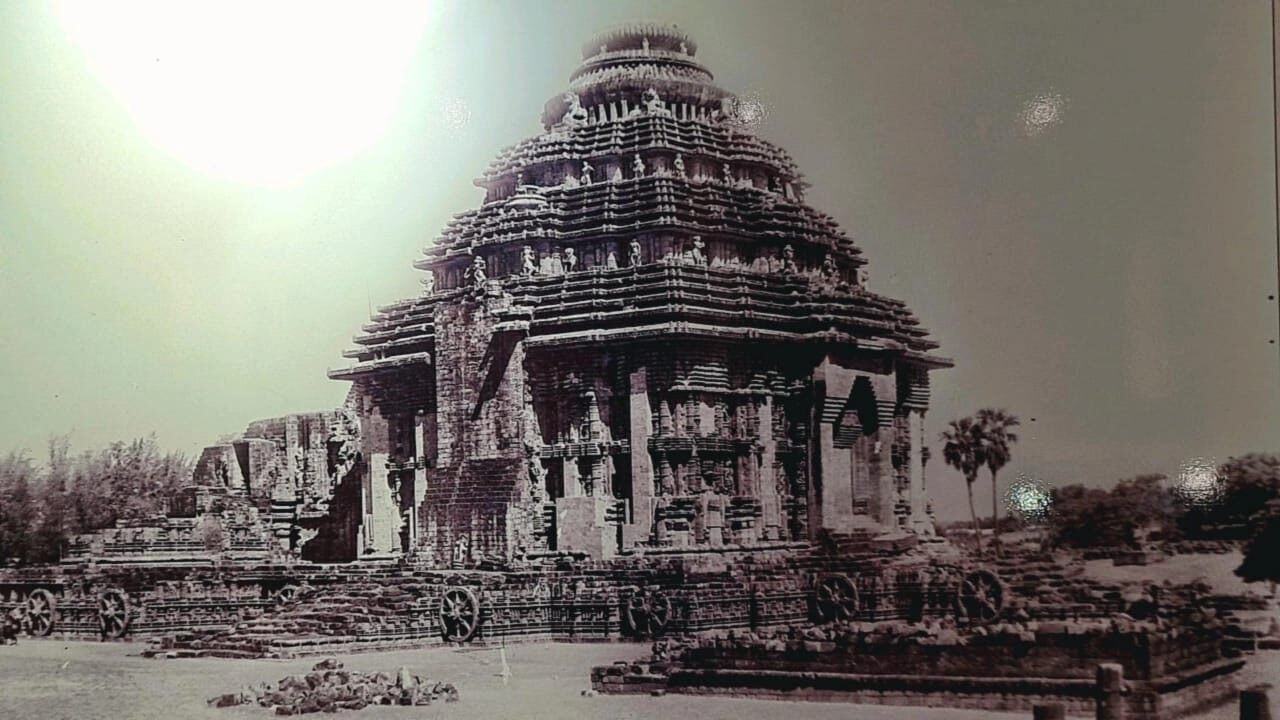
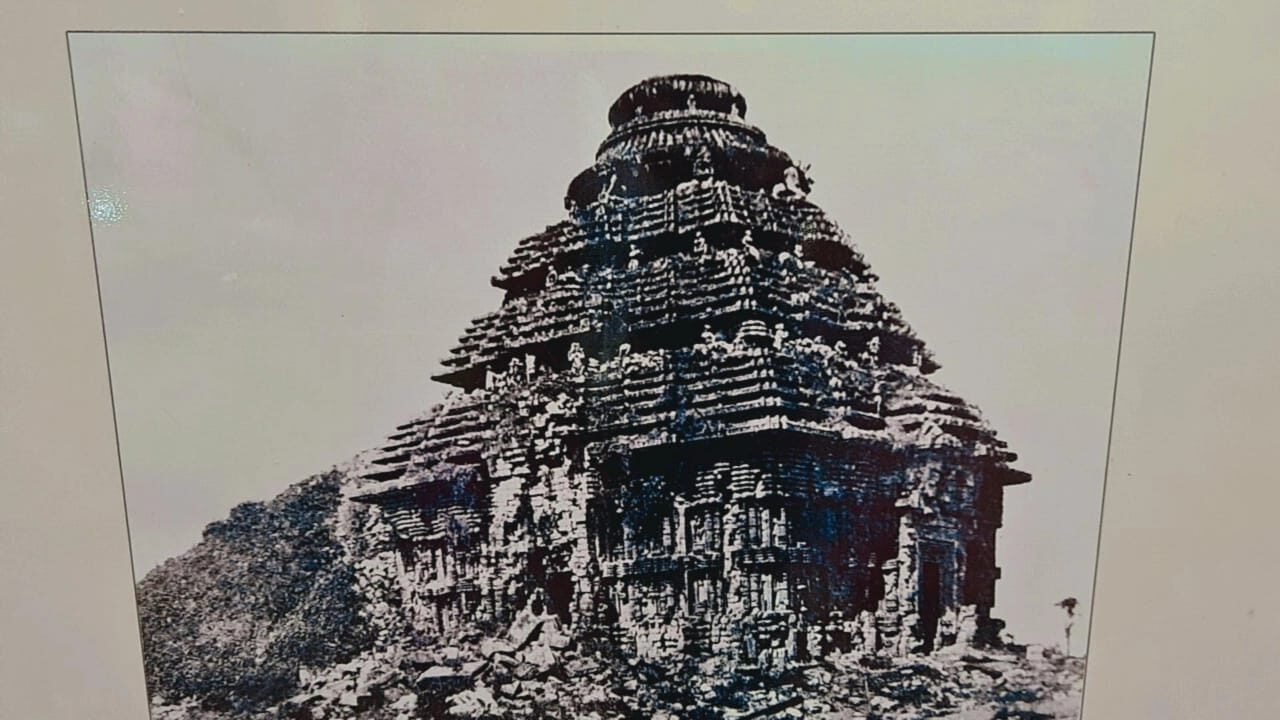
According to James Harle, the temple as built in the 13th century consisted of two main structures, the dance mandapa and the great temple (deul). The smaller mandapa is the structure that survives; the great deul collapsed sometime in the late 16th century or after. According to Harle, the original temple “must originally have stood to a height of some 225 feet (69 m)”, but only parts of its walls and decorative mouldings remain.
The temple was in ruins before its restoration. Speculation continues as to the cause of the destruction of the temple. Early theories stated that the temple was never completed and collapsed during construction. This is contradicted by textual evidence and evidence from inscriptions. The Kenduli copper plate inscription of 1384 CE from the reign of Narasimha IV seems to indicate that the temple was not only completed but an active site of worship. Another inscription states that various deities in the temple were consecrated, also suggesting that construction of the temple had been completed. A non-Hindu textual source, the Akbar-era text Ain-i-Akbari by Abul Fazl dated to the 16th century, mentions the Konark temple, describing it as a prosperous site with a temple that made visitors “astonished at its sight”, with no mention of ruins. 200 years later, during the reign of the Marathas in Odisha in the 18th century, a Maratha holy man found the temple abandoned and covered in overgrowth. The Marathas relocated the temple’s Aruna stambha (pillar with Aruna the charioteer seated atop it) to the Lion’s Gate entrance of the Jagannath Temple in Puri.
The Konark Sun Temple complex has ruins of many subsidiary shrines and monuments around the main temple. Some of these include
- Mayadevi Temple – Located west- been dated to the late 11th century, earlier than the main temple
- Vaishnava Temple – Located southwest of the so-called Mayadevi Temple, it was discovered during excavations in 1956. This discovery was significant because it confirmed that the Konark Sun Temple complex revered all the major Hindu traditions, and was not an exclusive worship place for the saura cult as previously believed
- Kitchen – This monument is found south of the bhoga mandapa (feeding hall). It, too, was discovered in excavations in the 1950s.
- Well 1 – This monument is located north of the kitchen, towards its eastern flank ,was probably built to supply water to the community kitchen and bhoga mandapa. Near the well are a pillared mandapa and five structures, some with semi-circular steps whose role is unclear.
- Well 2 – This monument and associated structures are in the front of the northern staircase of the main temple, with foot rests, a washing platform, and a wash water drain system. It was probably designed for the use of pilgrims arriving at the temple.
Texts from the 19th century do mention ruins, which means the temple was damaged either intentionally or through natural causes sometime between 1556 and 1800 CE. After the Sun Temple ceased to attract faithful, Konark became deserted, left to disappear in dense forests for years.
According to Thomas Donaldson, evidence suggests that the damage and the temple’s ruined condition can be dated to between the late 16th century and the early 17th century from the records of various surveys and repairs found in early 17th-century texts. These also record that the temple remained a site of worship in the early 17th century. These records do not state whether the ruins were being used by devotees to gather and worship, or part of the damaged temple was still in use for some other purpose.
Fall of the Konark Sun Temple
Many theories explain the fall of the temple in their own way.
As per one theory, part of the Konark temple collapsed because of its incomplete structure. The Konark Sum Temple was not completed because of the early death of the king Langula Narasimha Dev who initiated the construction of the temple.
Next is the theory of lodestone (piece of the mineral magnetite that is naturally magnetized) located at the top of the temple. The lodestone’s placement caused a huge damage to the temple as many vessels passing through the Konark Sea were attracted towards it. Also, this magnet used to disturb the compass of almost all the ships in the sea. So, to remove the cause of the trouble, Portuguese voyagers stole the lodestone. The displacement of the lodestone led to total imbalance and so the Konark temple fell down. But there is no historical record either of this event or presence of such a great lodestone at Konark.
As per another very popular theory, the temple was destroyed by Kalapahad (Kalapahad was the title given to a Muslim governor Sultan Sulaiman Karrani of Bengal) who invaded Orissa in 1508. He had also destroyed many other Hindu temples in Orissa along with the Konark Sun Temple. In 1568, Muslims started ruling Orissa and destroyed many Hindu temples.
How to reach
By Air -Reaching Konark is not difficult as this town is well connected to all the major parts of India by road, rail as well as air. Bhubaneswar airport is the nearest airport that is well linked and has regular flights from all parts of the country. This airport is at a distance of 64 km from Konark.
By Rail –The railway stations closest to Konark are there in the twin cities of Puri and Bhubaneswar.
By Road -An extensive road network connects Konark with the rest of the India via National as well as State Highways